The enigmatic plant Parka decipiens
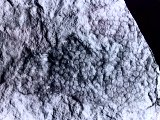
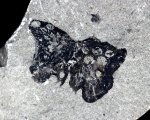
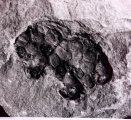
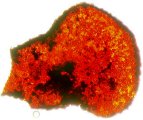
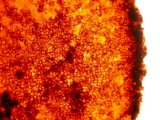
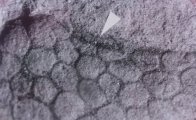
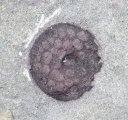
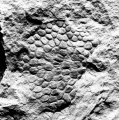
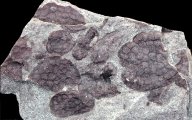
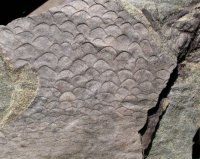
The fossil (1) looks like a little patch 0.5 - 7.5 cm in diameter showing
a reticulate structure on the surface. Its form is circular, elliptic or
irregular (2).
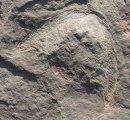
Complete specimens of Parka decipiens show a border of 0.2 - 1.2 mm in breadth. Actually the sporangia were formed in this border. Indeed incomplete sporangia can be seen lying in the border of some specimens (7). These sporangia were in the process of formation.
Some specimens show a 'holdfast' in the centre (8). Presumably that
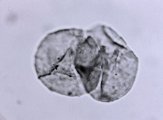
was the plant's attachment to the soil or to other plants. There have been all kinds of ideas about the true nature of Parka decipiens. In the previous century Parka decipiens has successively been taken for the inflorescence of a plant, snail's eggs, frog-spawn, a bramble-like fruit and the egg-packet of a seascorpion. The spores were discovered in 1891 and from that moment it was clear that Parka was a plant.
Still Parka is not completely understood
and the systematic place is uncertain. The plant resembles some extant
liverworts, but also a couple of extant algae. The chemical composition indicates
a relationship with green algae. Probably Parka was a member of group
of enigmatic plants, which tried to colonize the still barren land. Perhaps
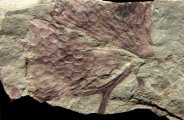
the higher plants, like Cooksonia and Zosterophyllum (11),
which developed at the same time, frustrated this attempt.
|