|
 Usage
Usage
This Usage-page is about:
The Ginkgo tree
is a phenomenon, an object of veneration, a sacred tree of the East, a
symbol of unity of opposites,  by
some seen as a symbol of changelessness, possessing miraculous power, bearer
of hope and of the immeasurable past, a symbol of love. Because of all
its properties it is associated with longevity. by
some seen as a symbol of changelessness, possessing miraculous power, bearer
of hope and of the immeasurable past, a symbol of love. Because of all
its properties it is associated with longevity.
Artists have long been inspired
by the aesthetic charm of the Ginkgo and its leaves, for instance Goethe
and Nemerov made a poem on it and in the Art
Nouveau (Jugendstil)-period -special pages: Nancy |
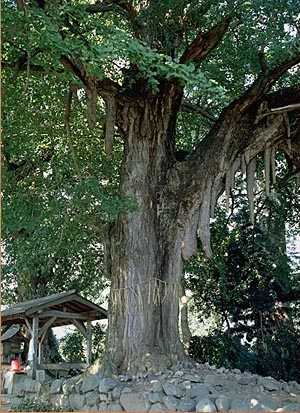 |
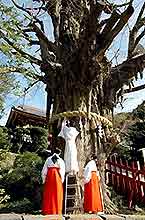
Since ancient times the tree has been planted in China and Japan in temple gardens, also near shrines and castles, due to veneration, its protection against fire, seeds and beauty. The famous Hiroshima-tree is also near a temple. Old Ginkgoes are worshipped like a god in Japan (example below). To indicate the sacred character of the tree a shimenawa (cord of rice straw) is tied round the enormous trunk of the tree. This is also believed to keep off evil spirits. |
 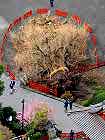 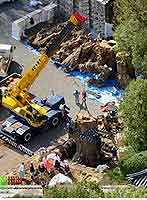  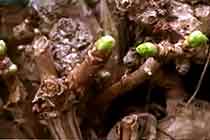
Symbol tree, rituals, replanting. Read fascinating story (+ videos) on my blog:click here. |
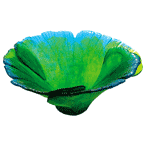
I made a special page about the Ginkgo used in art & design in many countries with many photos. Click here to see my Art-page. |
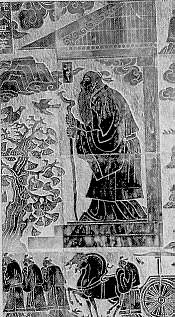
Ginkgo trees have a symbolic meaning in Confucianism because Confucius (551-487 BC) is said to have loved reading and pondering and teaching his disciples under a Ginkgo tree (picture left). The chi chi of old trees are subject of devout worship of Shinton-women in Japan, for they are seen as a sign of motherhood (chi chi = mother's breasts). The Ginkgo is also thought to
protect against fire and therefore it is still planted near temples.
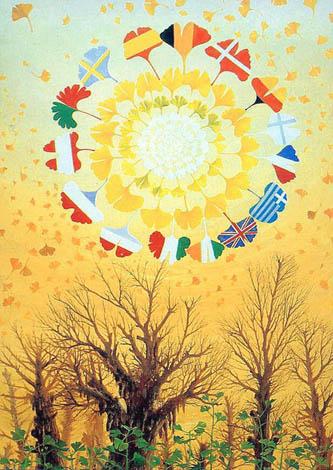
Grenzenloses Utopia, painting
© Atsuko Kato, 2001
|
 |
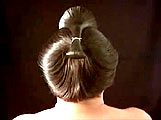
Ginkgo and hairstyles
| Topknots worn by
men in Japan since the Edo-period are calledicho
or ginkgo, because
the tip of a topknot is Ginkgo-leaf shaped. Shape, size and position of
the topknot showed social status: for instance samurais and sumo wrestlers
wore o-icho or big-ginkgo
and merchants wore ko-icho
or small-ginkgo.
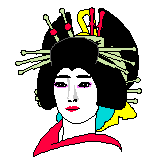
Women and girls in the 19th century wore icho-mage or ginkgo-chignon, a simplified coiffure of the shimada style (still used by brides), the bun is divided into two loops. They also know the icho-gaeshi or butterfly-ginkgo since the Edo-period, it has two Ginkgo-leaf shaped chignons, one at each side of the head. |
 |
 |
Sumo wrestlers know
the oicho
or
big-ginkgo
hairstyle.
In the 18th century the whole hair came to be tied on the crown to make it like a big Ginkgo leaf and the tip of the topknot was also shaped like a Ginkgo-leaf. This style can still be seen today. The o-icho-mage is the hairstyle only top division wrestlers are allowed to wear. It also protects wrestlers from head injury in case they fall. |
 |

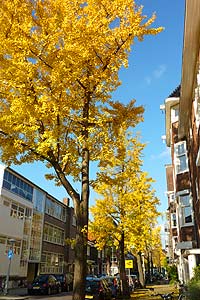
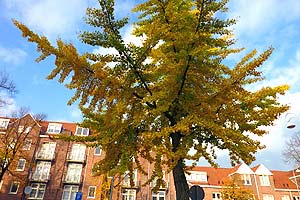
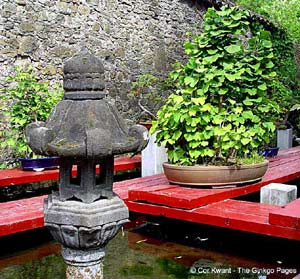
Most Ginkgos live as ornamental trees, specimen are planted in many parts of the world, it is nearly cosmopolitan.
It is used as a landcape tree because it is picturesque, has an unusual shape of the crown, provides shade and gives a bold accent. In average sized landscapes it may become too large, therefore several varieties are available, incl. columnar types, with finer growth habit, better fall colour etc. (see also on my page The tree).
Smaller selections can also be
planted in gardens.
 |
 |
 |
Due to its natural resistance
to diseases, insects, air pollution, fire and even radioactive radiation
it is also used as a street tree in cities and urban areas. It is also
planted in parks and along boulevards because of its unique form and yellow
leaf colour in fall. For instance in Japan many are planted in parks and
along avenues, esp. in Tokyo.
However so far not many are
used as a roadside tree in the USA and Europe.
Mostly male trees are planted in cities because of the smell the female seeds produce when fallen on the ground and decaying.

click picture to enlarge and more photos of the wood  |
The light-coloured
wood of the tree has little economic value, it is light, fine grained,
smooth, flexible and has a silky shine. Its decay isn't very fast. For
long it is used among others for structures, sculptures, tea shelves and
utensils for the Japanese tea ceremony, for Buddhist family altars, chess
boards, chess men, tubs for brewing sake, choppingboards, go-boards (go-ban)
and used for an "Ema" (wooden tablet for prayers). It is also used to make
insect-proof cabinets and for lacquerware materials such as trays, bowls
and containers for tea powder. The female tree is used to make (sheet)
paper.
Read more about the wood on my Tree-page. |
 click
on photo to enlarge and to see more photos of China
click
on photo to enlarge and to see more photos of China
photo © Peter Del Tredici |
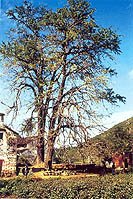
Dongting Mountain
on the shores of Lake Tai in Jinagsu Province in China is an important
seeds producing area. There the cultivar 'King of Dongting Mountain' produces
the largest seed of about 44 cultivars that are based on size and shape
of the seed and their productivity. The trees are kept short (about 5 m)
and are branched low to the ground (photo). Selected
grafted female trees produce 3-5 years after grafting, which normally takes
20-35 years.
More watering and fertilizing, tipping, girdling and especially bark inversion contribute to a rapid yield. In general every other year a heavy crop with relatively light crops in alternate years. More details: click here. |
In the 11th century
a poem was written by the chinese Onhang Xiu in which he says "the nuts
are seen as pearls given to a dear guest". The seeds are still given (shell
dyed red) and roasted and eaten at weddings and other feasts as a delicacy,
used as a digestion aid and for their ability to suppress the effects of
consuming wine and to recover from illnesses. It is also used as a kidney
yang tonic that increases sexual energy.  The
nuts possess i.e. ginkgolic acids and ginnol (which inhibit certain
bacteria and fungul infections). For long it is considered useful in Chinese
traditional medicine and Japan as an astringent for the heart, lung,
asthma, bronchitis, wheezing, cough, for regulating urinary frequency (bladder/kidney),
diarrhea, gonorrhea, toothache, skin diseases, digestive aid, fever and
other ailments. The cooked seeds are said to stabilize the production of
sperm, the raw seeds may have anticancer and counter-vinous activity.
The
nuts possess i.e. ginkgolic acids and ginnol (which inhibit certain
bacteria and fungul infections). For long it is considered useful in Chinese
traditional medicine and Japan as an astringent for the heart, lung,
asthma, bronchitis, wheezing, cough, for regulating urinary frequency (bladder/kidney),
diarrhea, gonorrhea, toothache, skin diseases, digestive aid, fever and
other ailments. The cooked seeds are said to stabilize the production of
sperm, the raw seeds may have anticancer and counter-vinous activity.
For the medicinal history of
the seeds read my History-page.
The roasted nuts were also offered
to the emperor in order to honour him.
| The taste is sweet
like a large pine nut, a cross between potatoes and sweet chestnuts when
baked. In Japan the nuts are eaten in an egg custard like dish called chawanmushi.
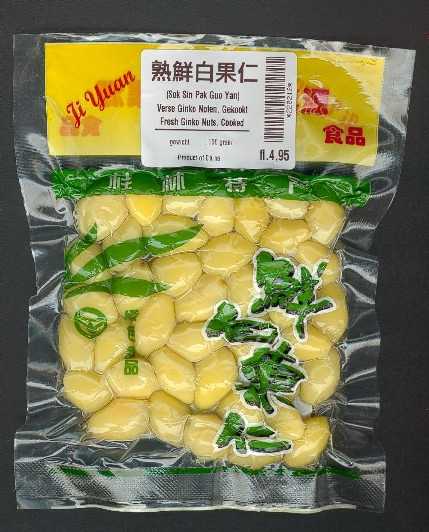
Fresh ginkgo nuts (also canned with fleshy outer coats removed) are available
in Japan and China and sold in markets esp. in the Orient (there they don't
mind the smell) as Pa-Kewo, Pakgor or ginnan ("silver almonds" or "white
nuts") etc. being edible when baked, cooked or roasted. They contain only
3% fat, are rich in niacin and a good source of starch and protein. They
are imported into some Western countries and sold in Chinese food stores,
natural food stores or supermarkets.
The seeds are usually steamed until the hard shell cracks open, then the kernel can be removed (or can be cracked open) and eaten like pistacho nuts, or used in pilaf, porridges, soups, vegetable dishes or mixed with rice, tofu, mushrooms and stir-fried vegetables. |
 |
The seedcoat contains a small
amount of urushiol, an allergen that may cause a mild form of poison oak
(poison ivy) dermatitis in sensitive people, so when picking the seeds
up from the ground wear latex gloves.
When eaten the inner seed can
cause food poisoning -especially with children- caused by MPN ( 4-methoxypyridoxine)
when seeds are eaten for a long period and/or in large quantities (over
5 seeds a day). MPN is heat-stable. Studies have demonstrated that convulsions
caused by MPN can be prevented or terminated with pyridoxine.
Oil from the seed is used as
a lighting-fuel and a soap substitute is produced by mixing the pulp of
the seeds with oil or wine.
|
Ingredients (for four): 1/4 cup of longan pulp, 1/4 cup of red jujubes, 1/4 cup of lotus seeds, 1/4 cup of ginkgo fruits, 1/4 cup of lily petals, 1/4 - l cup of rock sugar (to taste) and 8 cups of water. Procedure: Wash longan pulp and red jujubes
clean. Soak red jujubes in water for 2 hours.
Synergically very nutritious.
|


|
|
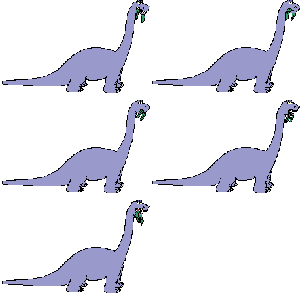 Ginkgo
foliage would have formed a major part of large herbivorous dinosaurs diets
as a source of biomass and energy.
Ginkgo
foliage would have formed a major part of large herbivorous dinosaurs diets
as a source of biomass and energy.
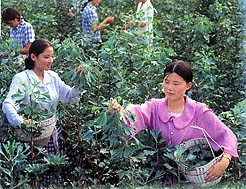
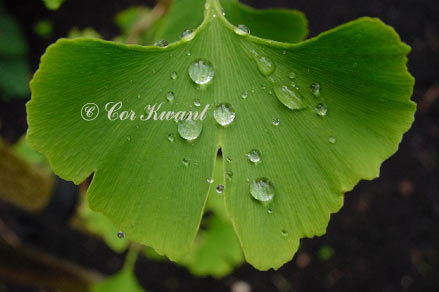
The leaves are used by the Chinese and Japanese as a herbal medicine although the seeds were used more. For the medicinal history read my History-page. The leaves are still used in Chinese medicine known as 'bai-guo-ye' and used to treat for instance respiratory problems like asthma, bronchitis, hearing loss, couching, tuberculosis, poor circulation, memory loss, gonorrhea, stomach pain, skin diseases, leukorrhoe, angina pectoris, dysenterie, high bloodpressure and anxiety. The powdered leaf is inhaled for asthma, ear, nose and throat disorders like bronchitis and chronic rhinitis. Locally applied juice of boiled leaves are used for chil blains. The leaf is also used as a woundplaster.
In Western medicine the leaves became an object of research in the late 50s. Dr. Willmar Schwabe, physician and botanist, analysed the constituents and activity of the natural substances of the leaves in his company in Karlsruhe (Germany) at the end of the 50s and produced in 1965 the brand Tebonin (tincture and tablets) in a concentration of 10:1. Later other firms also developed the extract. Concentration nowadays is mostly 50:1 (50 pounds of leaves result in 1 pound of extract).
Meanwhile hundreds of controlled
scientific studies and research on the chemistry, pharmacology and clinical
effects of the leaves have been conducted, mostly by European researchers
over the last decades, using the German/French extract EGb761, also called
Kaveri, Tebonin, Tanakan, Rökan and Ginkgold; LI 1370 (Lichtwer).
In 1988 dr. Corey of Harvard
University won the Nobel prize for among others the fact that he synthesized
ginkgolide B, which is being investigated for instance for its use to prevent
rejection of transplanted organs and for asthma and toxic shock.
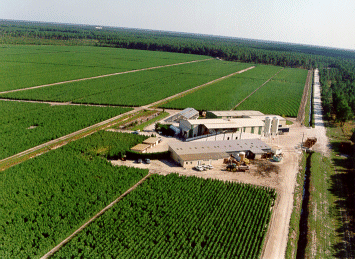
The tree is extensively cultivated
to supply the expanding market for the leaf extract. Most of the
extracts available on the American market are made from leaves produced
on the millions of trees (shrub-sized) on a Ginkgo plantation owned by
a German/French company in Sumter, South Carolina and also from smaller
plantations in France near Bordeaux.
| Plantations
The world's largest plantation of Ginkgo trees is in Sumter, South Carolina, consisting of 400 ha of sandy soil with millions of trees planted 40 inches apart (about 25,000 trees per ha). They are kept shrub-sized. The gathering of the leaves starts mid-July when the leaves are still green. Every 5 years the trees are cut down to the ground!
Harvesting is done by specially equipped huge cotton-pickers starting at 7 pm because the leaves come off easier when it cools down. This goes on until 1.30 am, resumes at 5 am and then continues until enough leaves are gathered to keep the drying process going until 7 pm. The leaves need to be dried within 12 hours or they start decaying. Drying takes place in a massive drum. Over 2.5 million pounds of dried, baled leaves are then shipped from Garnay to Charleston and then travel by sea to Europe. There the leaves are fine chopped; the 27 step extraction process takes 2 weeks to complete meanwhile being monitored to get the standardized product. There is another plantation near Bordeaux in France. Since 1990 the Chinese manufacturers
have rapidly developed. The most important area is in the Jiangsu (3,000
hectares) and Shandong provinces. The potential could be very high, the
density of the plantations is variable because they often originate from
nurseries. Harvesting is done by hand and intercropping systems are applied.
The climates of South Carolina and South China are about similar. The German/French company has a partnership with the Chinese. |
 |
Until now in the USA it is primarily sold as a herbal dietary supplement in drug stores, supermarkets, vitaminshops, nutrition centers and on the internet to use it for memory and mental clarity improvement and for its antioxidant function. Today many vitamin/mineral supplements contain a (low) dosis of the extract.
Some scientist are suggesting that research on the Ginkgo biloba may lead to a whole new class of medicine. Most likely the ancient Ginkgo will be remembered as a special tree long into the future!
The active ingredients of the
extract are according to the monograph of the Commission E (made up by
the German federal health commission and published by the American Botanical
Council in 1998) flavonoid glycosides,
which contain among others quercetin, kaempferol (named after Kaempfer
who discovered the Ginkgo in Japan in 1690) and isorhamnetine and terpene
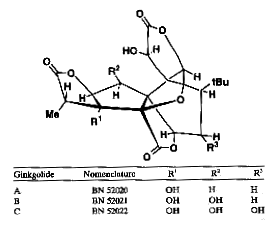
lactones, containing ginkgolides A, B, C,
J, M and bilobalides. Flavonoids are natural substances also found in fruits
and vegetables, acting as antioxidants. The ginkgolides are among others
PAF-inhibiting (against "blood clotting") of which ginkgolide B is most
effective.
 |
The standardized extract contains
24% flavonoids and 6% terpenes. Whether the
claimed benefits are also obtained with other Ginkgo extracts is uncertain.
Brands vary widely in content according to a publication of the American
Chemical Society of 17 June 1999. The liquid extract is weaker.
 |
Out of the research it appears that basically there are three important effects of the extract on the human body: it improves blood flow (including microcirculation in small capillaries) to most tissues and organs, it protects against oxidative cell damage from free radicals (antioxidant) and blocks many of the effects of PAF (platelet aggregation: "blood clotting") that have been related to the development of a number of cardiovascular, renal, respiratory and CNS (Central Nervous System) disorders. |
According to the monographs by the German federal health Commission E and the World Health Organisation the extract can be of help for the treatment of many human ailments, especially for middle-aged and older people. It's impossible and beyond my scope, qualification and intention to discuss all disorders on my page nor can I judge the efficacy and effects for each individual. Consider this only as information.
For details, dosage and possible side-effects read the links with medicinal information on my Links-page, including the Medline, use search engines, ask questions in my forum etc. I am not affiliated with nor vouch for any claims of the products offered on these links.
If whole leaf preparations are effective is uncertain because the leaf extract is achieved by concentration and purification and there is no quality control. Dried leaves can be made into tea or powdered to fill capsules. Best time to harvest is thought just before the leaves begin to change colour.
Pieces of Ginkgoleaf-shaped radish
in soup were described in 'Ukiyo-buro' (1813). Today vegetables as carrots
and radishes sliced into a Ginkgoleaf shape are common in preparing
vegetables in Japan, called 'icho-giri' (ginkgo-cut).
Ginkgo leaves are also used
in cosmetics (skincare) and shampoo etc. They are also used as an insecticide
and as a fertilizer.
They can be dried to use for
artistic designs.
From my own experience I know
the
leaf makes
a perfect bookmark
for a book! In Japan the leaves have been used traditionally as bookmarks
because of their shape and yellow colour in fall. They are believed to
reduce damage by booklice and/or silverfishes, because of the Ginkgo's
chemical defense properties against insect pests.
| ... |
 |


© Cor Kwant
Copyright information.