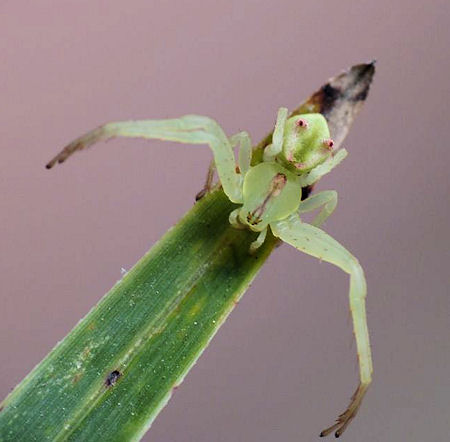
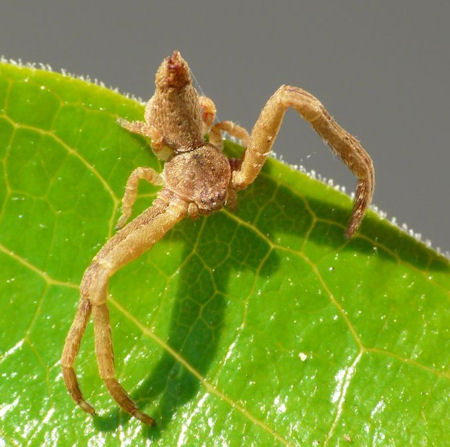
Crab spiders
Family Thomisidae
ß
Home
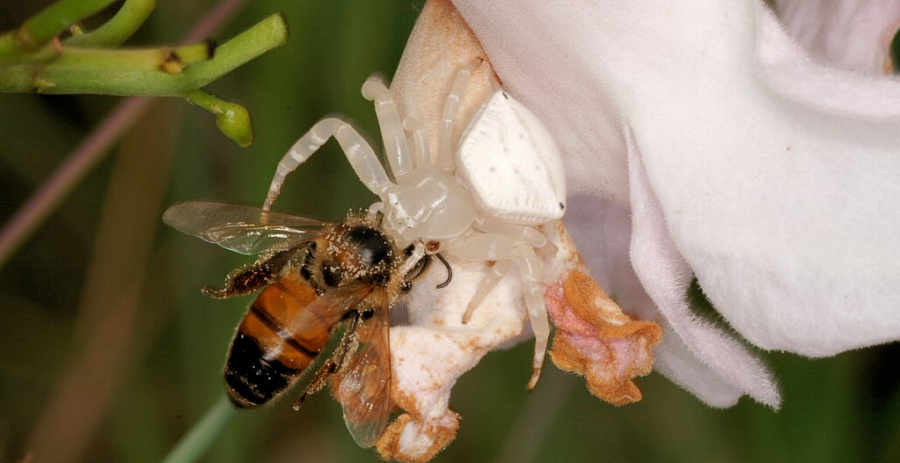
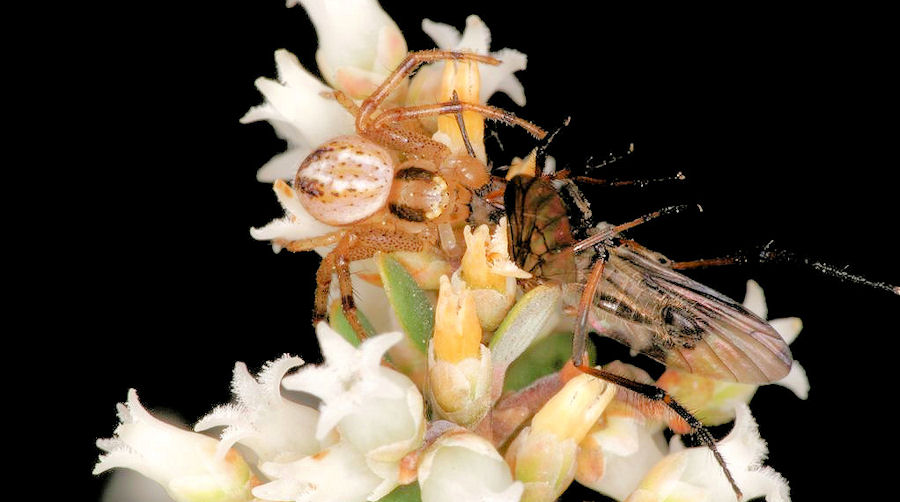
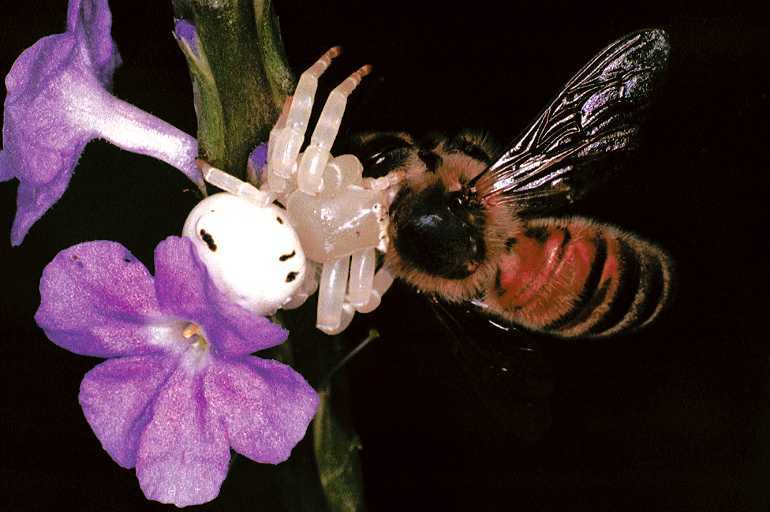
Thomisus spectabilis with a bee
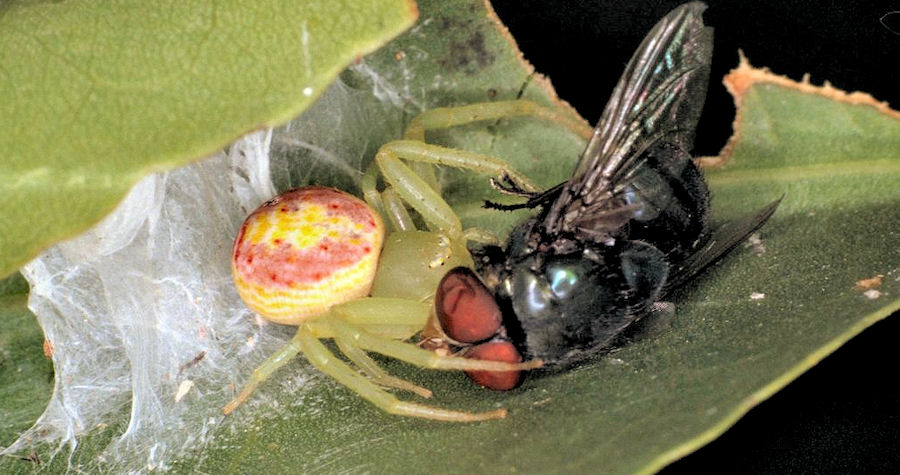
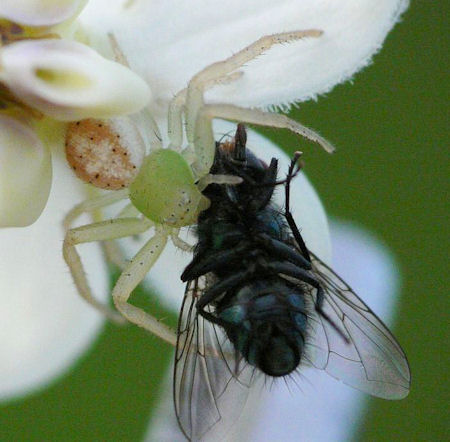
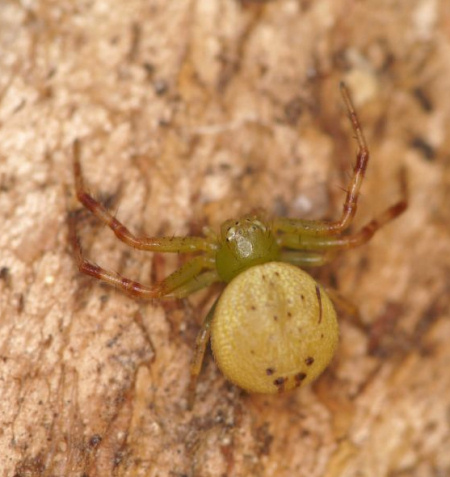
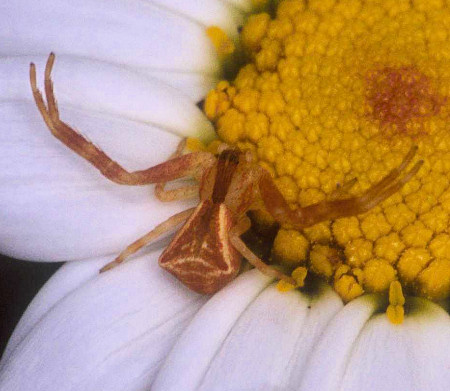
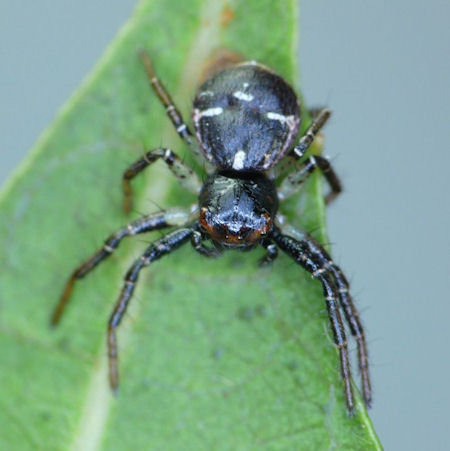
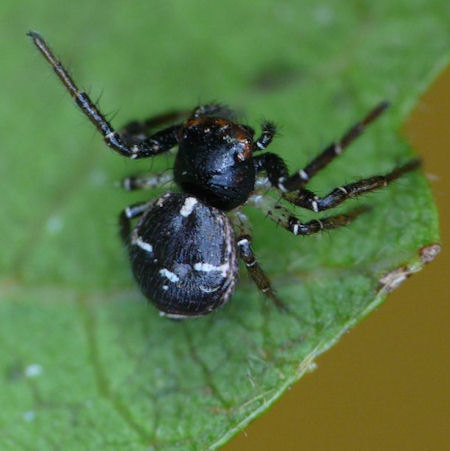
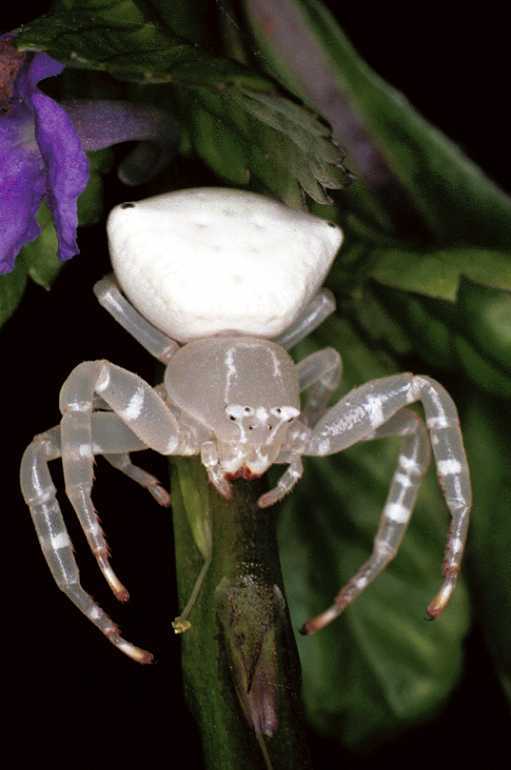
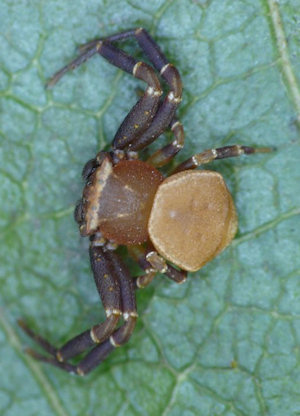
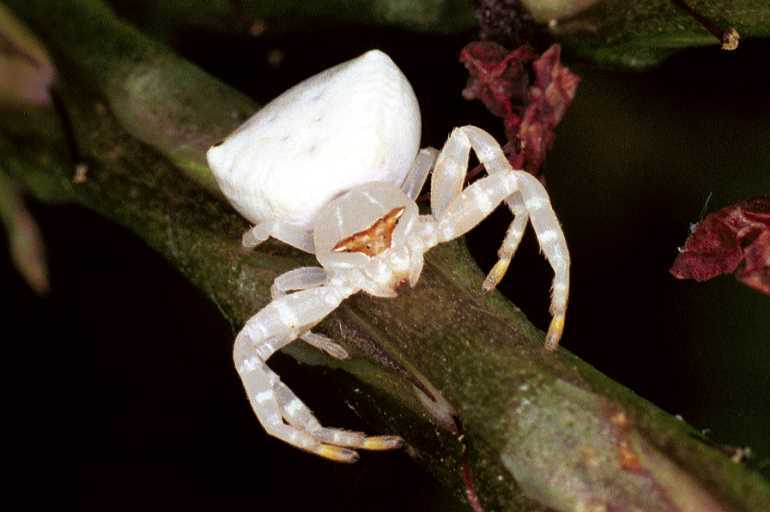
Crab spiders are no active hunters. They make more use of the camouflage
techniques than other spiders. They do not make a web but catch their prey with
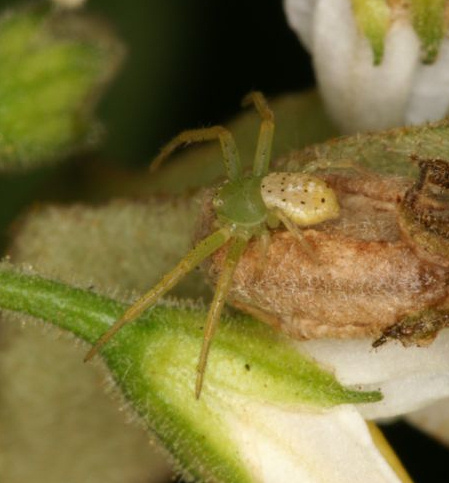
their front legs. The color of the spider is adapted to the hunting terrain they
use and is mostly extravagant. They remain unmoved until the prey arrives and
catches it. With a poisonous bite (not dangerous to humans) they kill their prey
and suck it dry. They can be found on flowers or leaves of plants. Often the
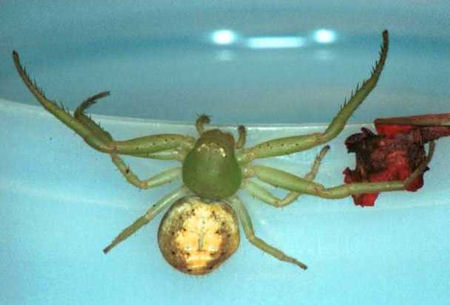
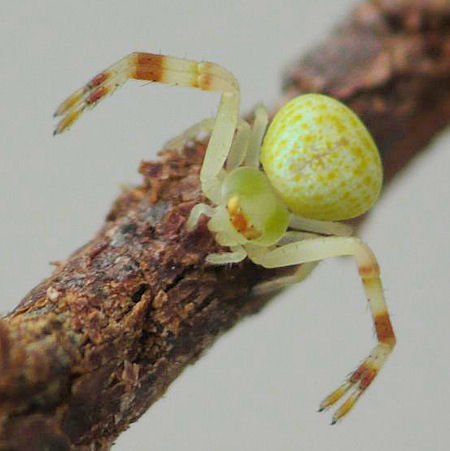
crab spider remains for days, even weeks at the same spot. The front two legs,
that are often larger and stronger than the other six, are held sideways, ready
to catch the prey immediately. Because they sit on easily spotted places they
are also easy to catch by the predators. When they spot a possible enemy they
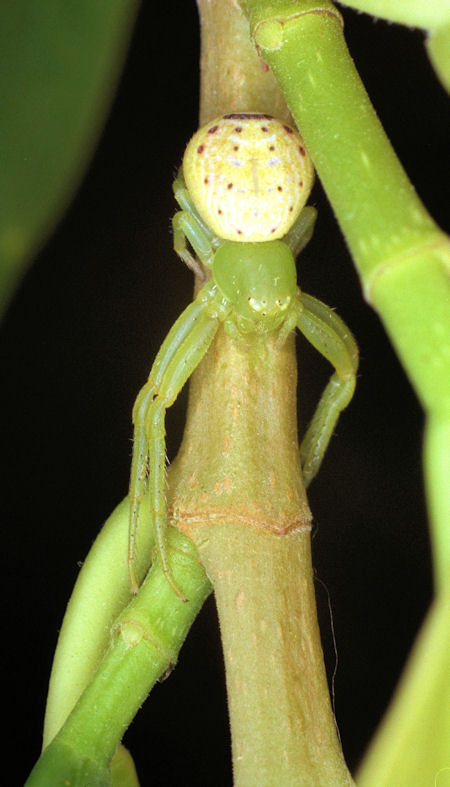
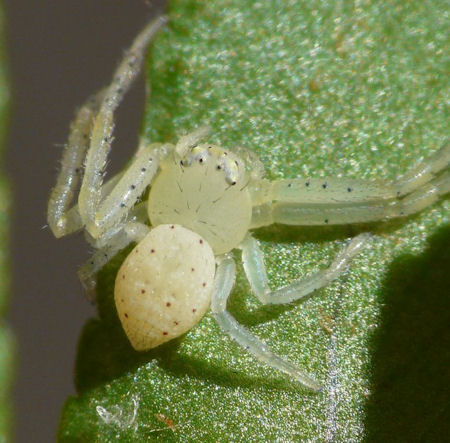
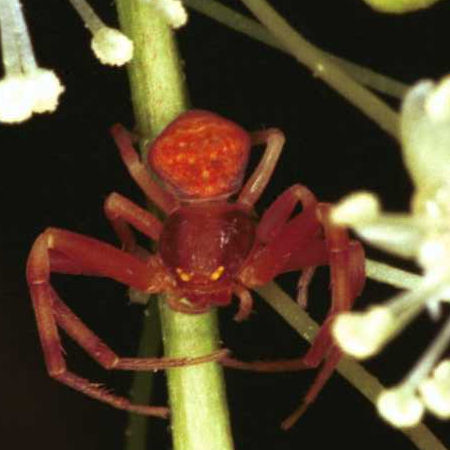
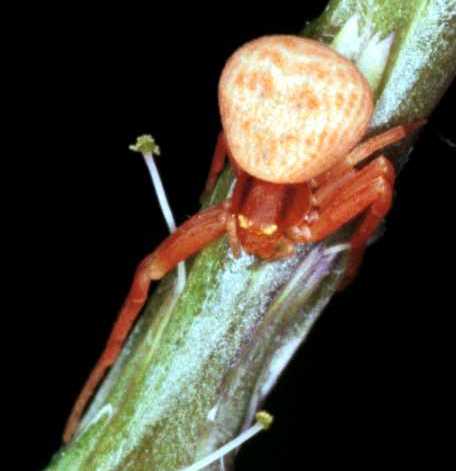
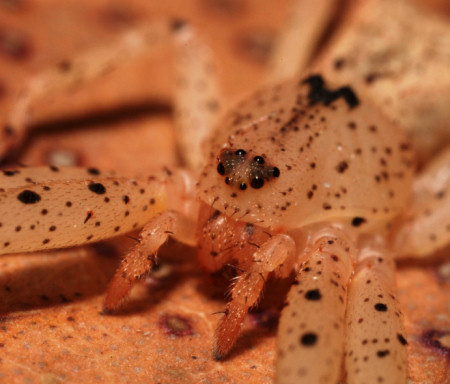
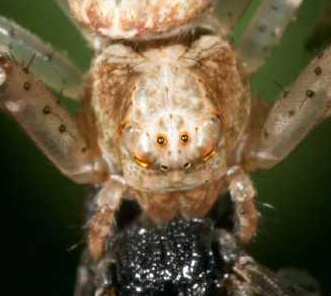
move quickly at the other site of the flower or leave. Their eyesight is
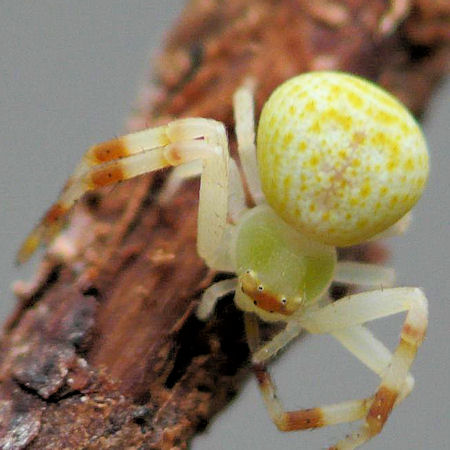
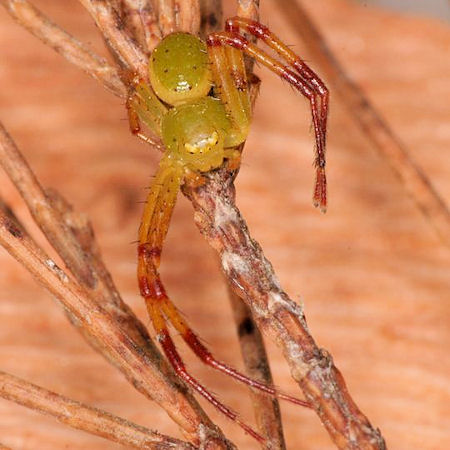
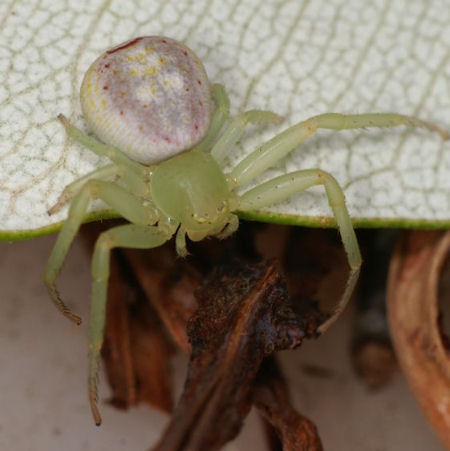
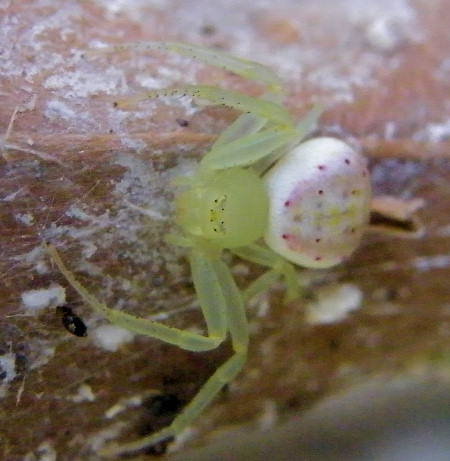
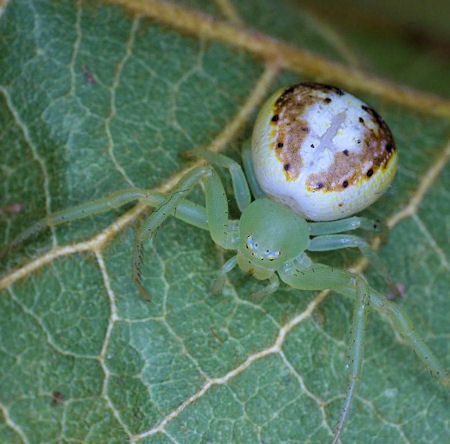
excellent developed as can be seen on the pictures. They have normally two big
front eyes.
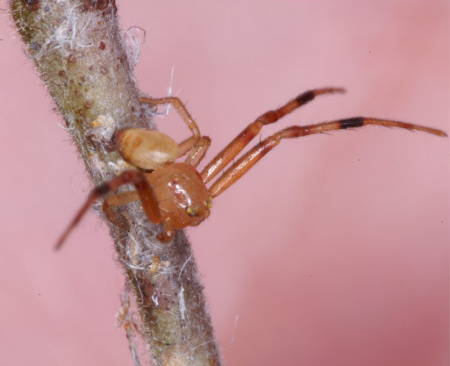
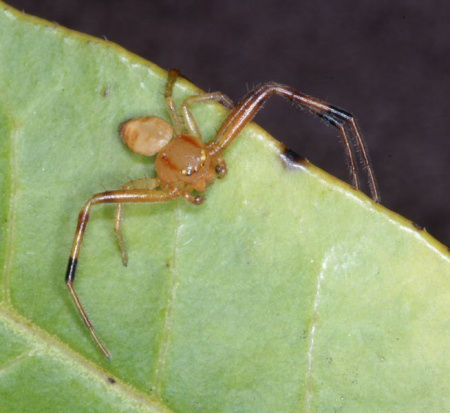
Crab spiders are easy recognizable if you tease them. They widen their legs and
move sideways like a crab. Their size varies between 4 - 10 mm.
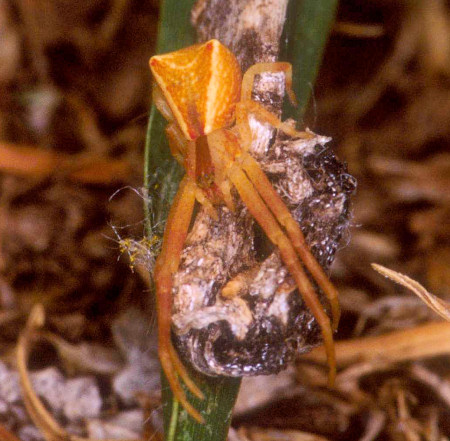
The females usually stand guard with their egg sacs. The egg sacs are fastened
to the vegetation and are usually flat.
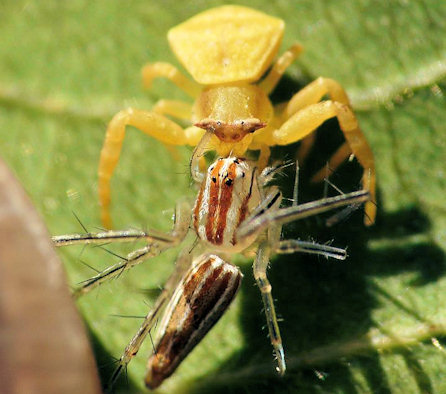
The small males often present a prey before they try to copulate. 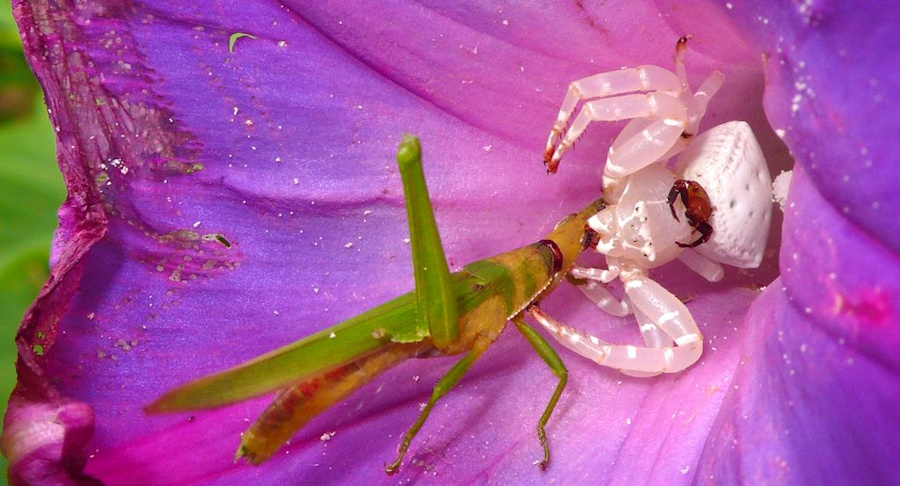
Having sex and your largest meal ever. See the small brouwn male on her back.
Thomisus spectabilis with a grasshopper. Picture by Tony
Bailey
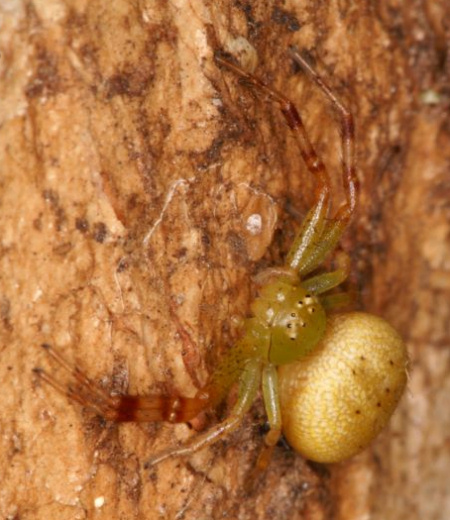
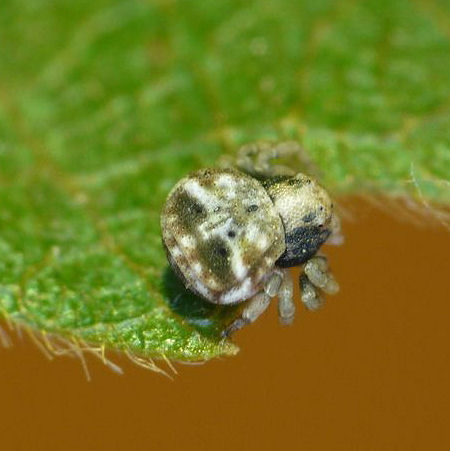
Genus Bomis
The only member is this genus and only occurring in
Australia. It is a around 2 mm tiny brown greenish spider. Maybe it is the
smallest species in this family. It is widespread in Northern and Eastern
Australia. She hides in a bend leaf secured with silk and this is also the
place where she lays her eggs. |
|
 |
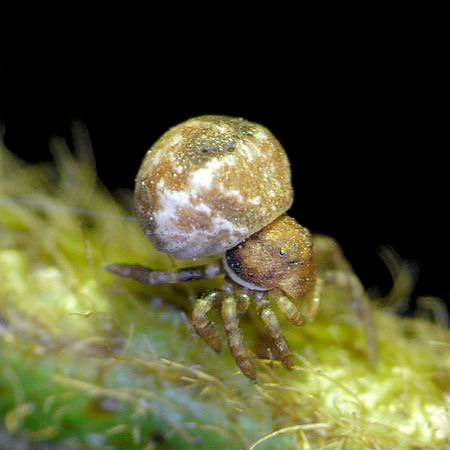 |
| Bomis larvata by Robert Whyte |
Bomis larvata by Robert Whyte |
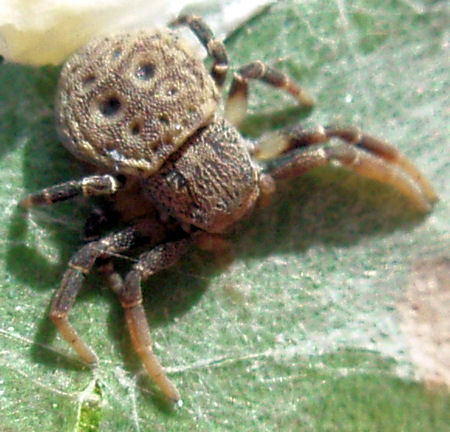
Genus Cymbacha
| This spider occurs in QLD and NSW. Seven species are
described. The spider hides in a rolled leaf. These spiders measure 3 - 7
mm. Males are smaller than females |
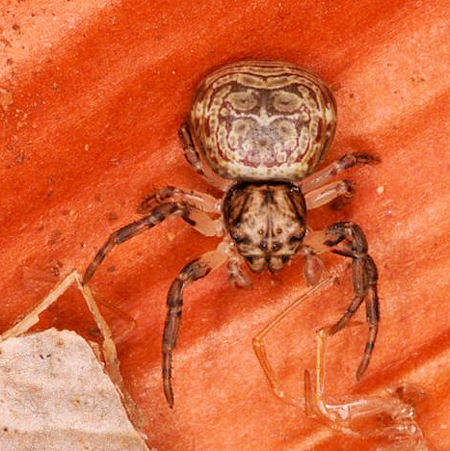 |
| |
Cymbacha saucia |
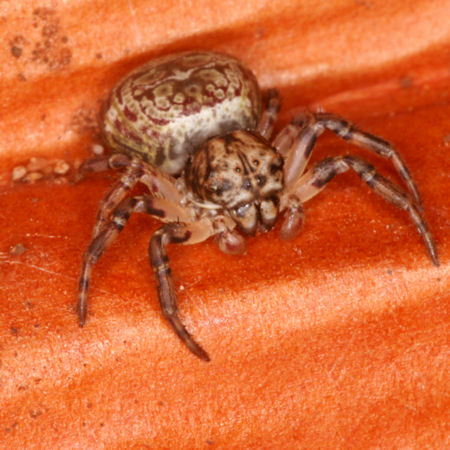 |
 |
| Cymbacha saucia |
Cymbacha ocellata by Robert Whyte |
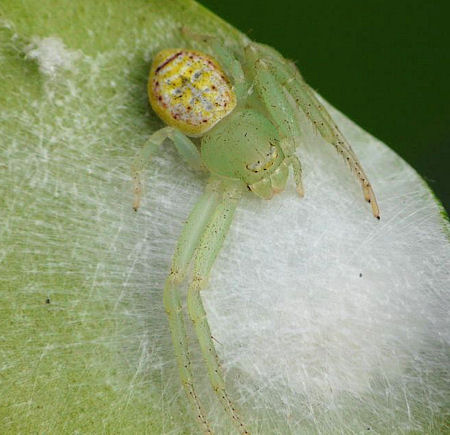
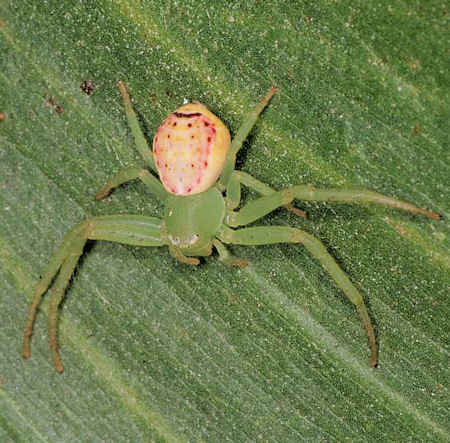
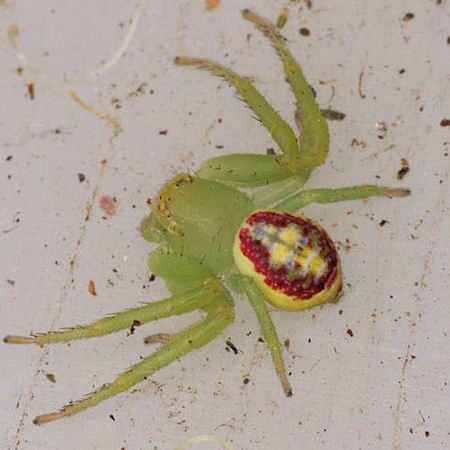
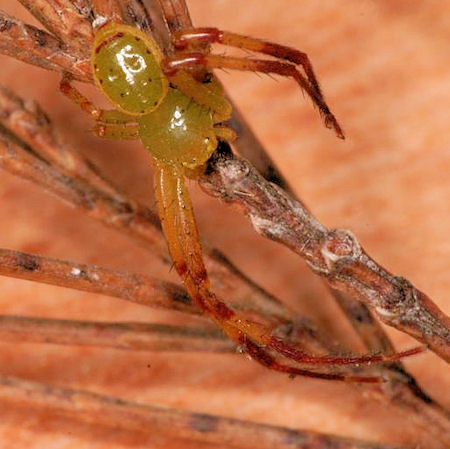
Genus Diaea or flower spider
This spider hides between vegetation, especially in or nearby a flower. Their
color is well adapted to its surrounding. Their size is between 5 and 7 mm.
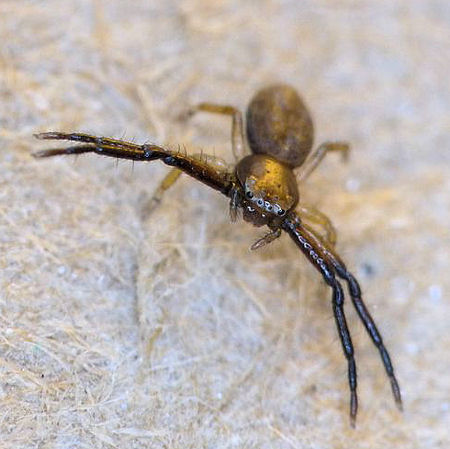
Genus Hedana
Hedana is a little spider with a long narrow abdomen. It lives between
foliage and is difficult to spot.
 |
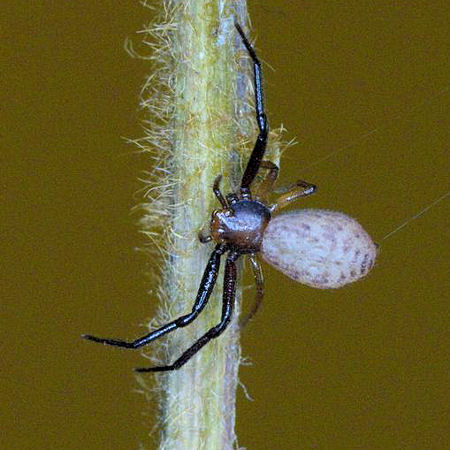 |
| Hedana ZZ512 by Robert Whyte |
Hedana ZZ512 by Robert Whyte |
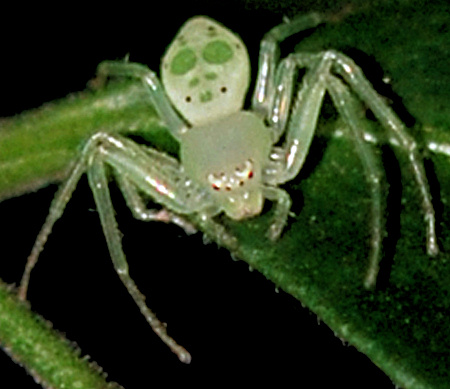
Genus
Lehtinelagia? New species
These new species were found near and in Wingham, NSW.
They look similar to Diaea above and Poecilothomisus
below.
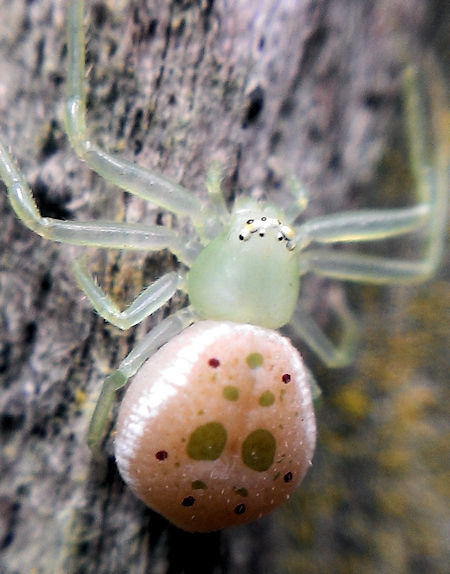
ZZ659 Pizza spider Picture and name by Julie
Newton
|
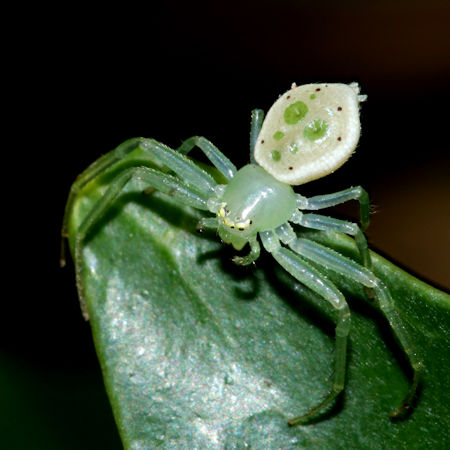
ZZ659 Picture by Julie Newton |
|
|
ZZ659 Picture by Steve Woodman, NSW |
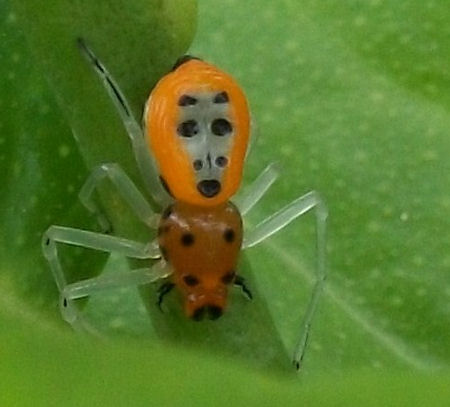
Genus Poecilothomisus
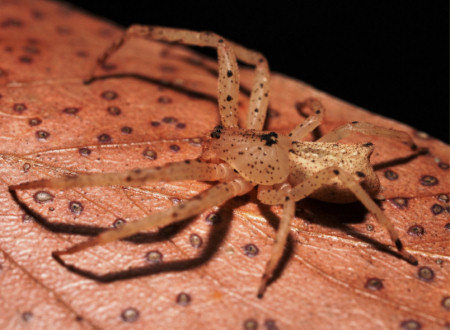
This attractive spider has a remarkable apprearance with
her orange body, the seven dots on her abdomen and the shiny white legs.
It occurs in NT and QLD. The female has a length of 10 -12 mm.
It is usually found amongst trees along creek banks.
|
|
|
Poecilothomisus speciosus NT by Marrissa Howard
& Ben McCoy |
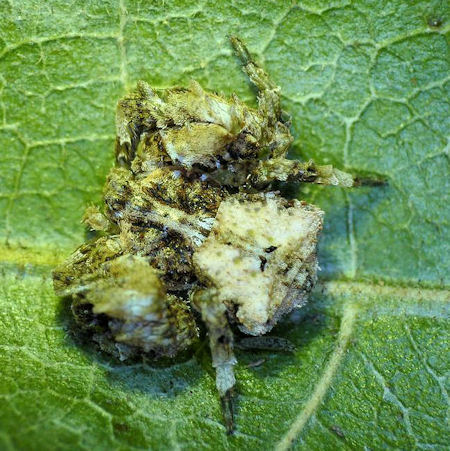
Genus Porropis
 |
|
| Porropis ZZ603 by Robert Whyte |
|
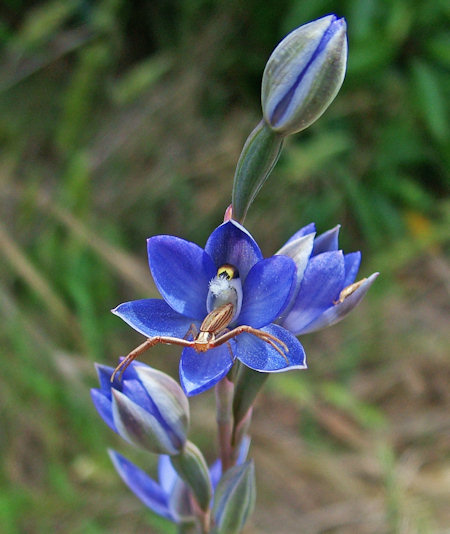
Genus Runcinia
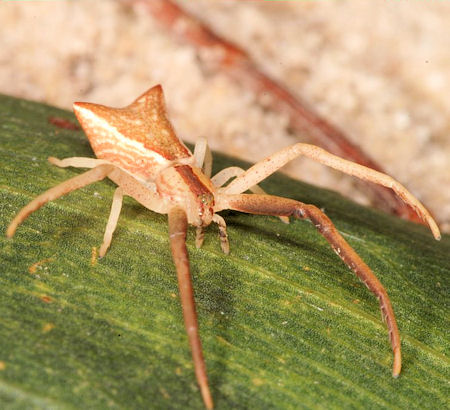
Runcinia acuminata is the only member of this
genus in Australia. The name Runcinia elongata is not used anymore.
The long oval abdomen has long stripes at the side. Eyes are small. They
occur Australia-wide. The female reach a length of 10 mm and the males 6 mm.
Females guard their egg-sacs they camouflages with fragments of grass
flowers and seed-heads.
Spiders are found on bushes, flowers and in seeding heads of grasses.
Here she is found on the orchid Thelymitra adorata.
The orchid is a terrestrial orchid growing near wetland edges with
melaleuca and eucalypt. It is critically endangered with fewer than 100
plants located this past flowering season (2011). |
 |
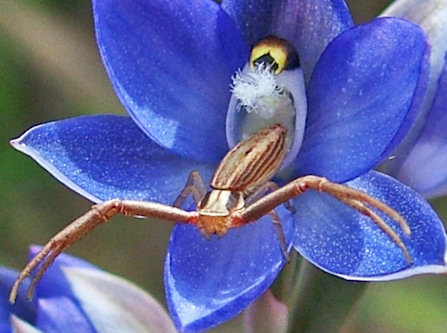 |
| Runcinia acuminata on orchid Thelymitra adorata
photo by Boris Branwhite, Wyong terrestrial orchid research, NSW |
Genus Stephanopis
Stephanopsis can be recognized because it is adorned with spines and
tubercles. They can be found on rough bark an low foliages.
Genus Sidymella
Genus Tharpyna
Genus Thomisus
This is the only species known in this genus in Australia. Its name is
Thomisus spectabilis.
As can been seen on the picture below they even catch bees. The spider seizes
the bee by its front legs and bites it in the neck. The spider keeps its hold on
the bee till the bee gives up its resistance.
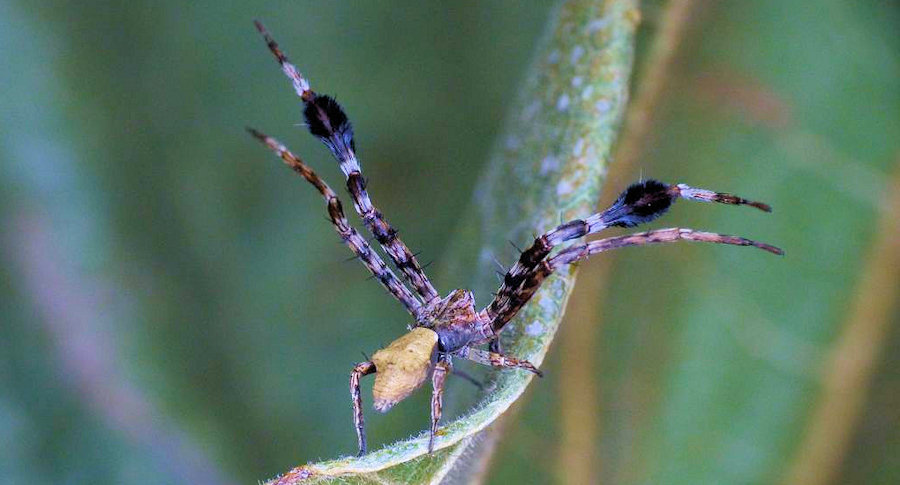
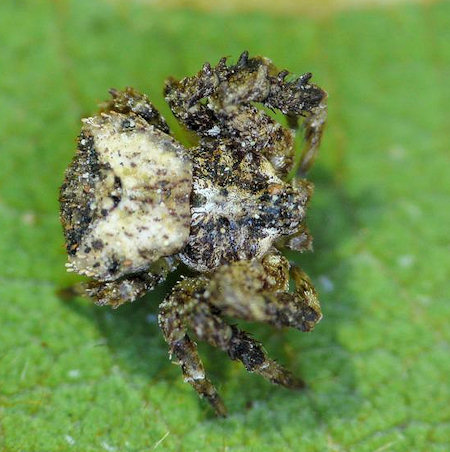
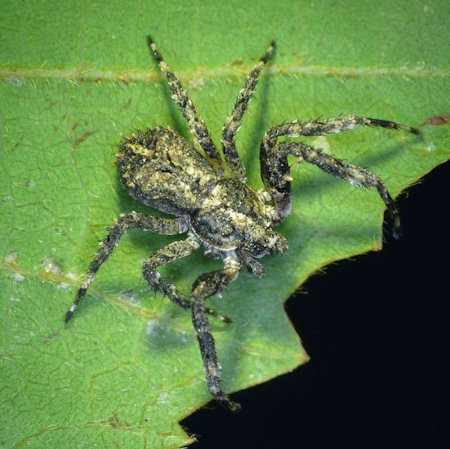
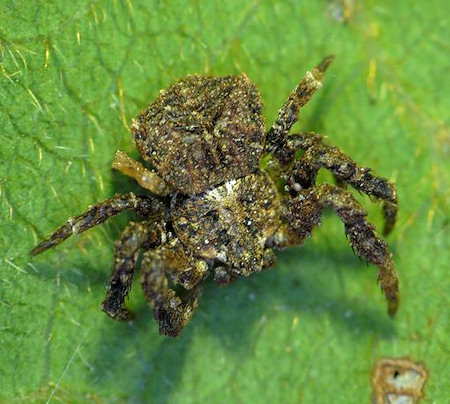
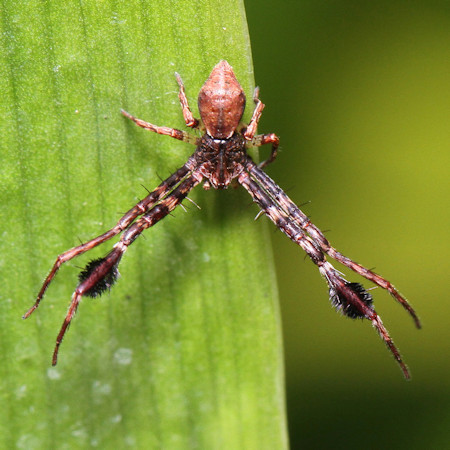
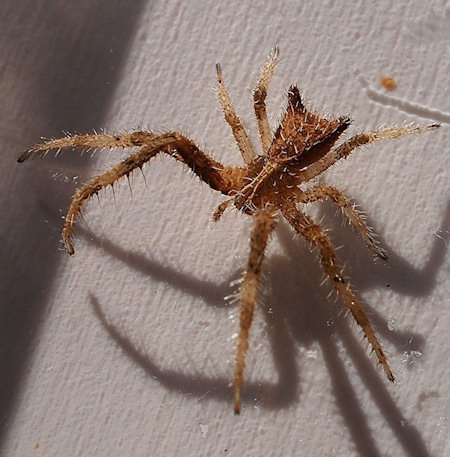
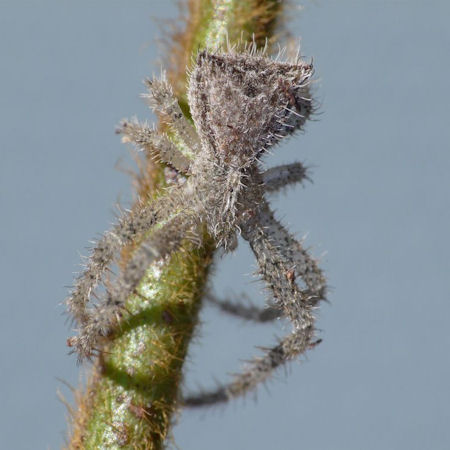
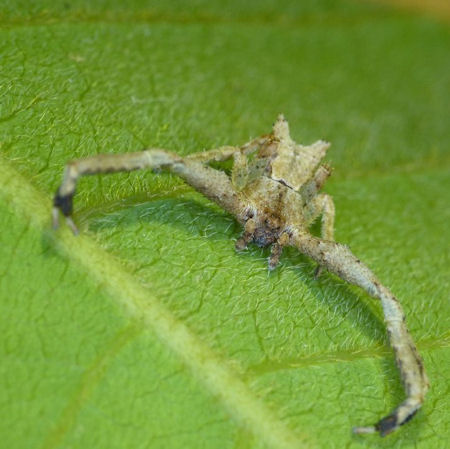
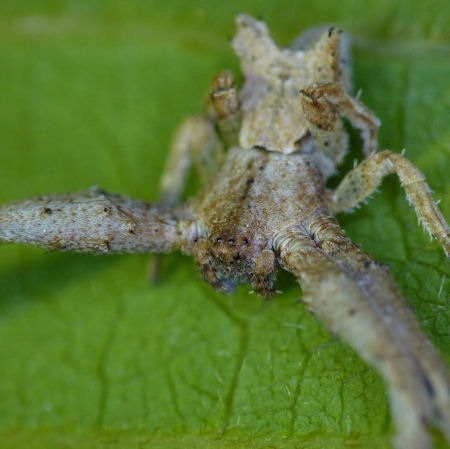
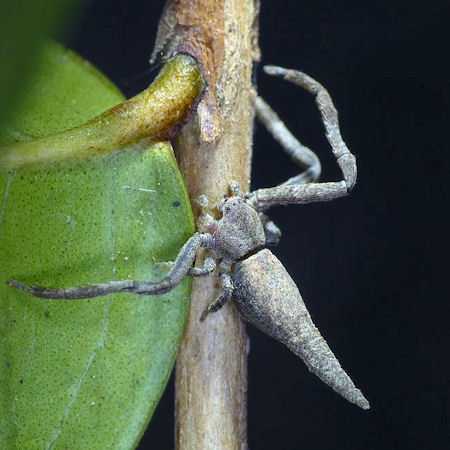
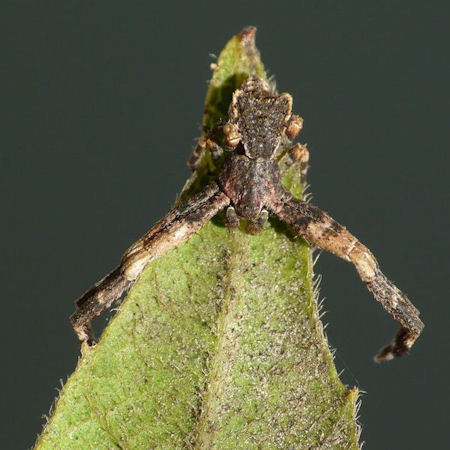
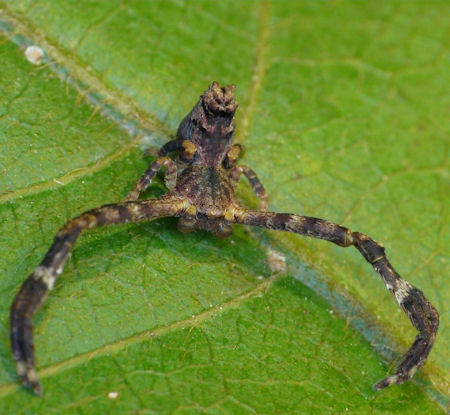
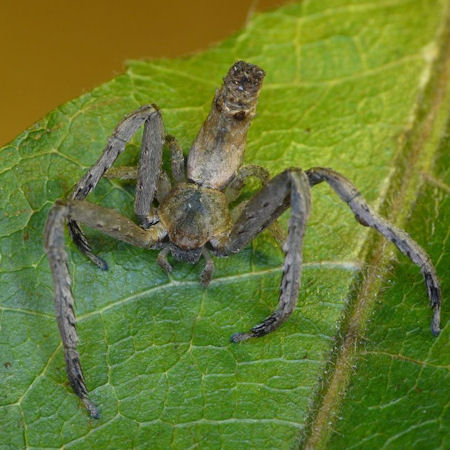
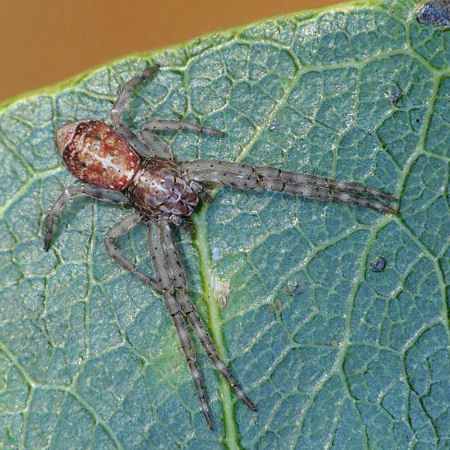
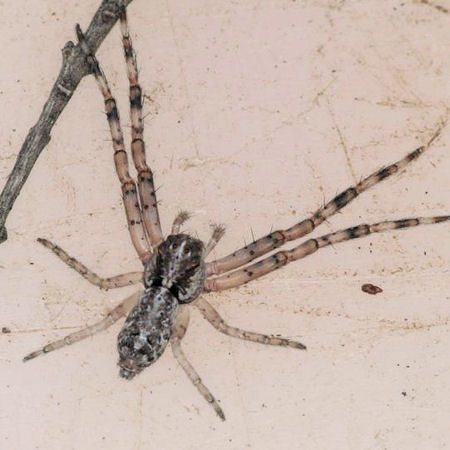
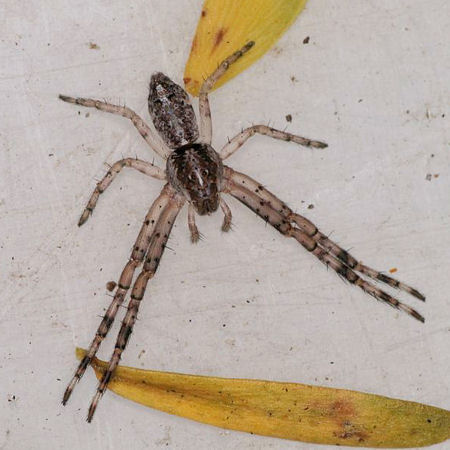
Genus Tmarus
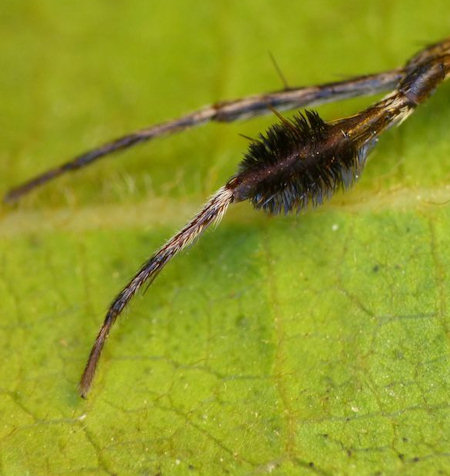
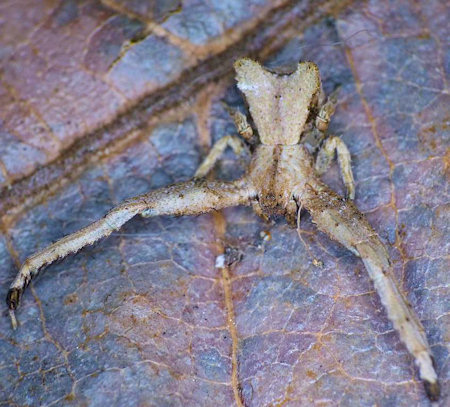
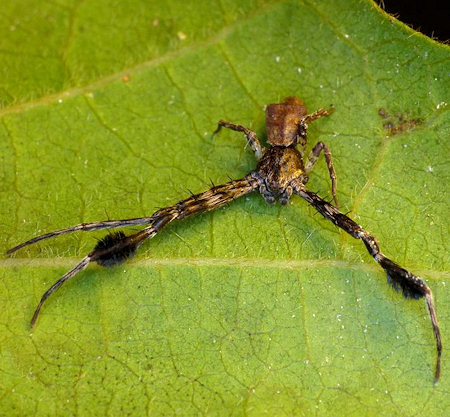
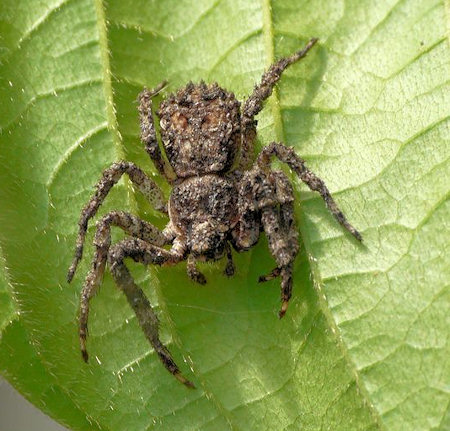
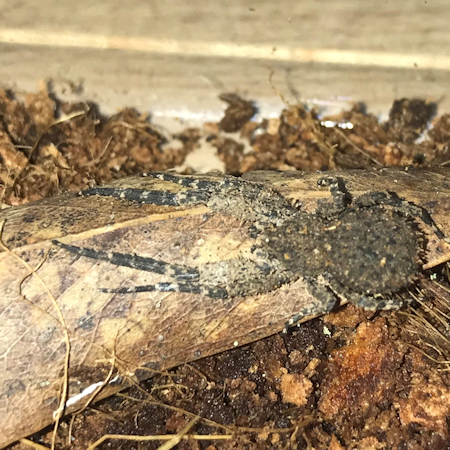
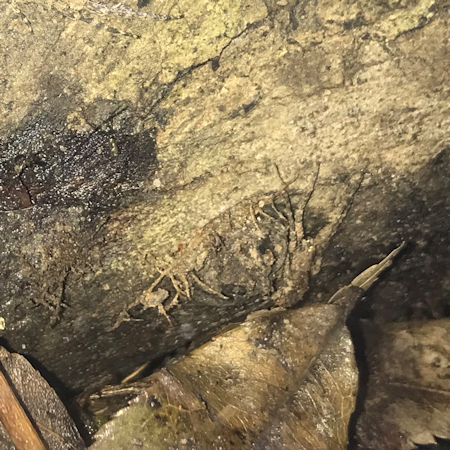
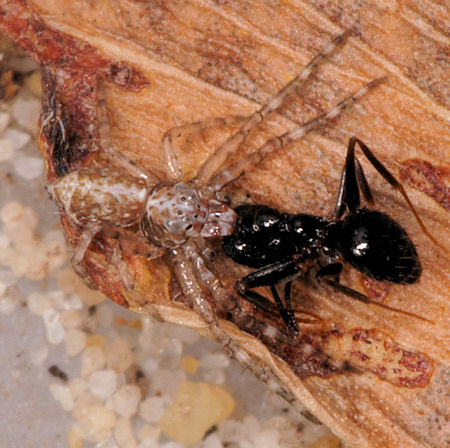
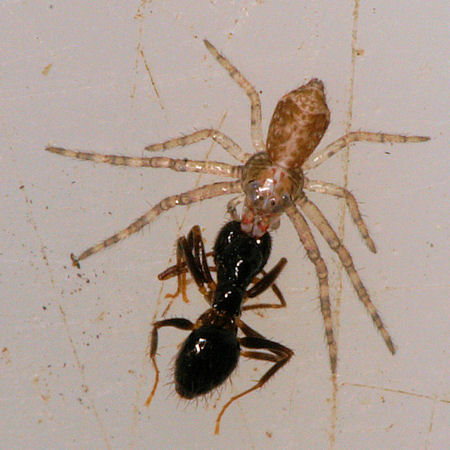
| Nine species are present in Australia. Their color is
gray/brown and the are well camouflaged because they can be found along the
margins of dead and living leaves or dead twigs. They build small retreats
by folding the tip of leaves or grasses. Tmarus can be found
hanging at the end of a single snare. |
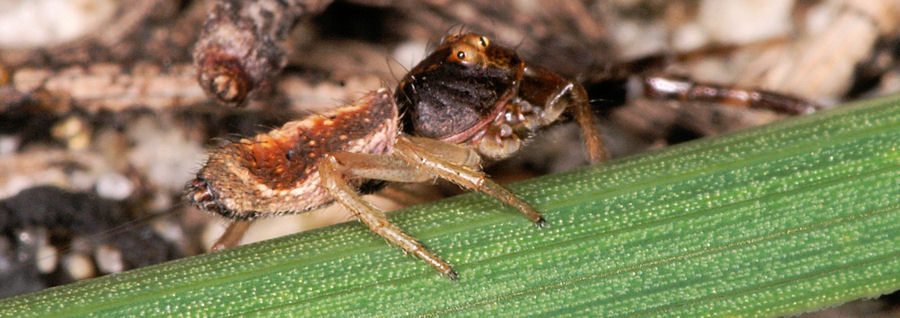 |
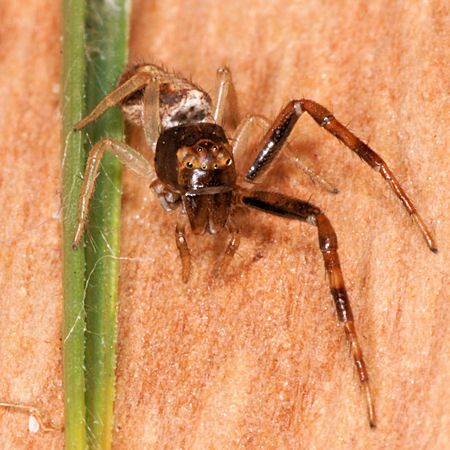 |
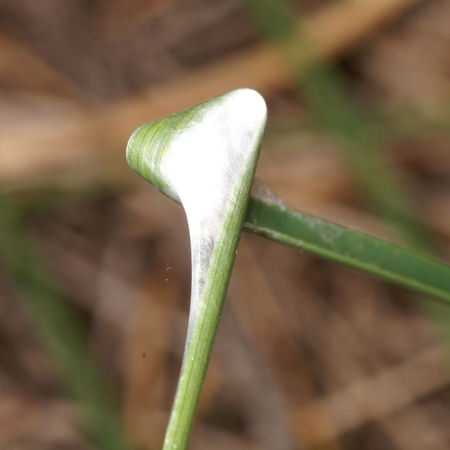 |
| Tmarus marmoreus |
Tmarus marmoreus Hiding place in a bend leaf |
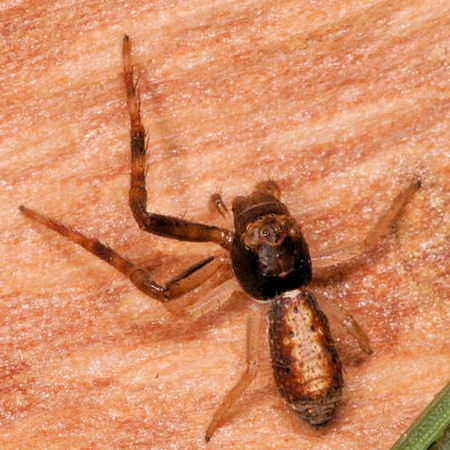 |
 |
| Tmarus marmoreus |
Tmarus marmoreus by Robert Whyte |
|
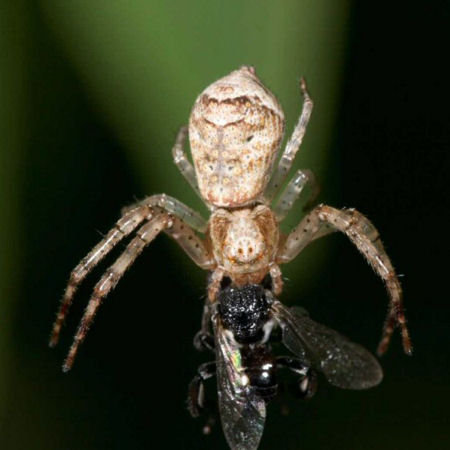 |
| Tmarus cinerascens detail of the cephalothorax. |
Tmarus cinerascens with a prey (by Jurgen Otto) |
 |
 |
| Tmarus ZZ615 |
Tmarus ZZ615 |
 |
 |
| Tmarus ZZ622 |
Tmarus ZZ622 |
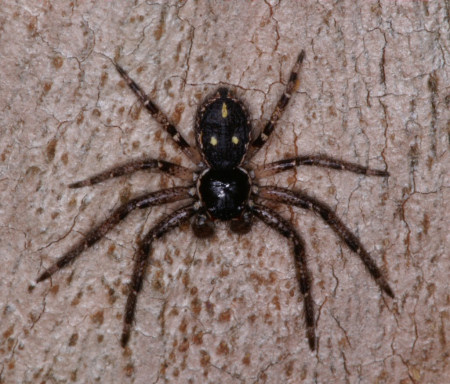
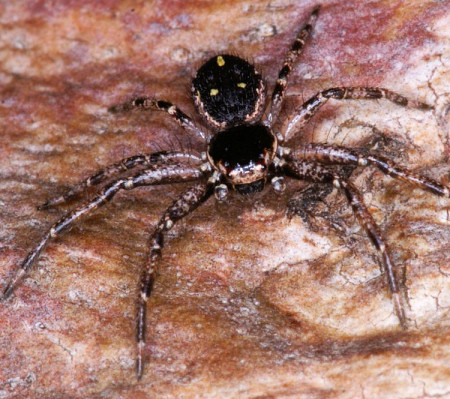
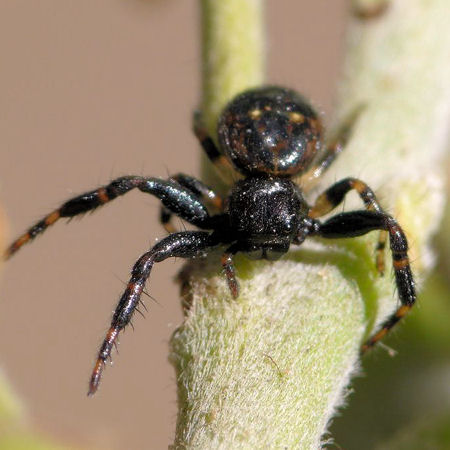
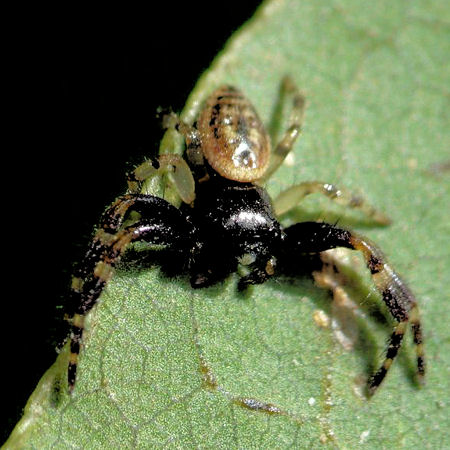
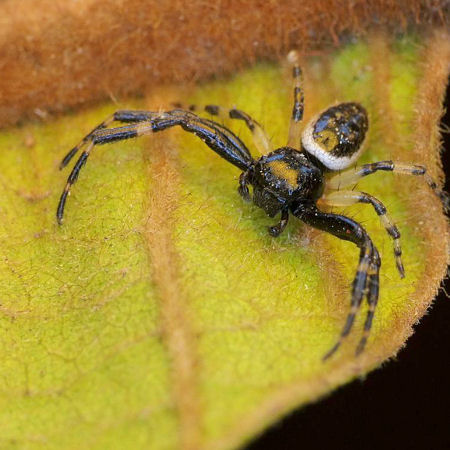
Genus Xysticus
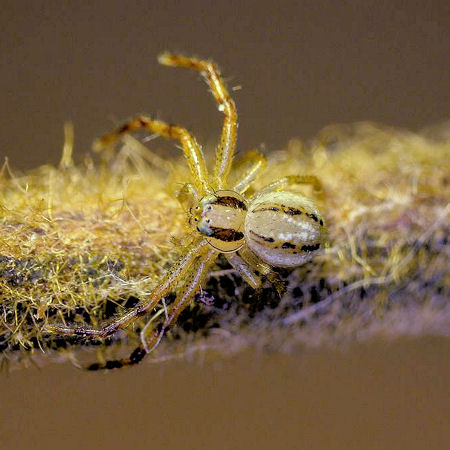
Xysticus is found more on plant itself and bark of trees than on
flowers. The color of the abdomen is therefore light to dark brown and the form
is oval to triangular.
 |
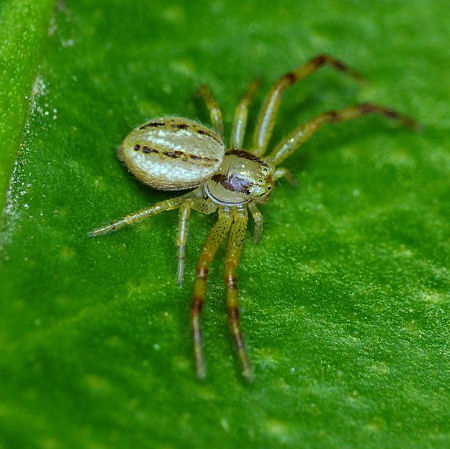 |
| Xysticus bilimbatus by Robert Whyte |
Xysticus bilimbatus by Robert Whyte |
 |
 |
| Xysticus geometres by Robert Whyte |
Xysticus geometres by Robert Whyte |
 |
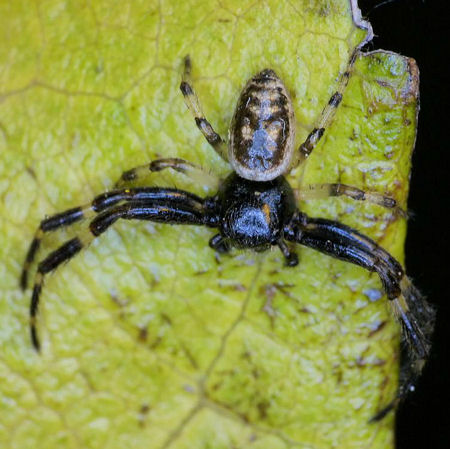 |
| Xysticus geometres by Robert Whyte |
Xysticus geometres by Robert Whyte |
ß
Home
Ed Nieuwenhuys, 6 November 2019
6 November 2019, 27 January 2017,
26 April 2016, 14 April 2012 20 October 2011, 26 February 2011, 24 January 2010, January 4, 2009 Ronald Loggen, 5 December 2005
Copyright ã 1997 - 2019