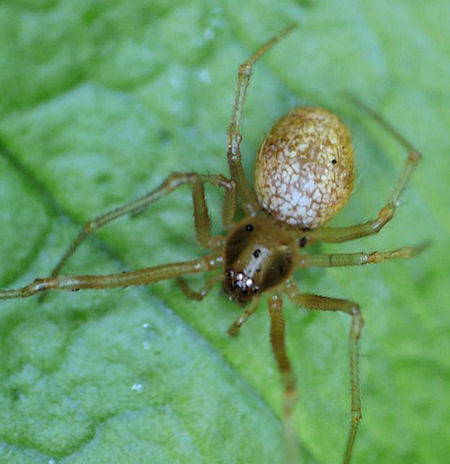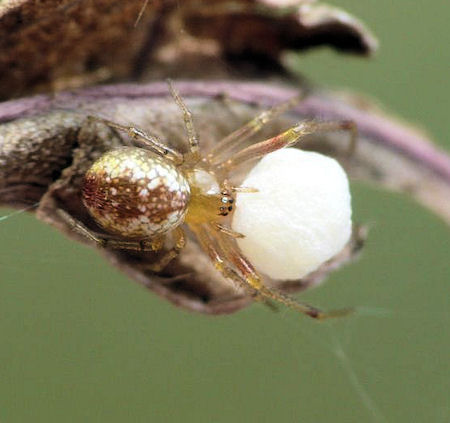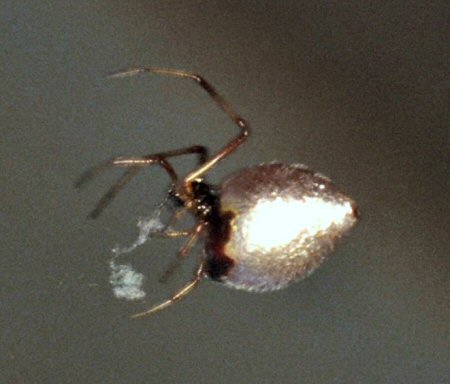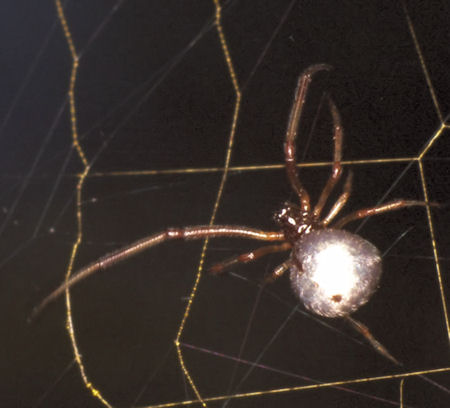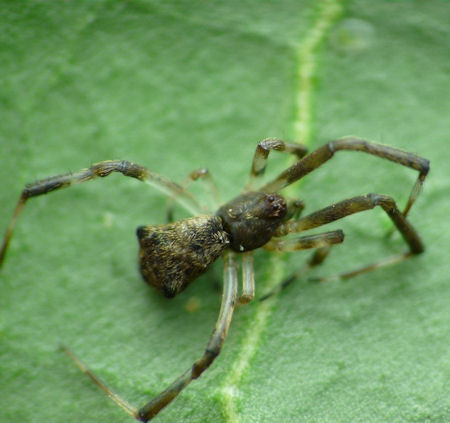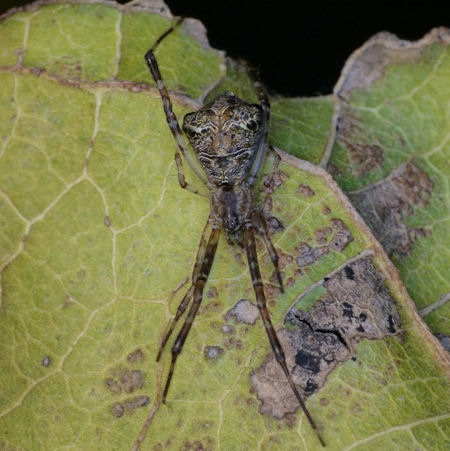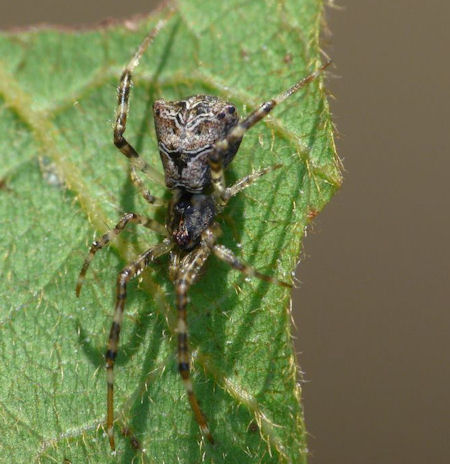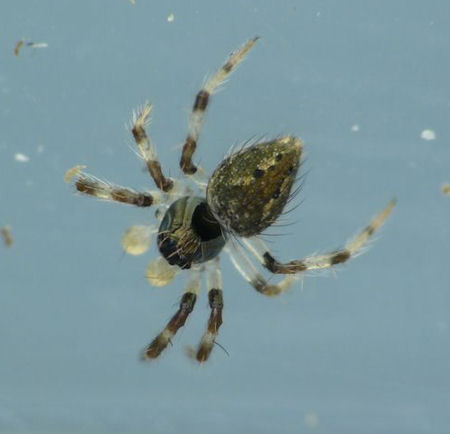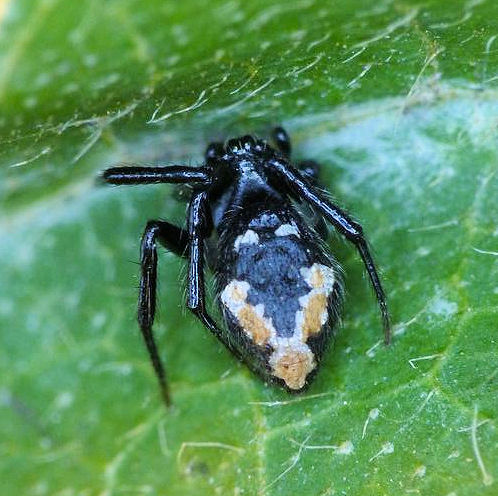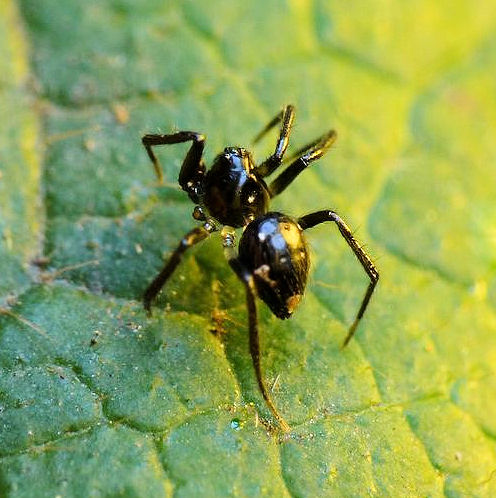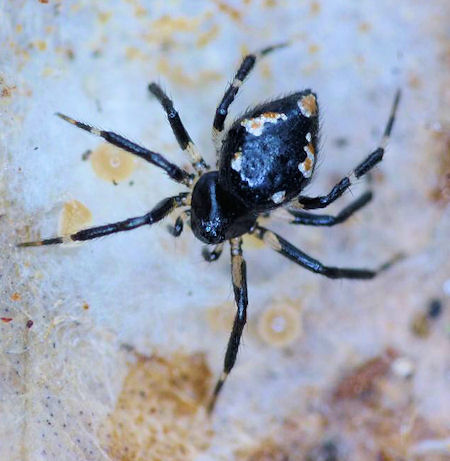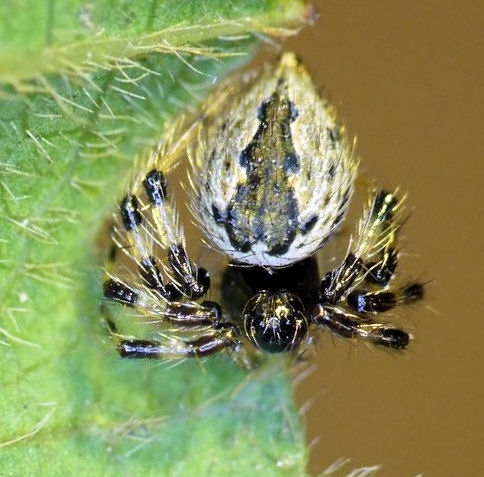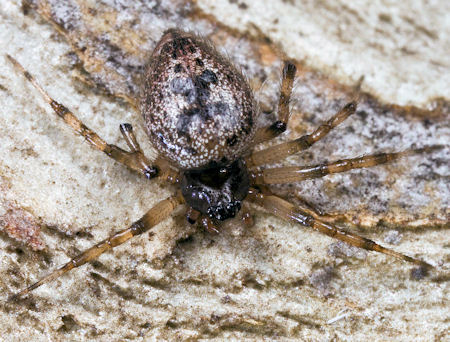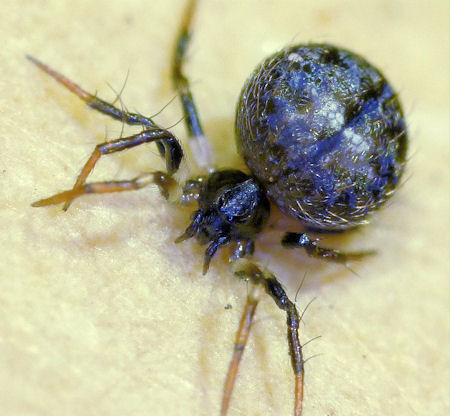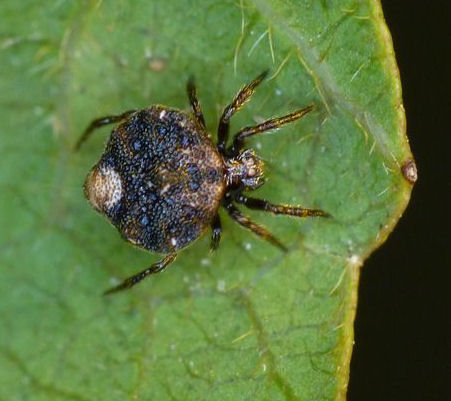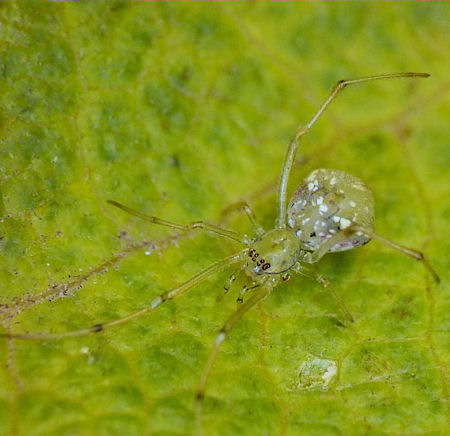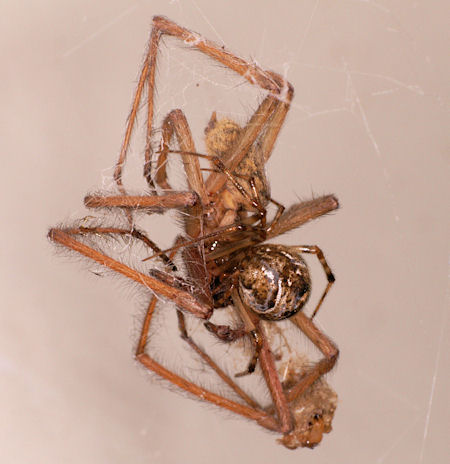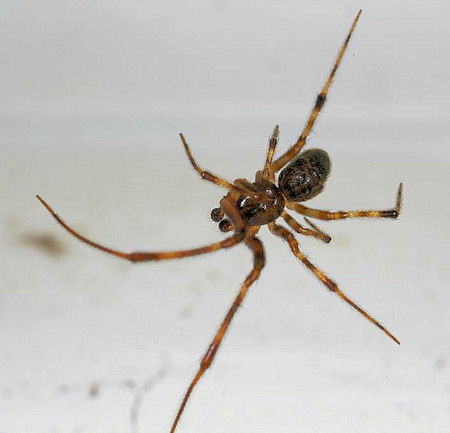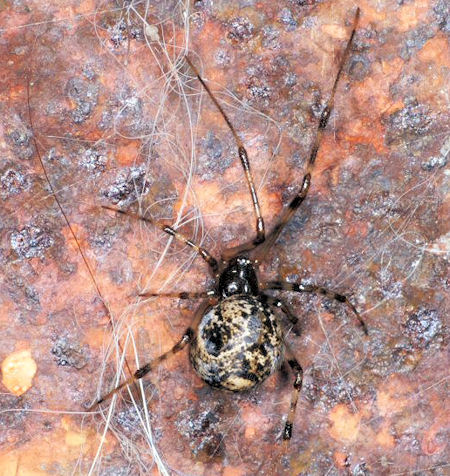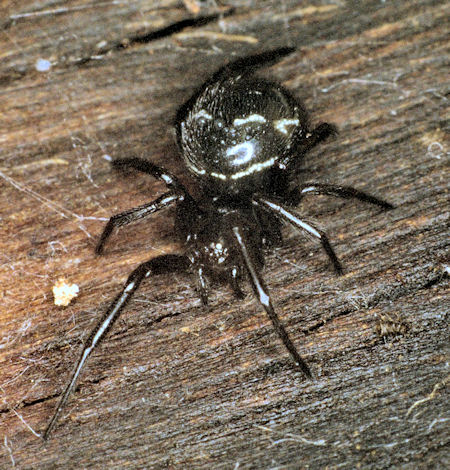
Scaffold web or cobweb weavers or comb-footed spiders

Family Theridiidae


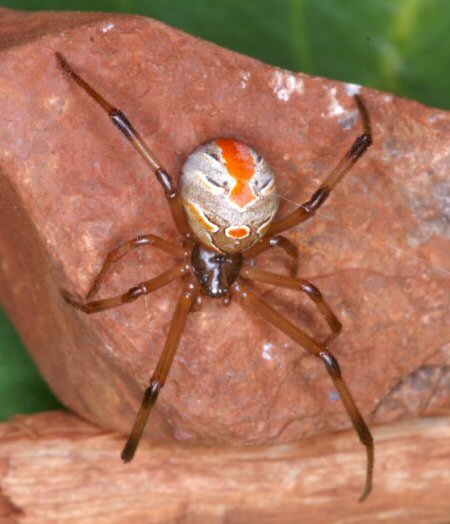
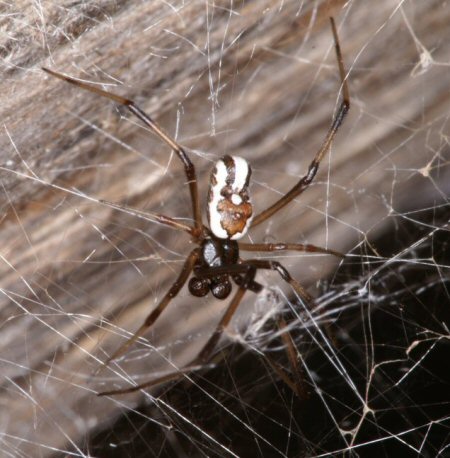
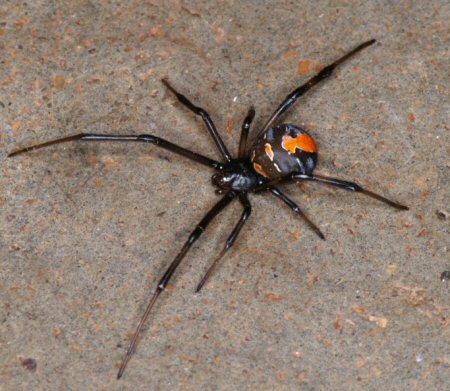
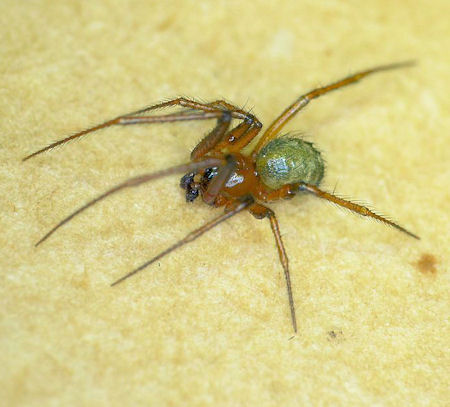
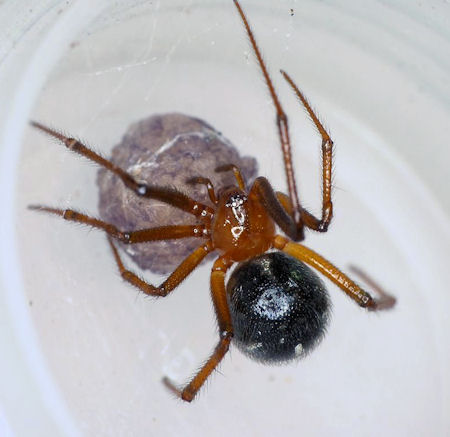
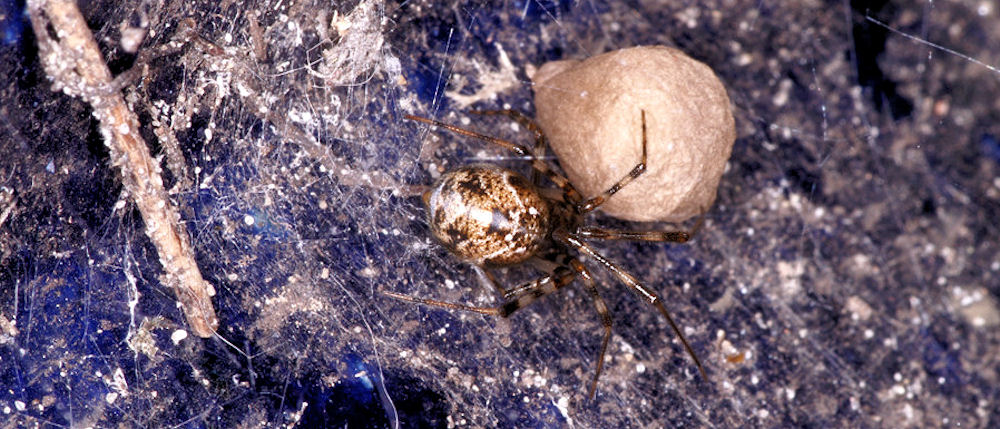
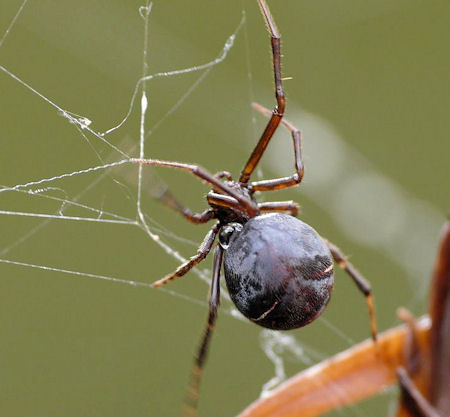
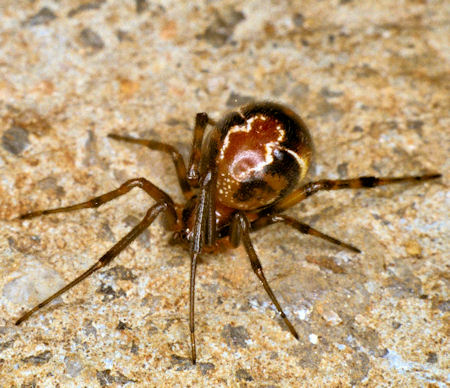
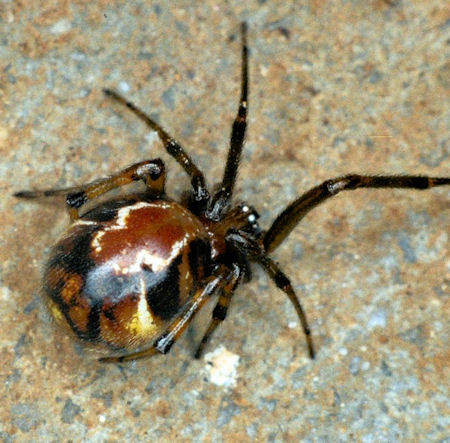
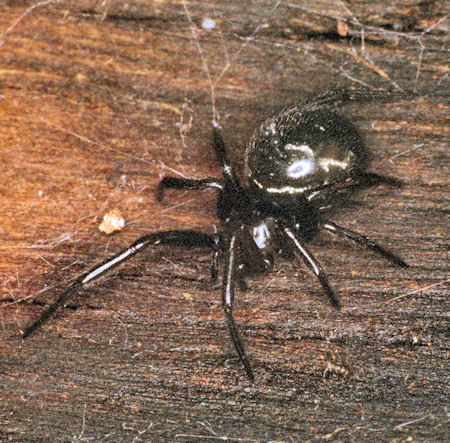
The dangerous black widow or red back, (Latrodectus hasselti) belongs to this family and these spiders are notorious for their poisonous neurotoxic venom.

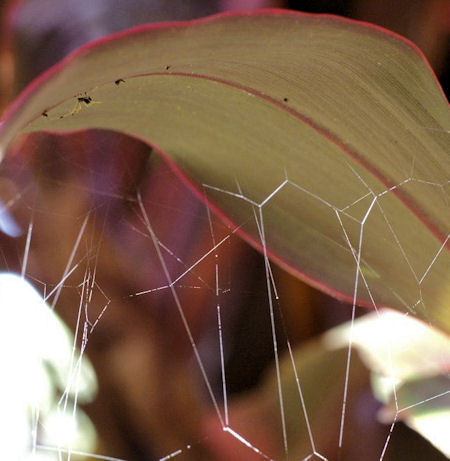
These spiders make a littery web and the webs can be described as an intersecting mass of scaffold work with a central area consisting of a three-dimensional trellis of silk. From the web to the ground are vertical threads with sticky glue at the bottom. If an insect crawls against the thread it will break and the prey will hang in the air awaiting the attack of the spider. Although they are small of size they are violent attackers and do not fear to attack much larger insects than themselves.
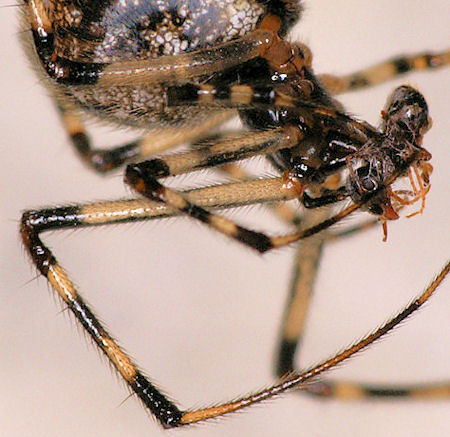
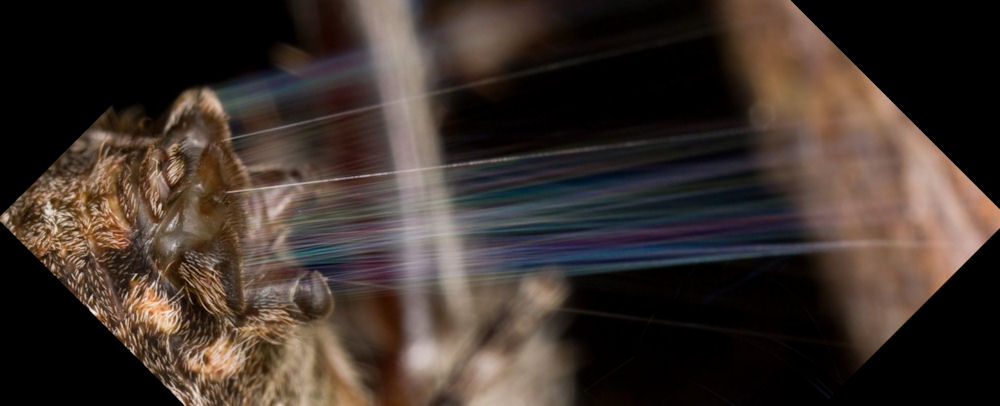
the member of this family are also called comb-footed spider because they have a "comb" on their last pair of legs. The comb is a series of serrated spines which they use to comb out the silk from the spinnerets. This combed silk is not sticky but insects get entangled in this "wool".

In Australia 20 genera and 90 species of this family are described.

ß Home


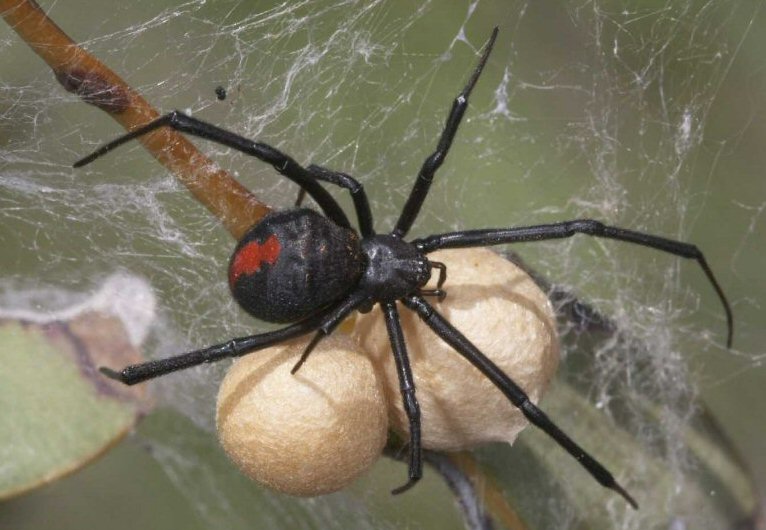
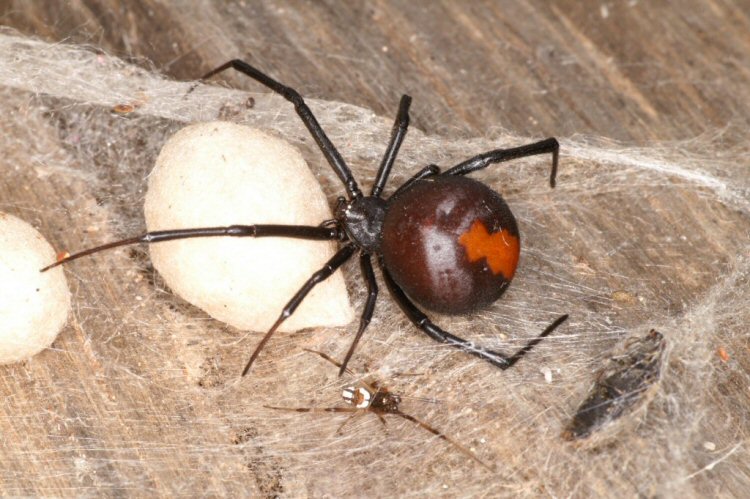
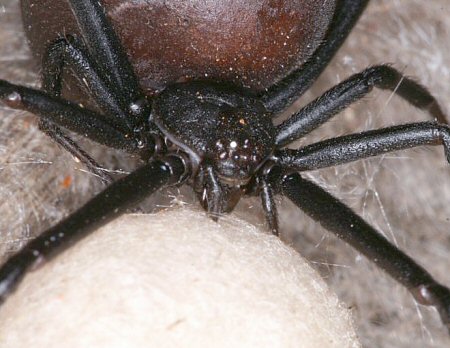
Latrodectus hasselti, "Red-back", Jockey spider or "Black widow"


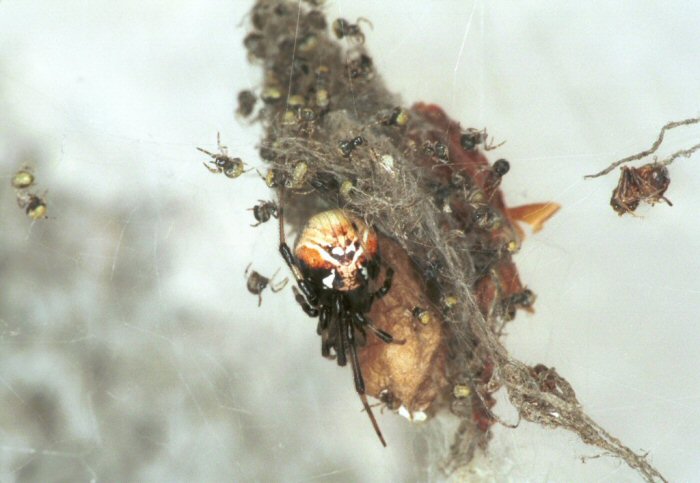
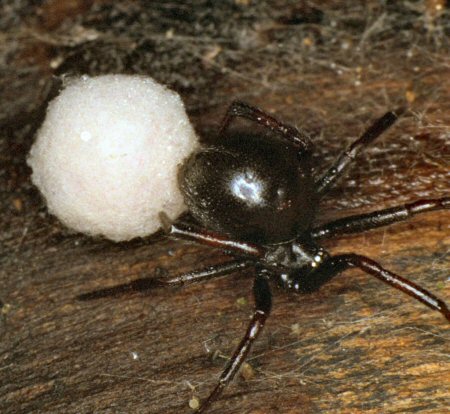
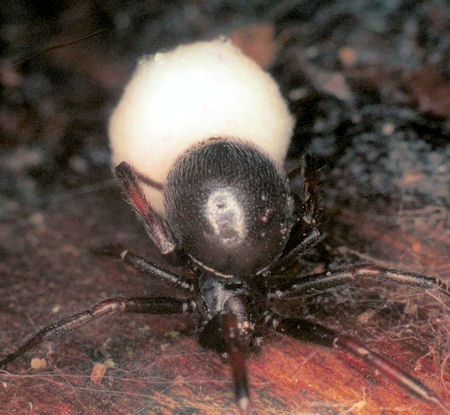
Latrodectus hasselti female guarding her egg-sacs and the very small male below.
Latrodectus hasselti

Survey of 2144 cases of red-back spider bites: Australia and New Zealand, 1963--1976.

Sutherland SK, Trinca JC.

An analysis has been made of 2144 consecutive cases of latrodectism (envenomation by the red-back spider, Latrodectus mactans hasselti) reported to the Commonwealth Serum Laboratories. In the last eight years, notifications have averaged 240 cases per annum. Bites, usually on the extremities (74%), occurred most frequently in the summer months, and in the afternoon or evening. Most victims (79%) were aged between 18 and 50 years and 64.4% of them were males. Males are still often bitten on the genitals or buttocks (9.7% of cases). Local pain, redness and swelling were the most common symptoms, although significant pain was felt at other sites in 39% of the cases. The regional lymph nodes often became swollen and tender within 30 minutes. General effects included nausea, vomiting and sweating, but coma and respiratory failure were very uncommon, probably because of use of specific antivenom. This was administered within 24 hours of the bite in 92% of cases, and within two hours in 70%. Although 11 anaphylactic reactions (0.54%) were reported, no deaths resulted either from the venom or from reactions to the antivenom. Few delayed serum reactions (1.7%) were recorded. The action of the venom is described and the management of red-back spider bite is outlined.

Med J Aust. 1978 Dec 30;2(14):620-3.

A black widow's toxin is 15 times more poisonous than that of a rattlesnake, making her one of the few spiders in the world capable of seriously harming humans.
Due to the good hospital services, deaths from a bite are not recorded any more.
Her size is around 10 mm, the male is very smal and measures. Only in her final moult she gets her black colour.

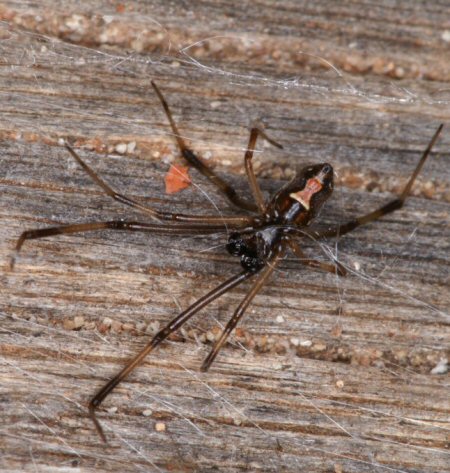
The male is creamy brown of colour and with a white hour-glass pattern on the underside of his abdomen. He is about 3 mm long.

Latrodectus builds her web in dark places near the ground, preferring the sheltered sides of buildings, abandoned rodent holes, or openings in stone outcroppings. She seldom ventures indoors, but anyone living in black widow territory should be aware that she sometimes makes a home in outbuildings such as woodsheds or outdoor toilets. The web is easily recognized by its tangled appearance, and a series of vertical trap threads extending to the ground. The web silk is extremely strong. Crawling insects getting stuck on the sticky threads are quickly lifted into the web where they're wrapped in layers of silk, injected with venom, and sucked dry. She lays 50 - 200 eggs usually in 4 or 5 egg-sacs. Female mature over a period of 4-8 month and males in a 2-3 month period. The female can live up to three years and males only 6 months. After 14 days the spiderlings emerges from the eggs. This emerging is often correlated on the onset of rain when temperatures are low and humidity high. The spider are cannibalistic and. The spider leaves the web by a process known as "ballooning". A thread line of silk is released until the drag of the air is strong enough to lift the young spider in the air.

There is a dispute whether she is a variant of the almost extinct New-Zealandic Kapito (Latrodectus mactans).

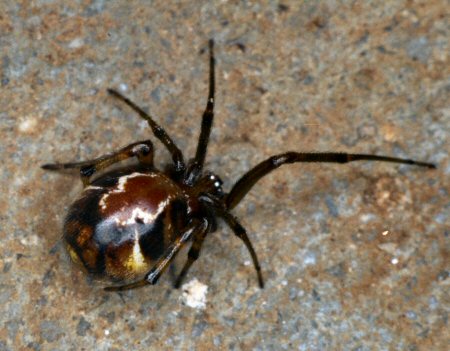
Juvenile (young) Latrodectus hasselti before her last mold where she gets her black suit.with red spot(s).
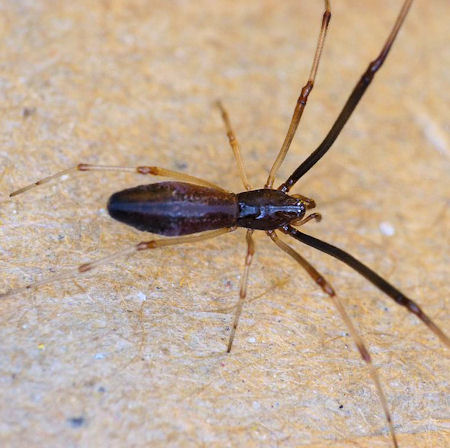
Latrodectus hasselti male from above (dorsal) side Latrodectus hasselti male from below (ventral) side
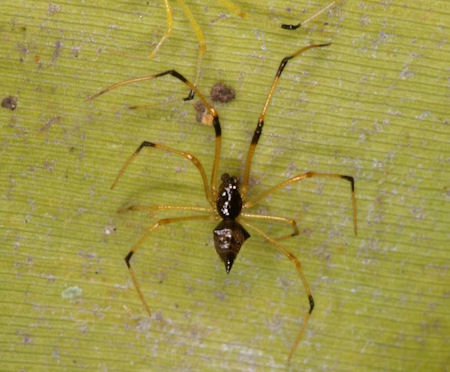
Latrodectus? ZZ012 Latrodectus hasselti in Nyang station (Emu creek) Western Australia

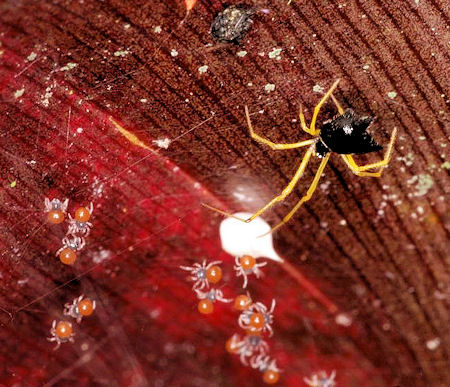
Latrodectus? ZZ012 with youngsters Latrodectus? ZZ012

GenusAchaearanea


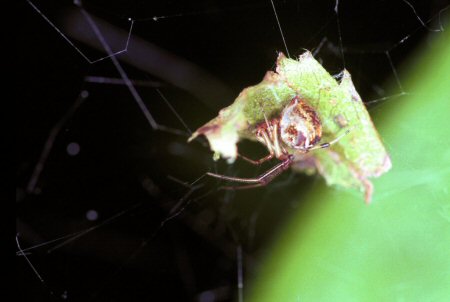
Achaearanea lunata
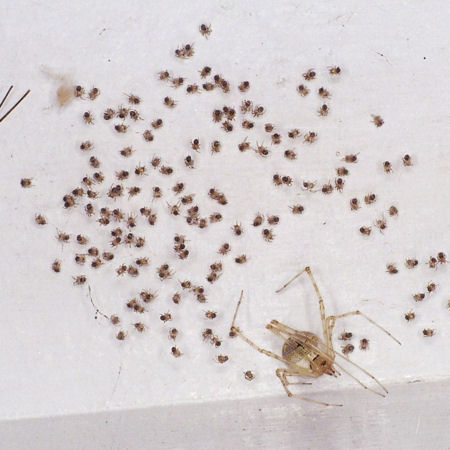
(European species) with youngsters.

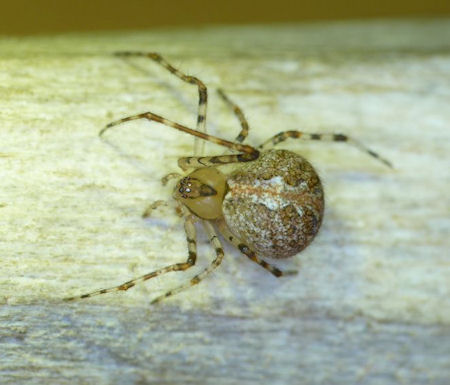
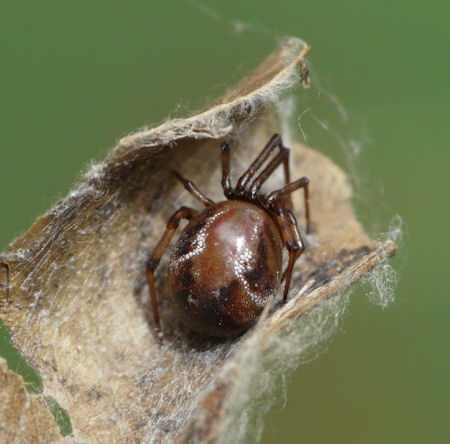
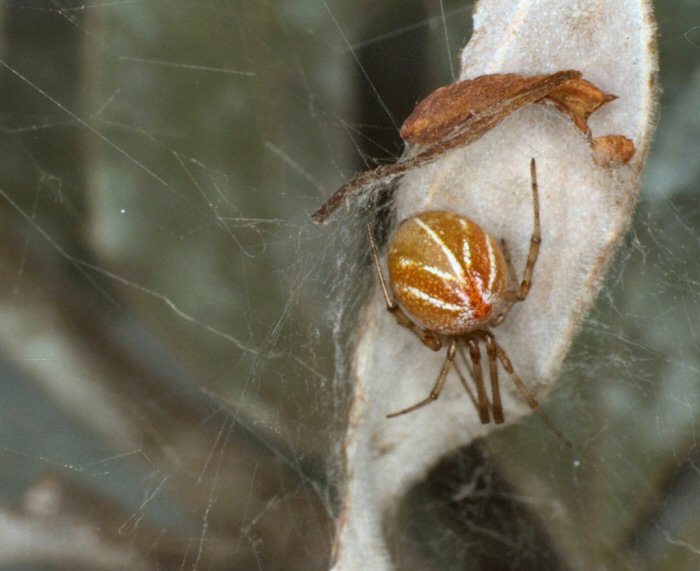
These spiders build untidy tangled webs amongst trees and along walls. Their webs sometimes contains a leaf or other debris that is used as shelter. Their size varies between 7 and 12 mm.
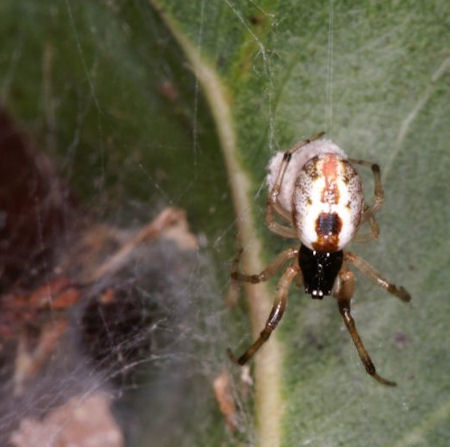
The high abdomen and the ringed legs are characteristic for the genus.
The male and female may occupy the same web for some time before mating occurs. After mating the female constructs up to eight pear-shaped papery brown egg-sacs.
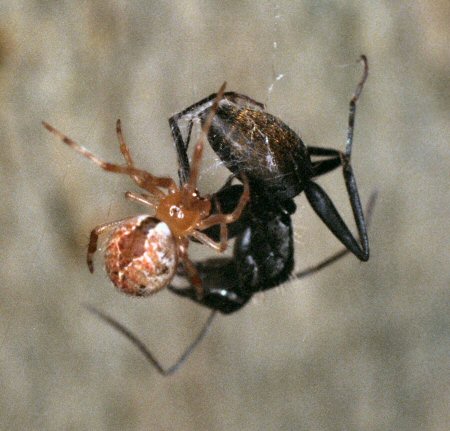
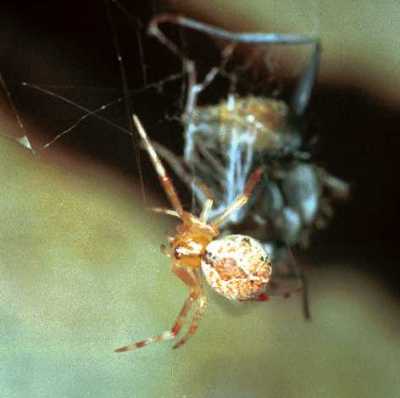
These spiders feed on all kind of insects, even on ants!
Achaearanea riparia (European species)  
Achaeranea

Achaearanea/Theridon? ZZ011 with ant.

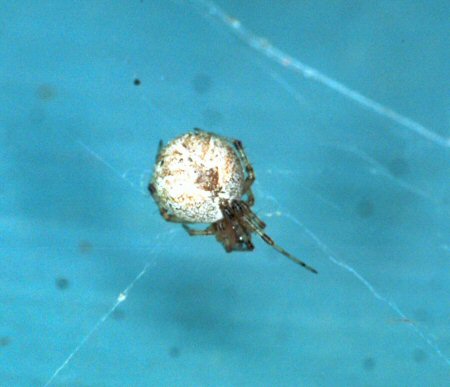
Achaearanea/Theridon? ZZ011
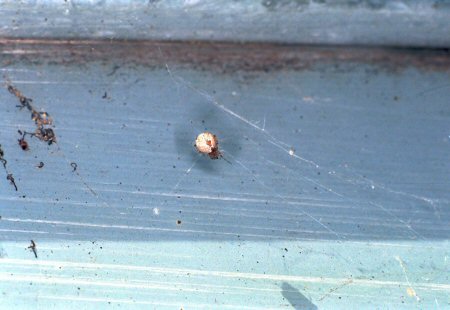
Achaearanea/Theridon? ZZ126 Achaearanea/Theridon? ZZ126
   

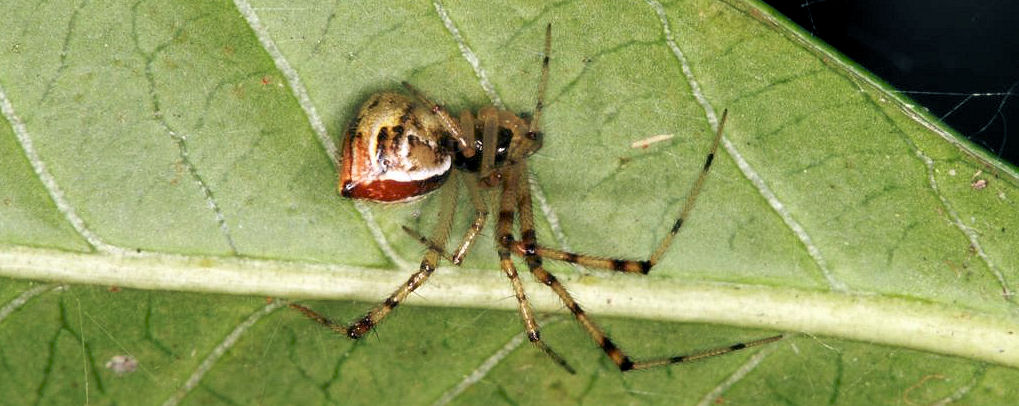
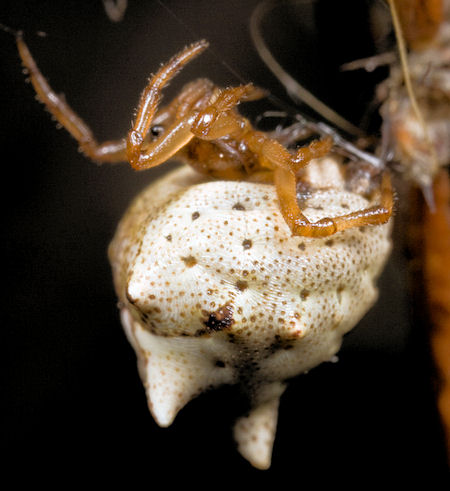
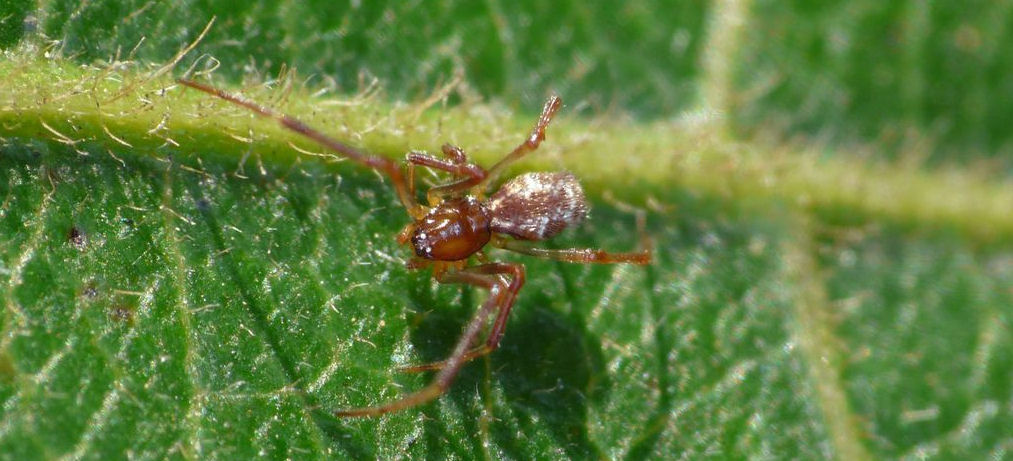
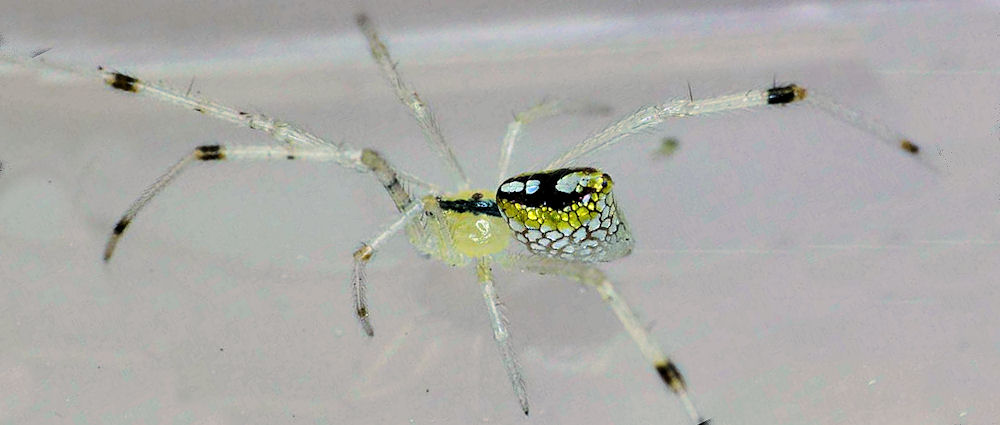
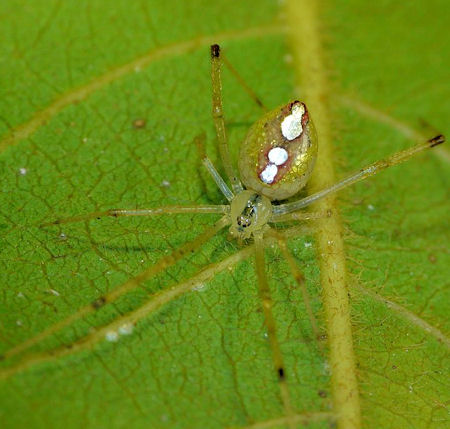
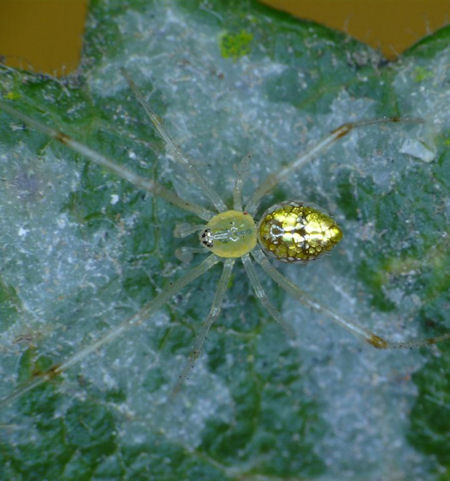
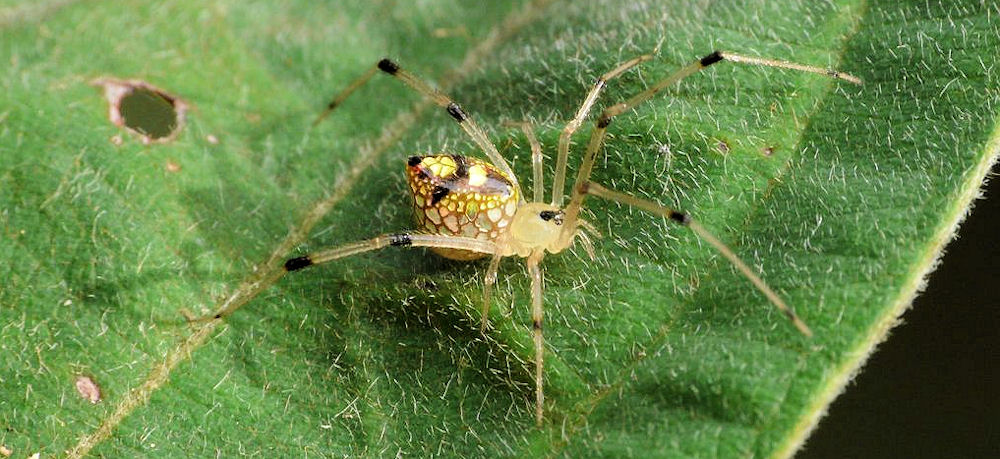
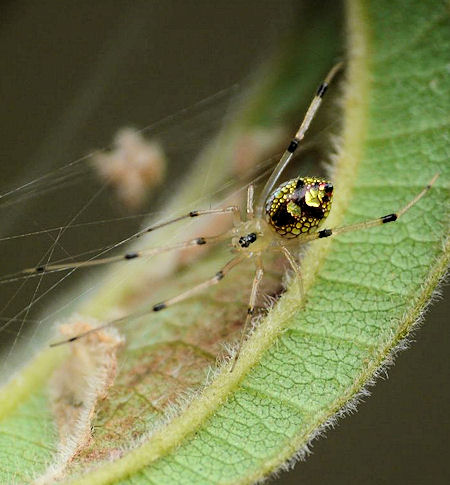
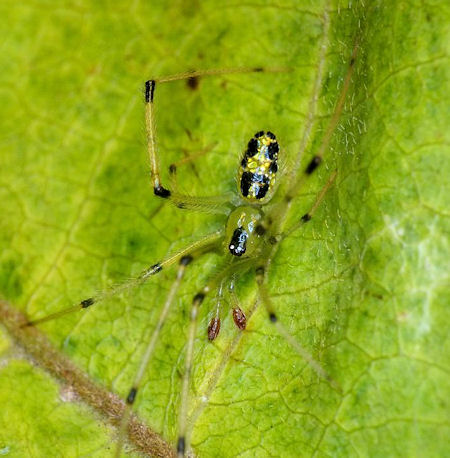
Genus Argyrodes

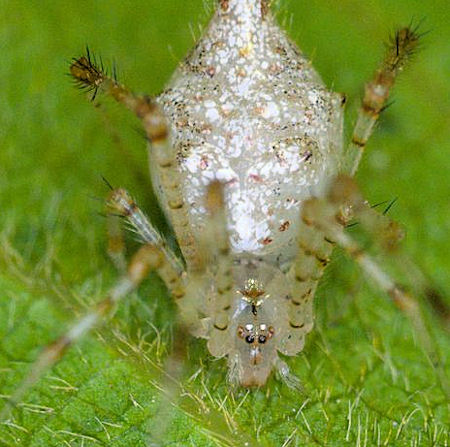
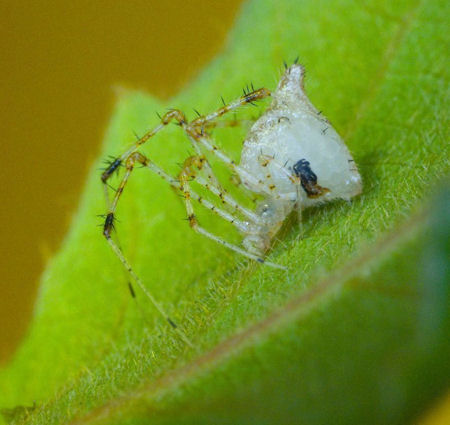
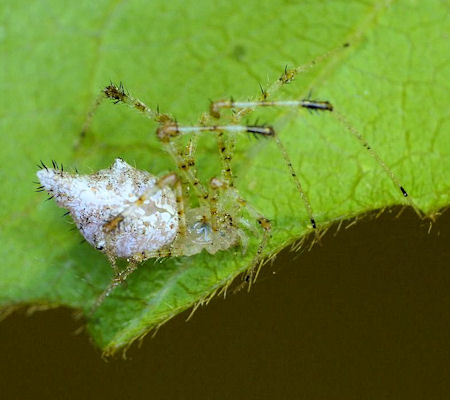
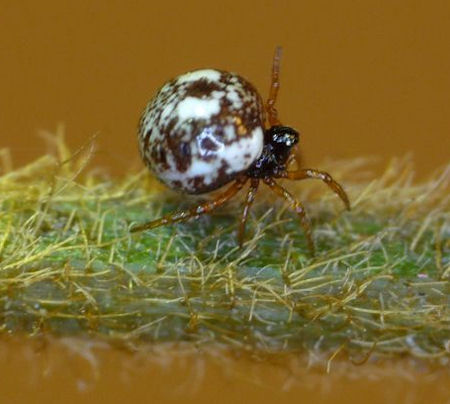
Argyrodes antipodianus Argyrodes antipodianus

Argyrodes antipodianus.

Argyrodes antipodianus.

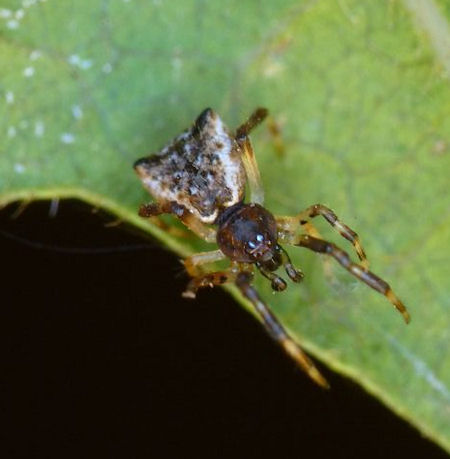
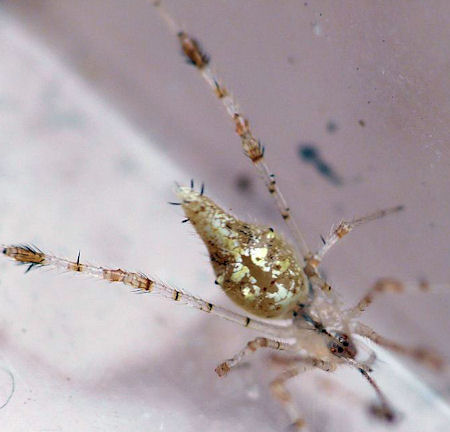
This spider can often been found in webs of the Nephila, golden orb-web, spider, but they can be present in any one web. Up to 25 spiders can be present in a single web.
These spiders are also named kleptoparasites.
Only a few spiders from this genus catch prey in their own webs. The long legs and highly sensitive vibration detecting organs enable them to move stealthily in the web. Depending of the size of the host the spider is a commensal, just an inhabitant that does not steal food from the owner, or she is detrimental to the host by stealing normal prey from the host, forcing the host to reallocated the web more often, removing silk from the web or preying upon the host or its eggs.
The males are 2 mm and the female 4 mm and both have the same colour pattern.
Their common names are Quicksilver and Dewdrop spider.
If a disturbed spider falls out of the web in your hand, the spider starts whirling and resembles the behaviour of the liquid metal mercury (quicksilver).
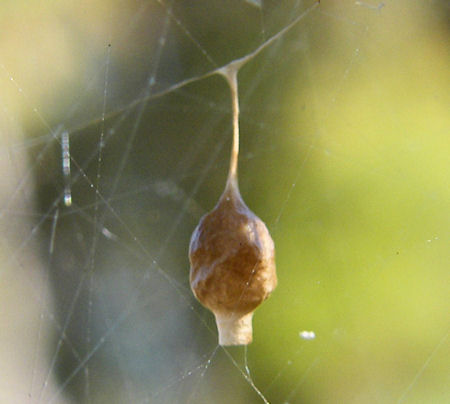
The female makes globular-shaped papery brown egg-sac with a diameter of 4 mm similar to the whip spider below. They attach the sac at the outside of the web or just outside the web on twigs of leaves. Each sac contains around 30 white eggs.

Genus Ariames

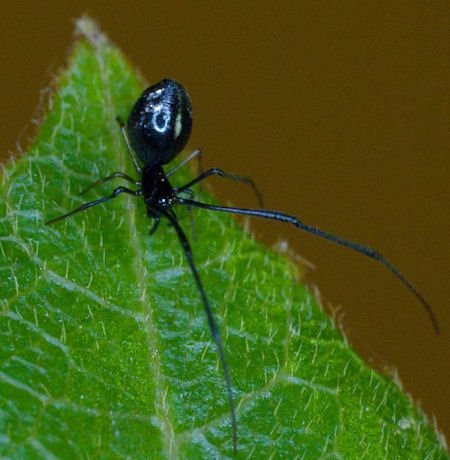
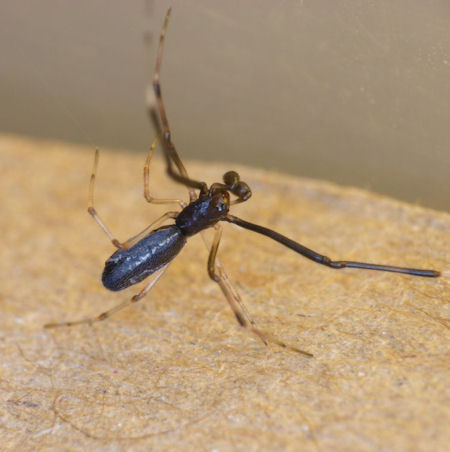
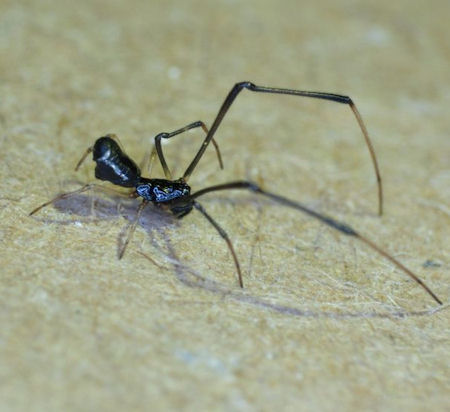
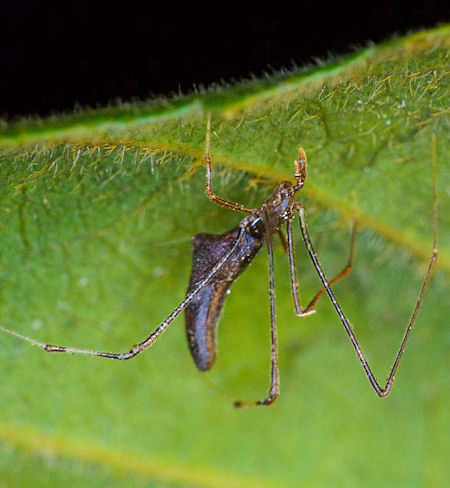
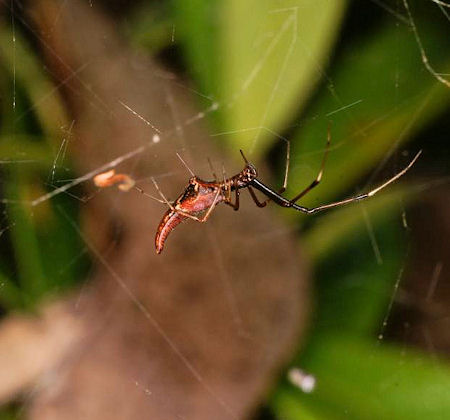
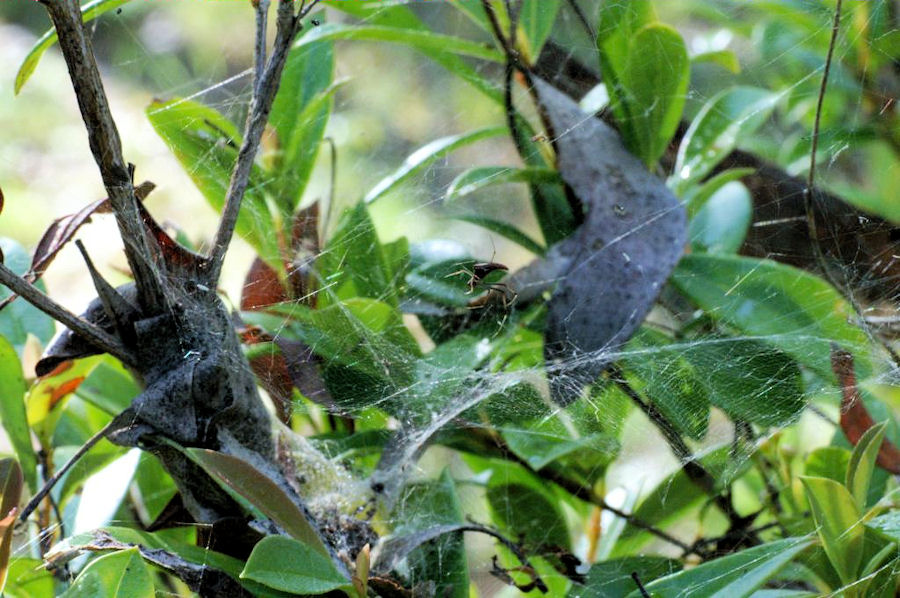
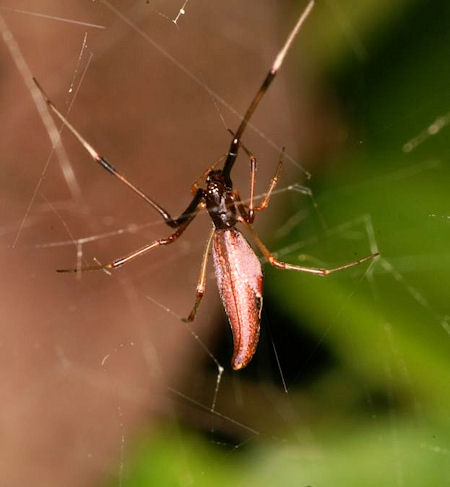
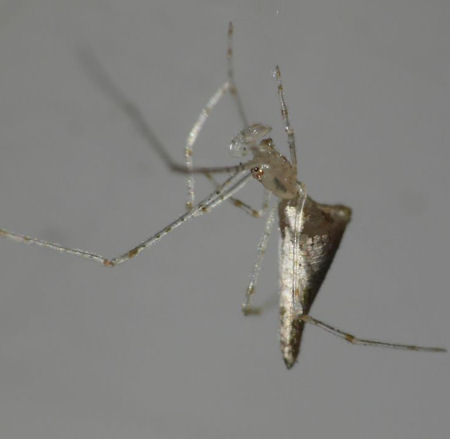
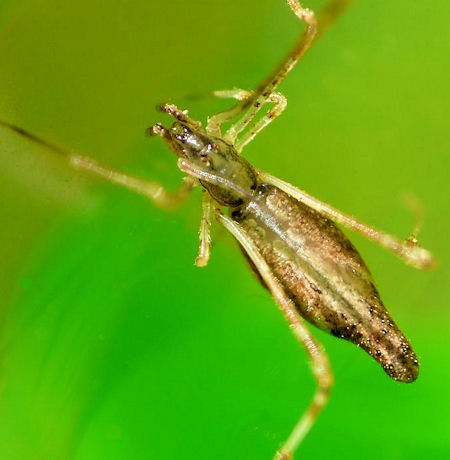
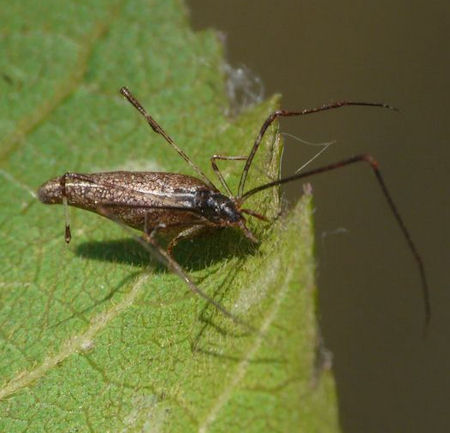
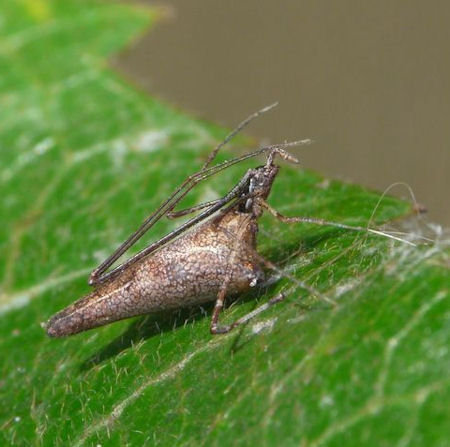
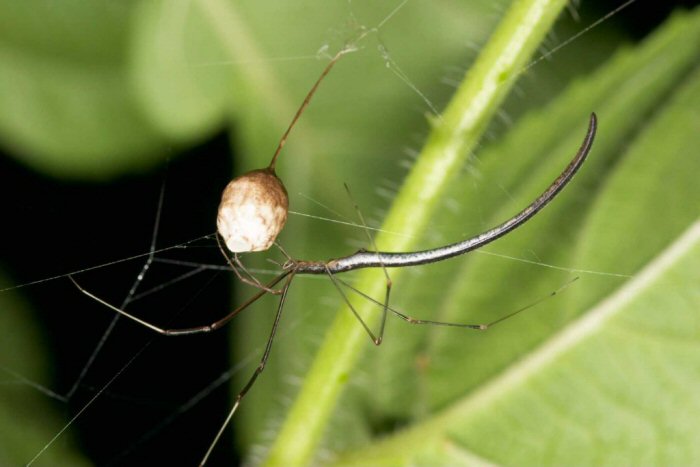
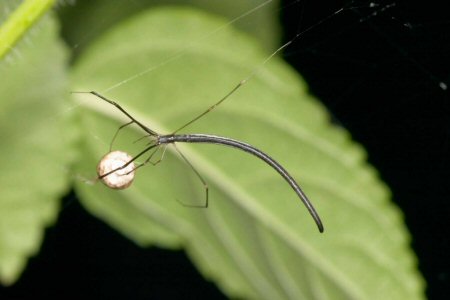
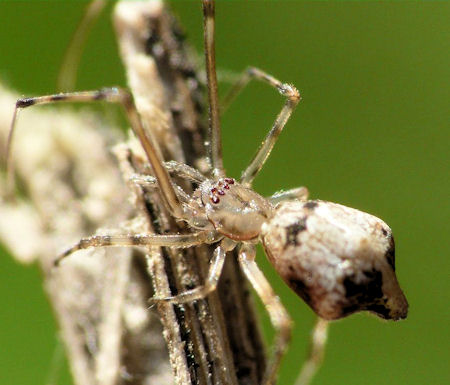
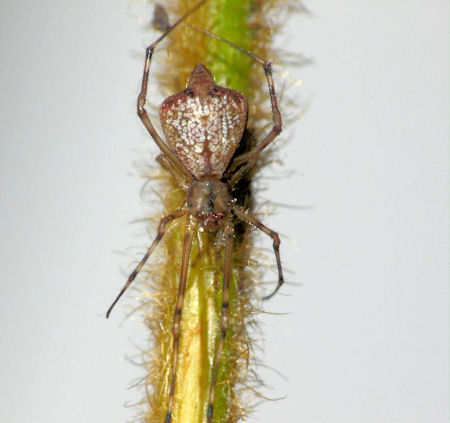
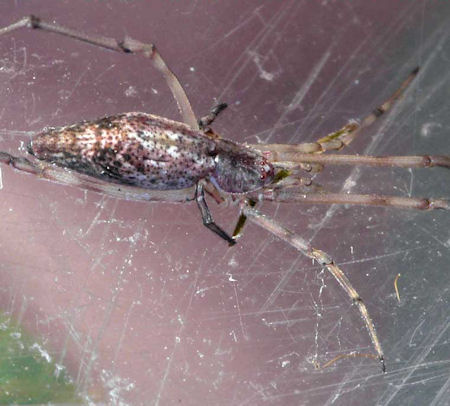
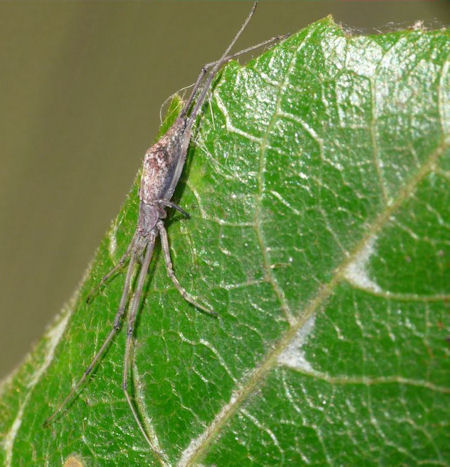
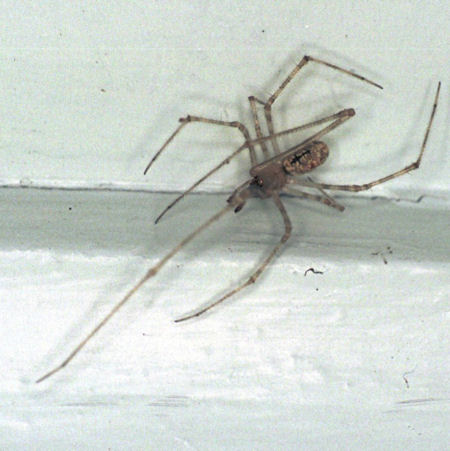
Whip or Stick spiders.

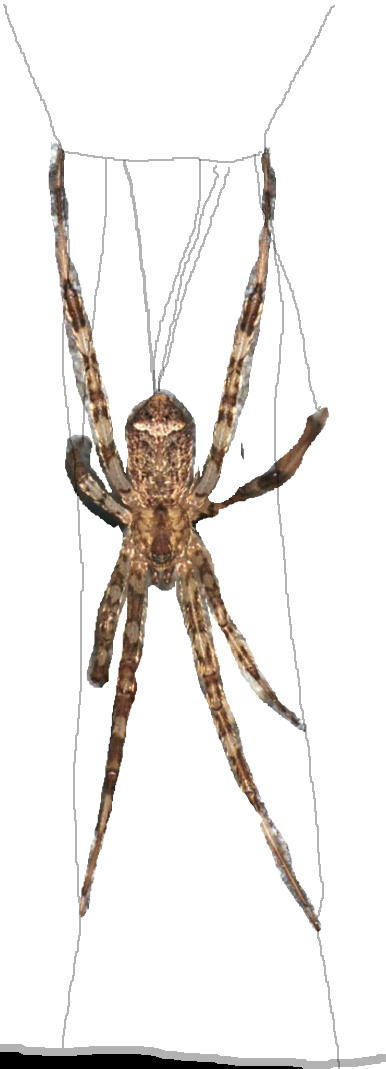
These very long spiders are often common in eastern Australia in gardens. Because of their narrow body they are difficult to spot between dead grass and sticks. The female is 20-25 mm and the male 12-15 mm. during the day she rests motionless with the legs outstretched. During the night they become active and hang downward towards the ground with a single snare attached to the ground. Even with this simple snare she is able to catch small insects. Her egg-sac is of strong papery silk and is 3-4 in diameter. The female guards her egg for the two weeks it takes before the young hatch.

  Ariamnes colubrinus


Genus Steatoda

   
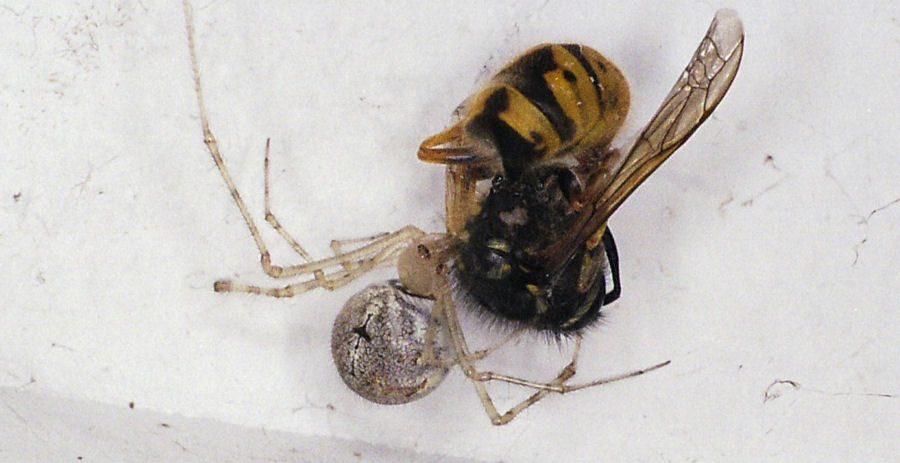
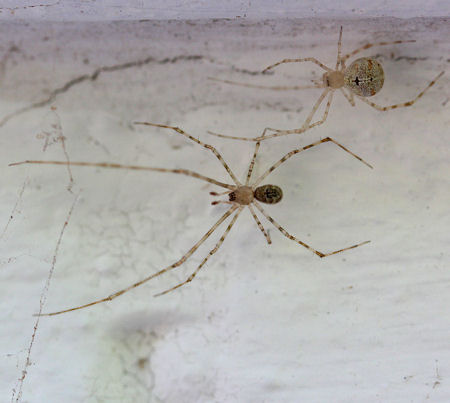
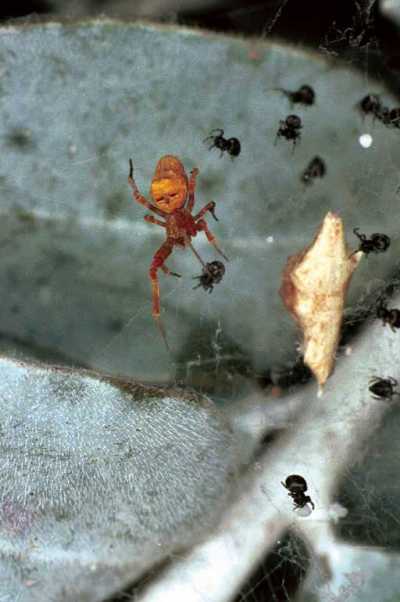
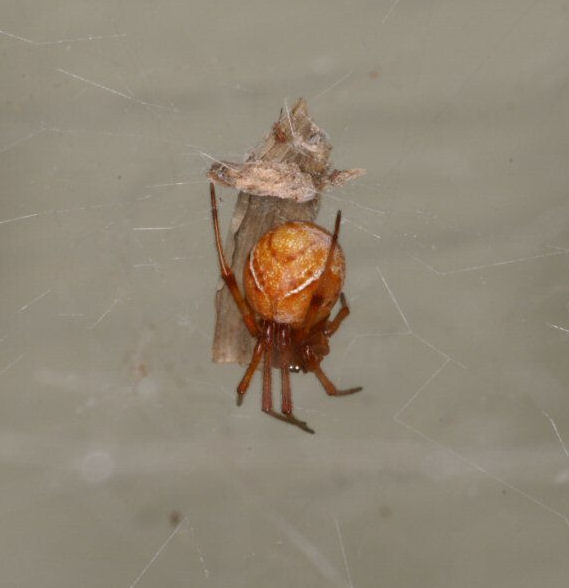
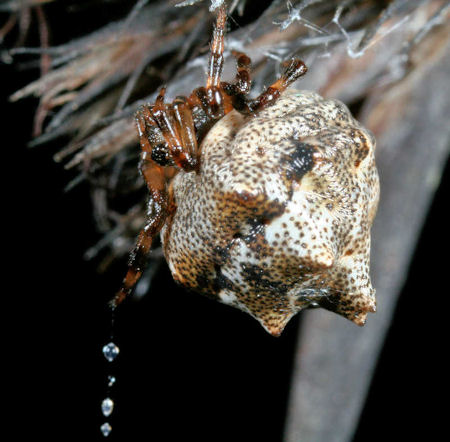
SteatodaZZ212 Steatoda ZZ212
Steatoda ZZ072 with egg-sac Steatoda ZZ072 with egg-sac

Steatoda is a common house spider that can live for several (upto six) years.
The spider is not known to be harmfull to people.
These spiders have a robust appearance. They often have a narrow light band in front of their abdomen. The sexes are similar in appearance. The webs are generally of the Therriid design, a messy web with criss-cross threads.


Genus Theridon

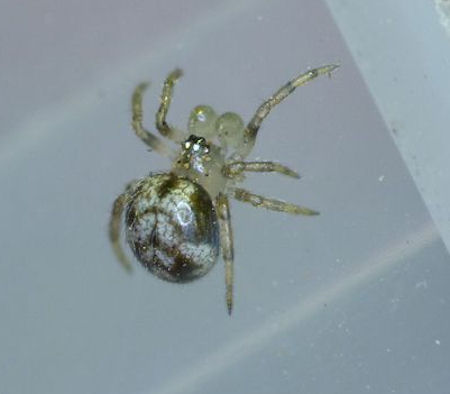
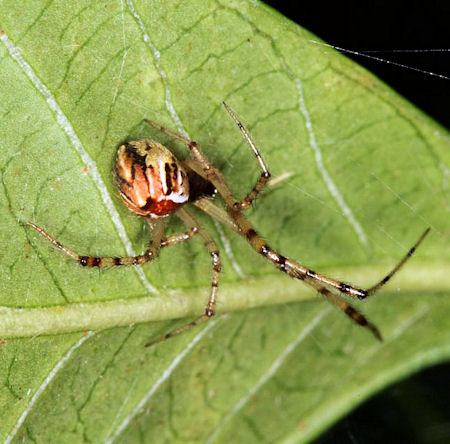
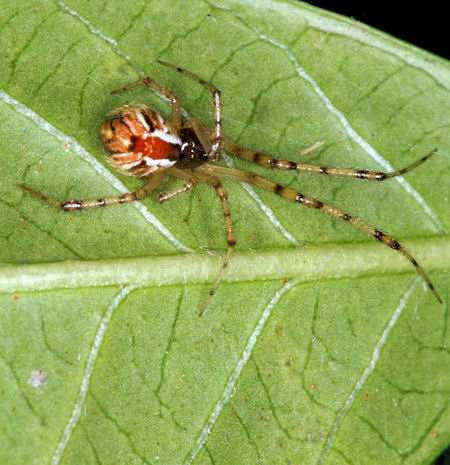
These spider are very similar in shape and behaviour with Achaearanea.

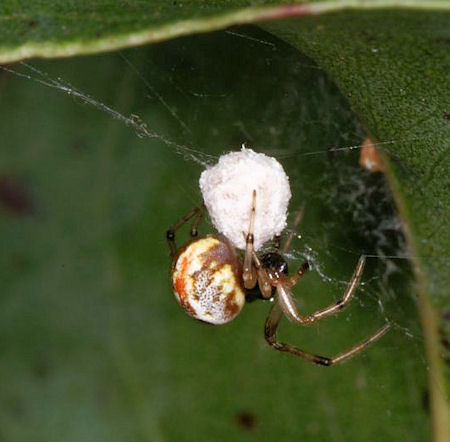
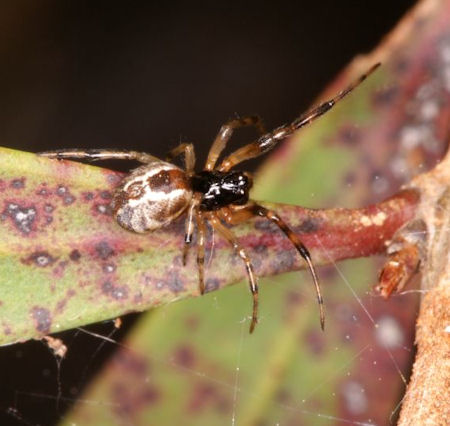
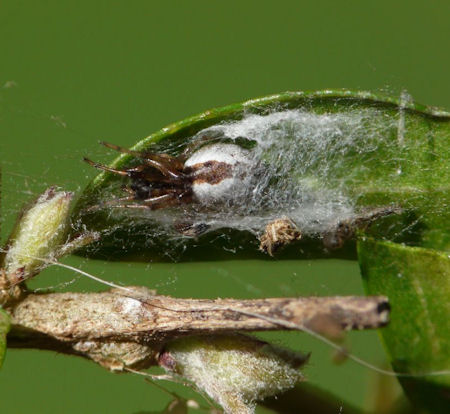
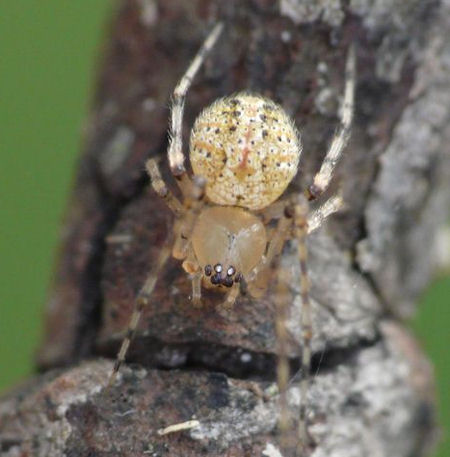
Theridion ZZ178Theridion_ZZ179

Theridion? ZZ178 and ZZ179

ß Home


Ed Nieuwenhuys January 4, 2009

24 september 2006
Ed Nieuwenhuys, Ronald Loggen 1997, 2002, Jurgen Otto 2005

Copyright ã 1997-2009