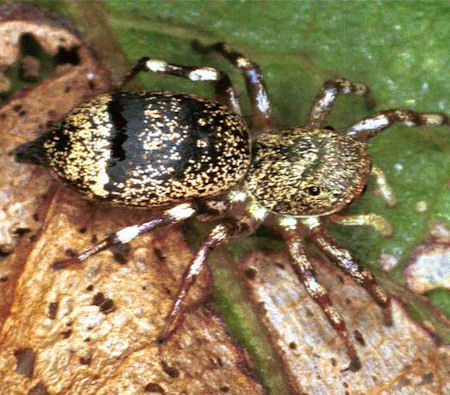
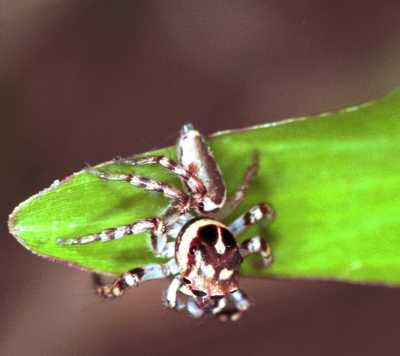
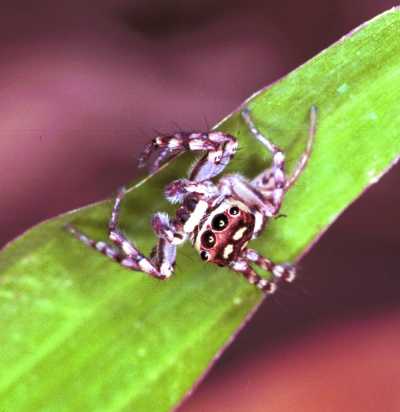
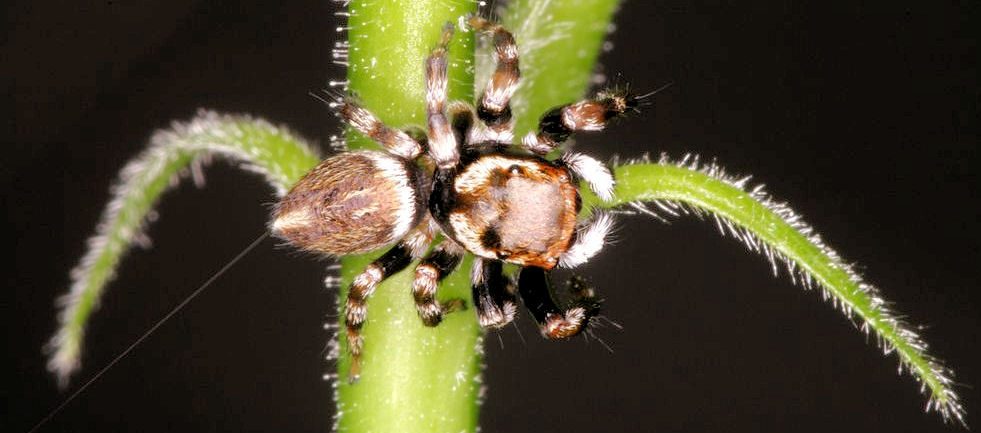
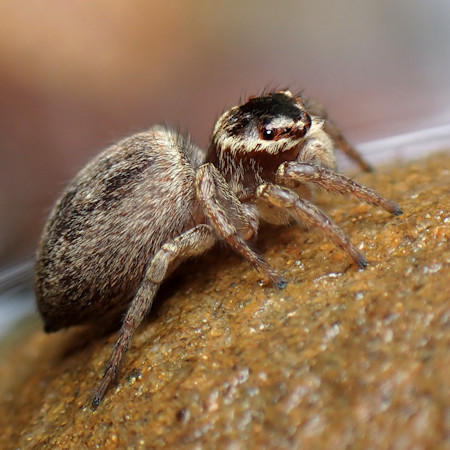
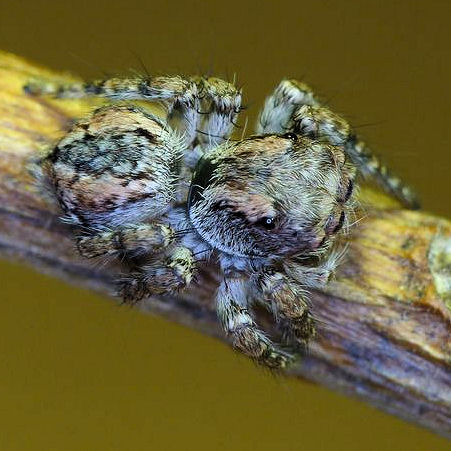
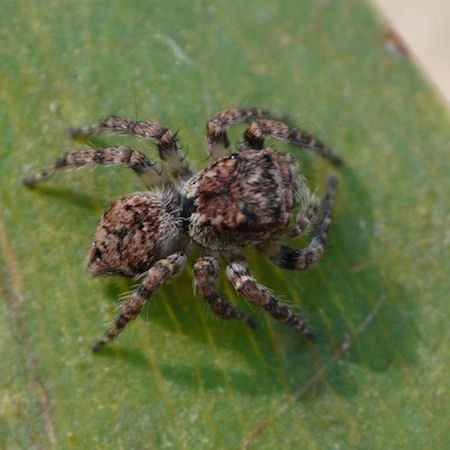
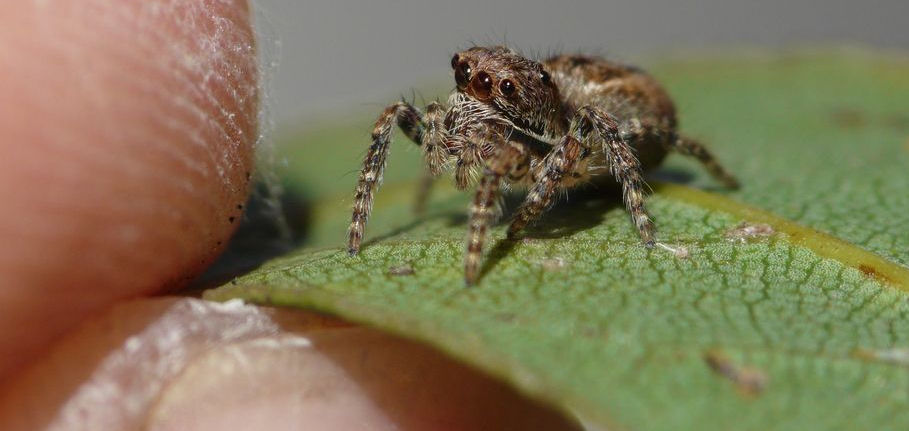
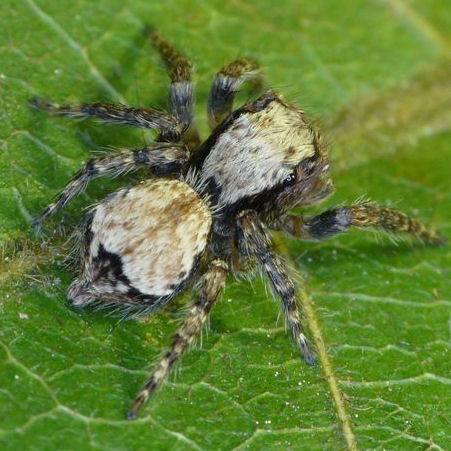
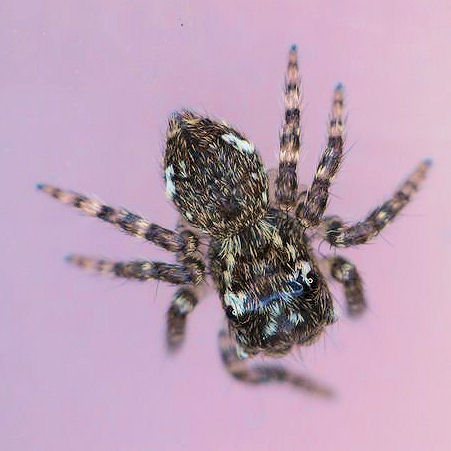
Salticidae, Jumping Spiders
ß
Home
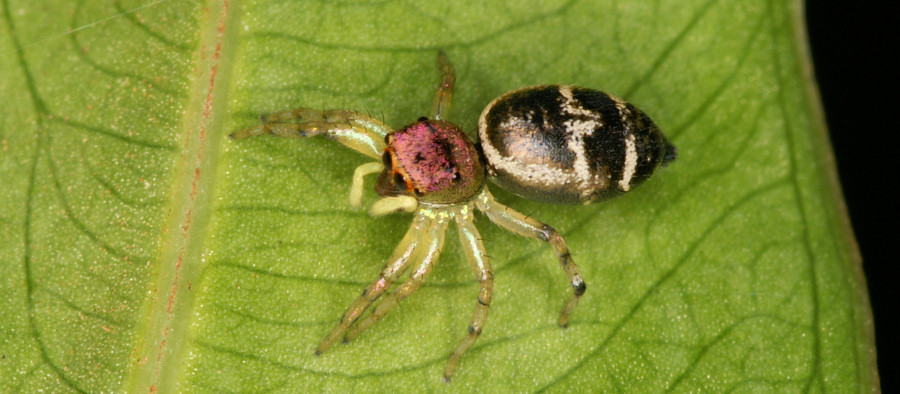
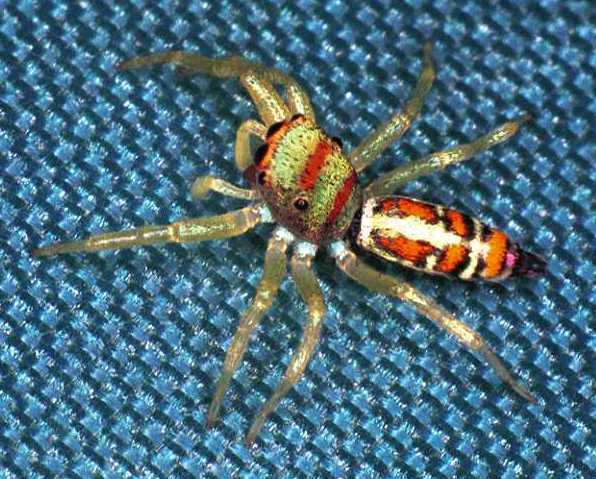
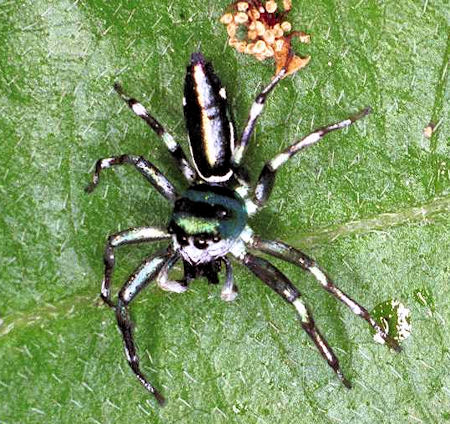
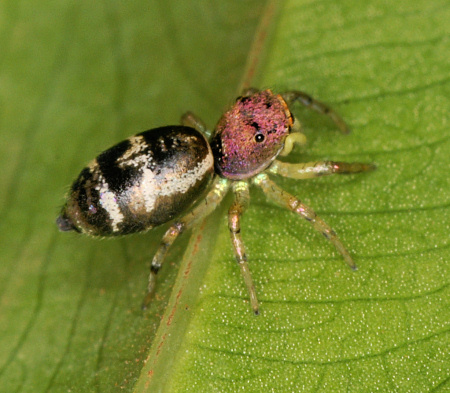
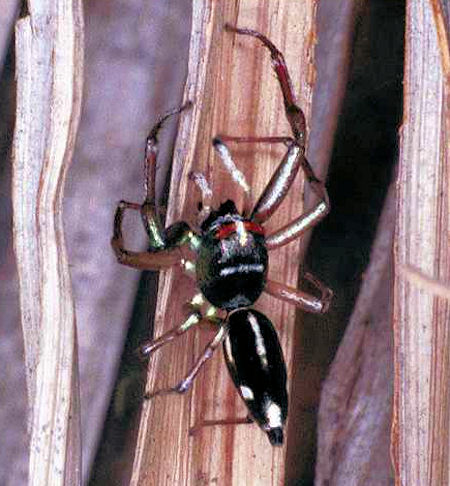
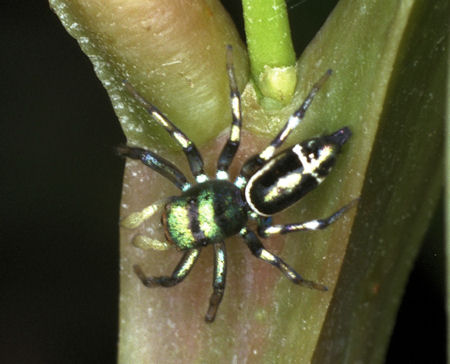
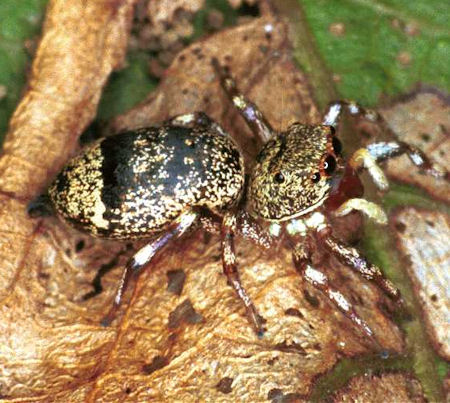
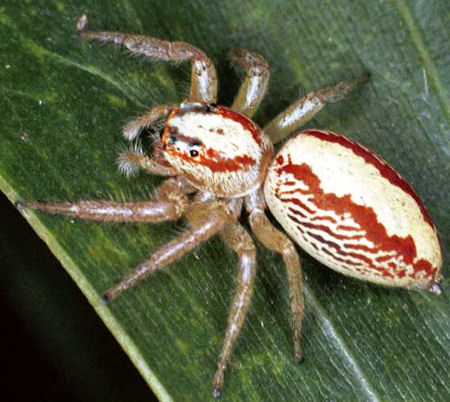
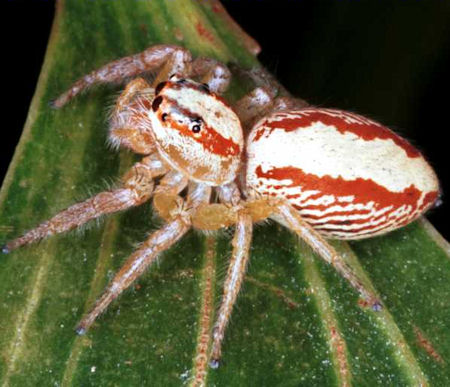
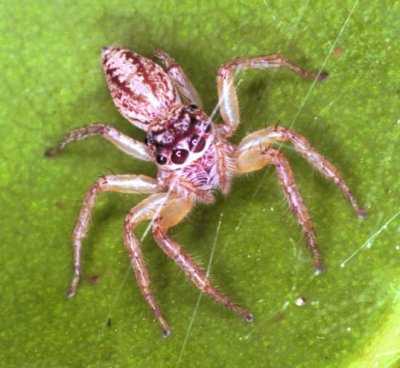
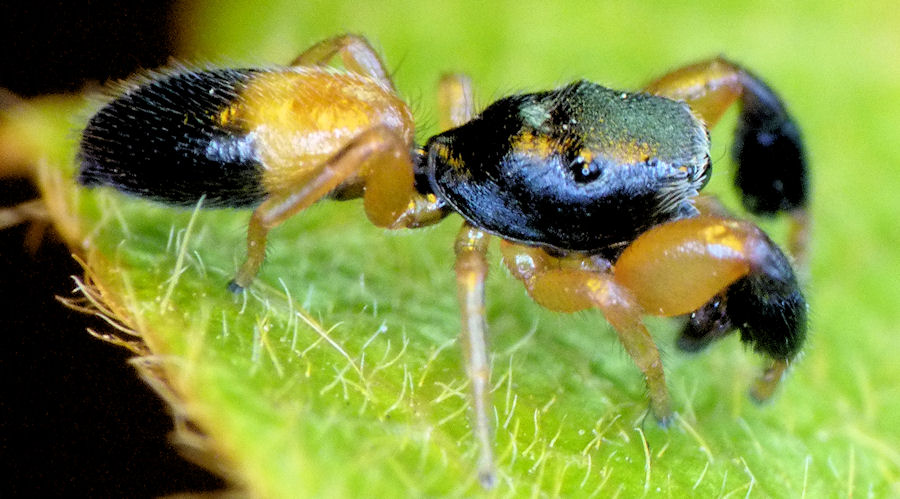
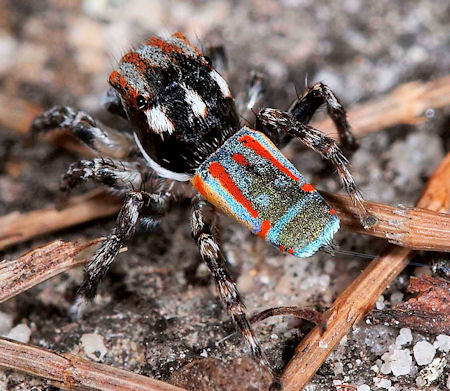
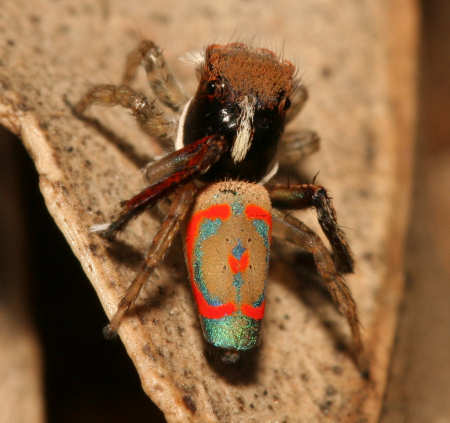
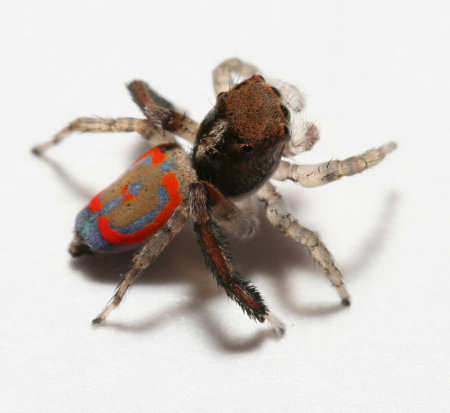
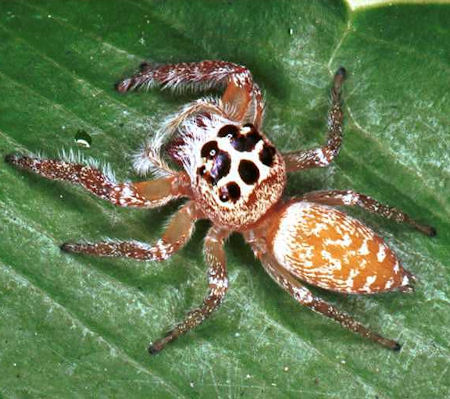
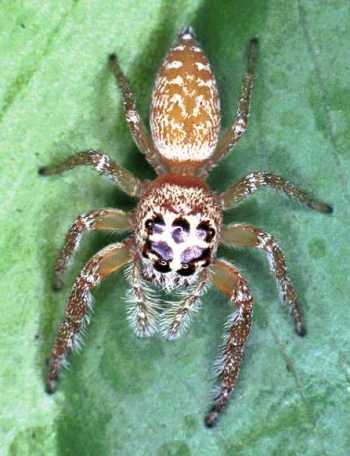
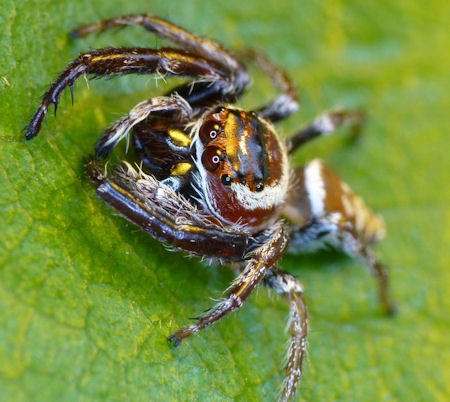
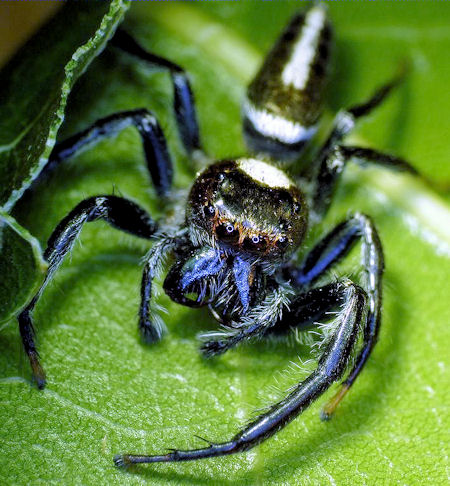
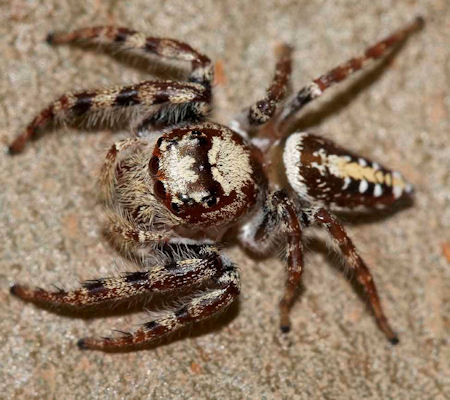
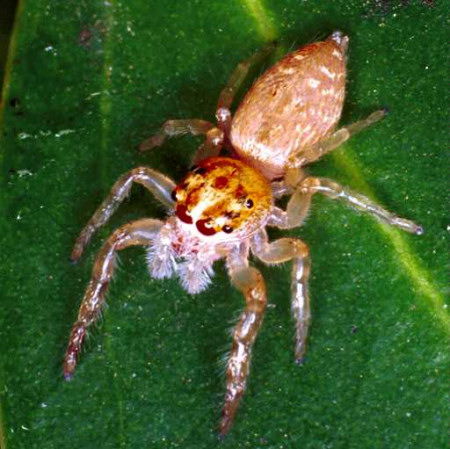
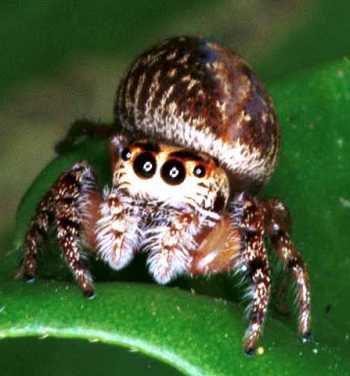
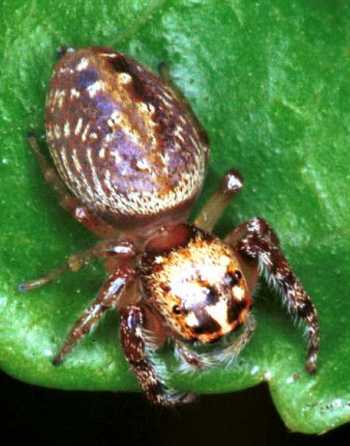
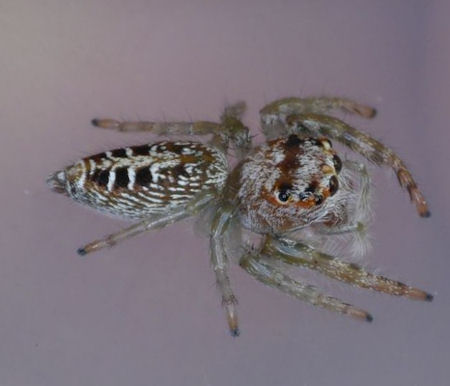
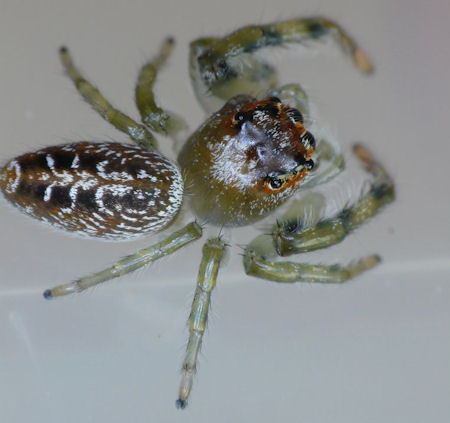
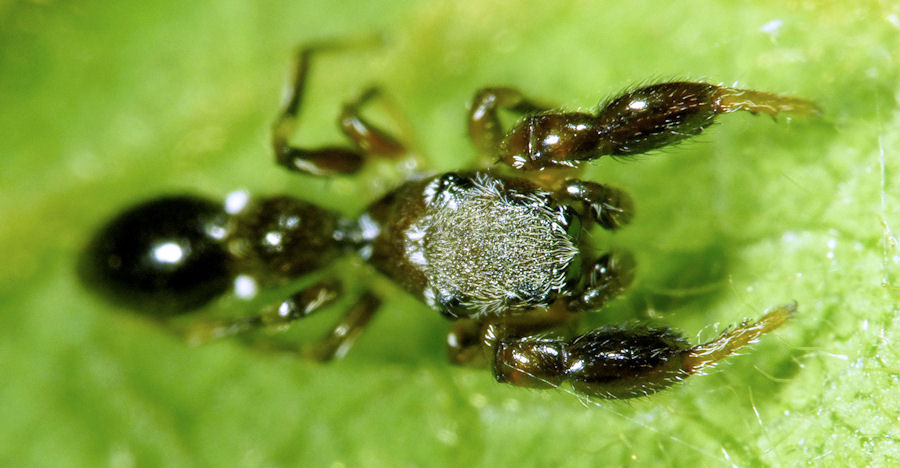
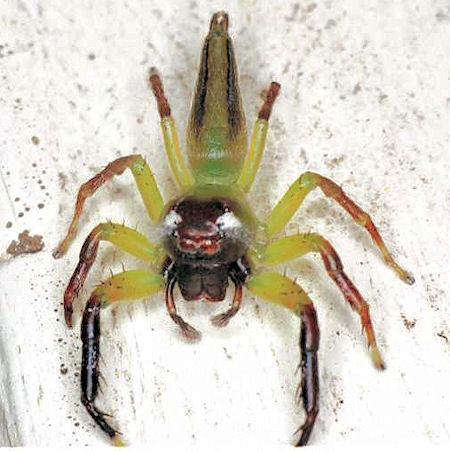
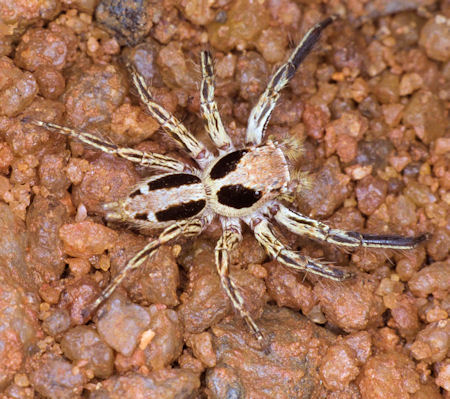
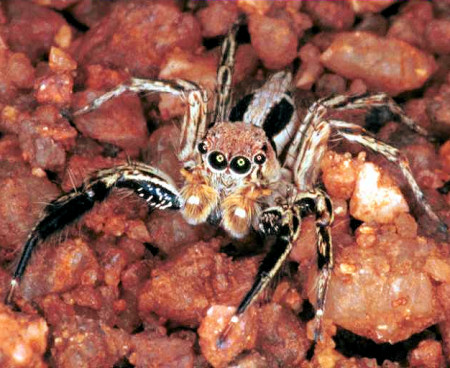
Cosmophasis baehrae
Most salticids, 5000 or more species, live in the tropics. In Australia
76 genera and 252 described species are present. The spiders are daylight
hunters and can be easily spotted. Their size is relatively small (3-20
mm) but most of them are smaller than 10 mm. A lot of them are coloured
beautifully. Most salticids hunt on vegetation. The rectangular thorax,
stout body, the rather short legs, their distinctive eye arrangement and
their jumping capabilities make them one of the most easily recognizable
families.
|
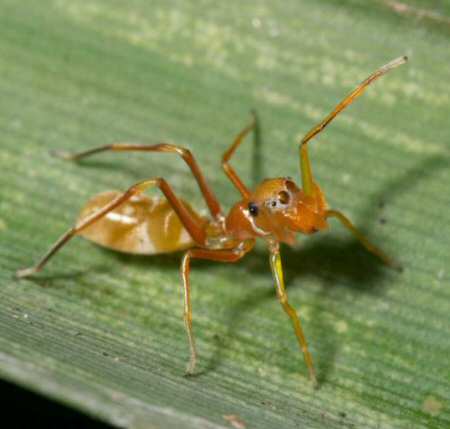
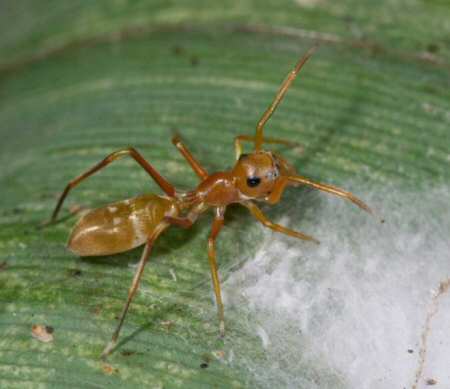
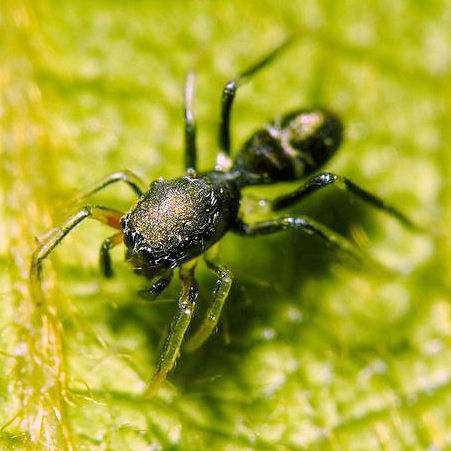
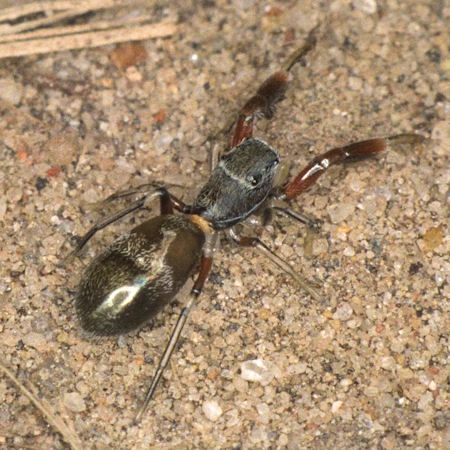
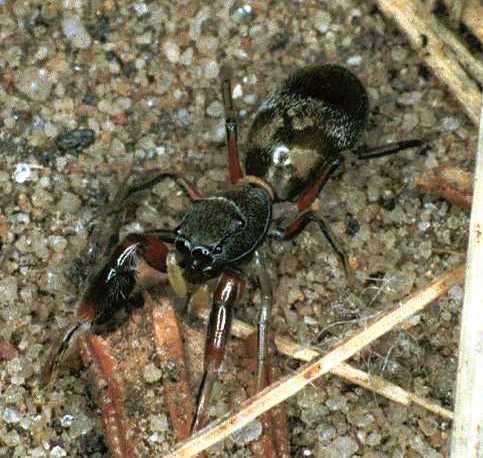
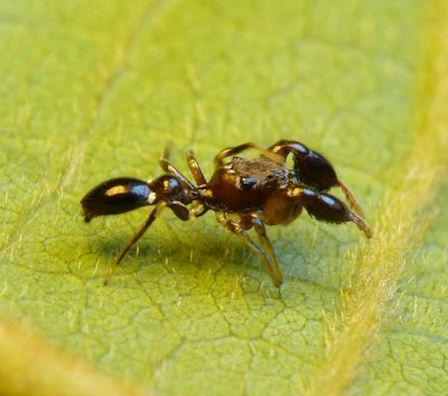
Some species exhibit an amazing resemblance with ants and
are called "ant like" spiders. Because of its resemblance to ants, it can
walk between them without being attacked. Five genera of ant-mimicking
spider occur in Australia:
Judalana, Ligonipes, Rhombonotus, Damoetas and
Myrmarachne.
 |
The jumping spider can be found
everywhere if the sun is shining, on trees, grass and rocks. At night or
during rainfall the spiders hide in a dry spot under a small web. Their
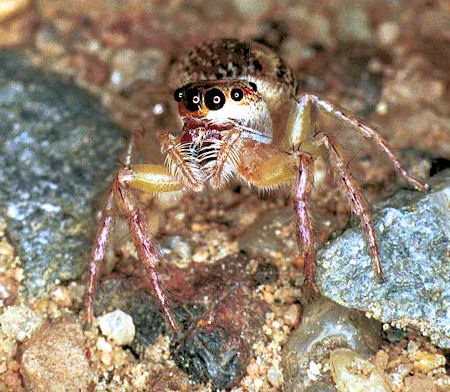
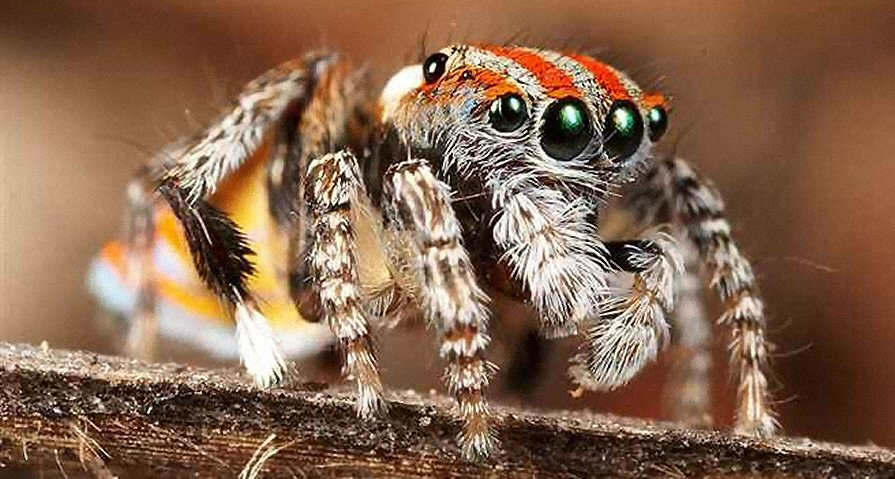
large eyes give them excellent eyesight. As most spiders they also have four
pairs of eyes. Two large ones in de middle and two small ones are looking
forward. Above the front row is a second row of two tiny eyes and behind
these there is a set of two large eyes looking upward. All these eyes give
them a 360-degree eyesight. Spiders have singular eyes like mammals, unlike
the insects that have compound eyes. The eyes can move out or inwards for
focusing and they can turn up and down and left and right. The spider can
also turn its carapace (breast) more than 45 degrees to look around. Prey
can be noticed from a distance of about 30 - 40 cm. At a distance of 20 cm
the spider turns its body so that the two front eyes points to the insect.
The muscles in the eye focus the eye on the prey and the eye moves around
their optical axis. In this way the spiders scans the object like a modern
scanner. The effect is extraordinary. The eyesight is enhanced like a zoom
lens and it is capable to adjust its looking angle from 10 to 60 degrees. In
experiments it was shown that the spider is capable to distinct dangerous
insects and prey. The eyes are also capable to see colour. After the object
is recognized as eatable the spider carefully moves towards it victim. As
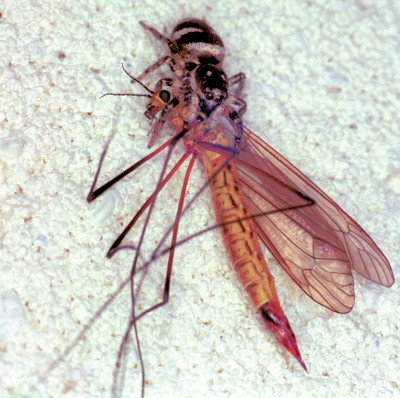
you can see the on the picture they also catch prey, much bigger than
themselves.
It was spectacular to see the little Salticus scenicus catching
this big fly.
|
Salticids are the tigers among spiders. The spider slowly advances
towards its prey. When it is at a reachable distance, it jumps on its prey
and grabs it with its jaws. They use their third and/or fourth pair of legs
for jumping. If you notice the spider on a wall, often the Salticus
scenicus, it seems as mocks at gravity. It jumps of the walls and falls
back on it several centimeters further instead of falling down. This is
because of its lifeline. If you watch the spider carefully, you can notice
that it always releases a lifeline when it jumps. If the jump fails it can
crawl back to its original position and it prevents the spider from falling
down.
Jumping spiders do not make webs to catch prey.
They do use a silken retreat of thick, white, slightly viscid silk in
crevices, under stones on the ground, under bark or on the foliage and
plants. Many retreat to these little white bags at night or during winter to
hibernate. The females lay their eggs in these retreats mostly in spring and
summer.
Jumping spiders are not toxic. |
|
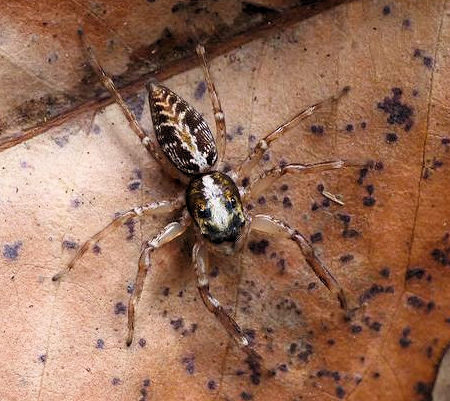
Genus Adoxotoma
 |
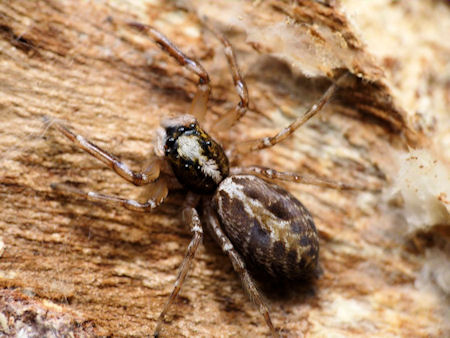 |
| Adoxotoma nodosa |
Adoxotoma nodosa |
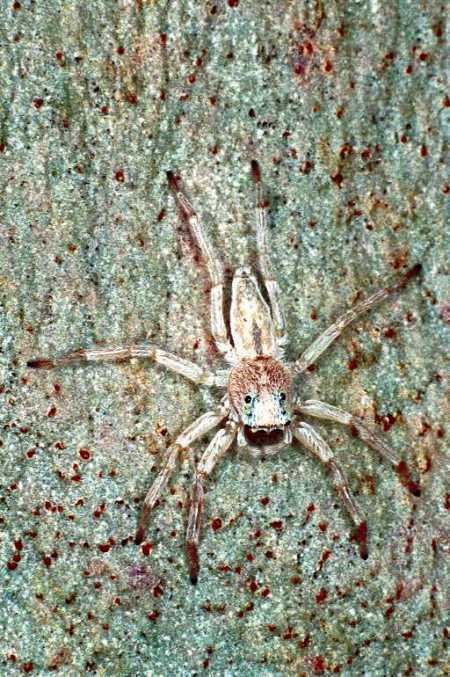
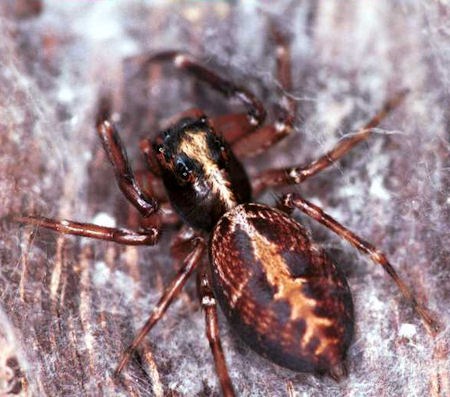
Genus Arasia
 |
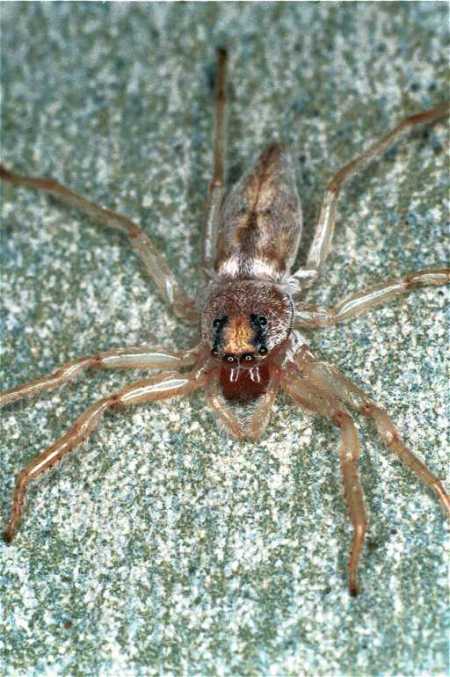 |
| Arasia mollicoma |
Arasia mollicoma Found on eucalyptus bark between Emerald and
Clermont, Queensland |
 |
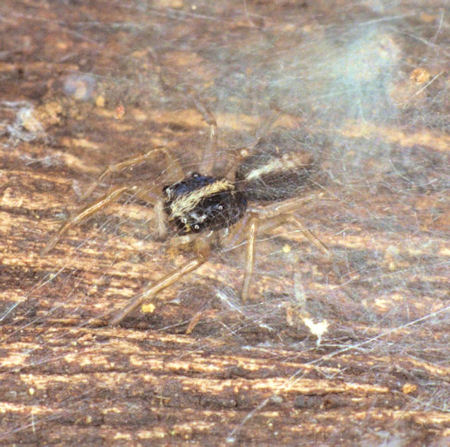 |
| Arasia ZZ029 |
Arasia ZZ029 |
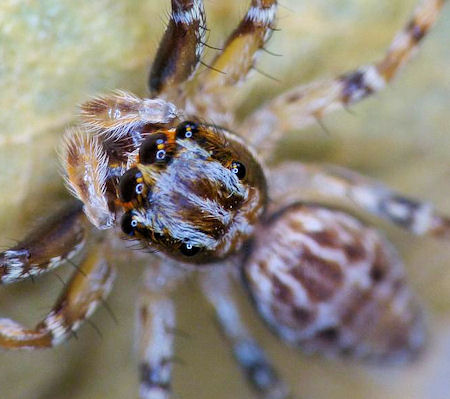
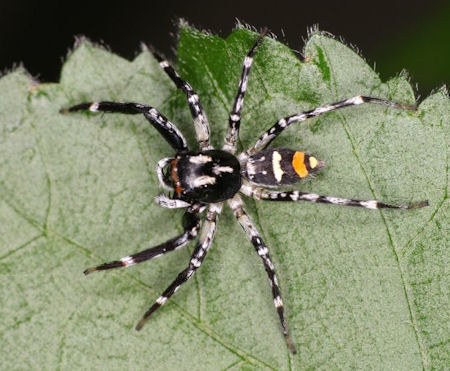
Genus Astia
 |
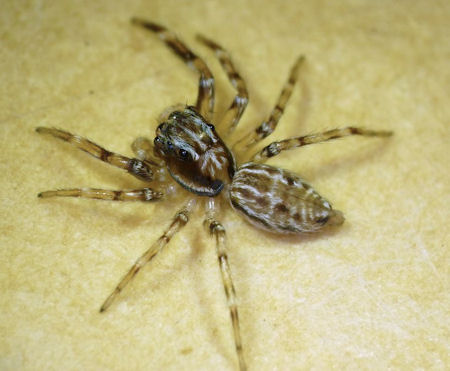 |
| Astia nodosa |
Astia nodosa |
 |
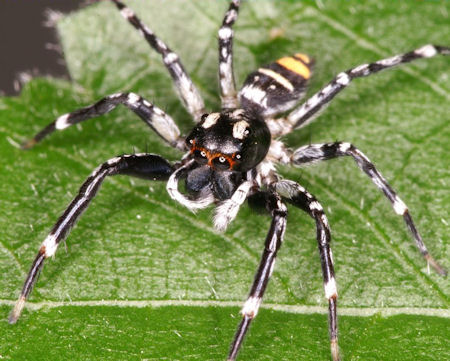 |
| Astia hariola |
Astia hariola |
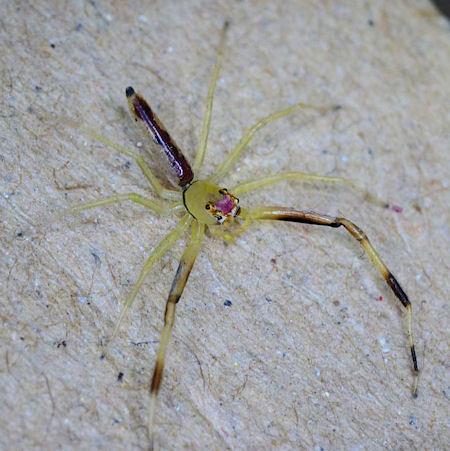
Genus Astilodes
 |
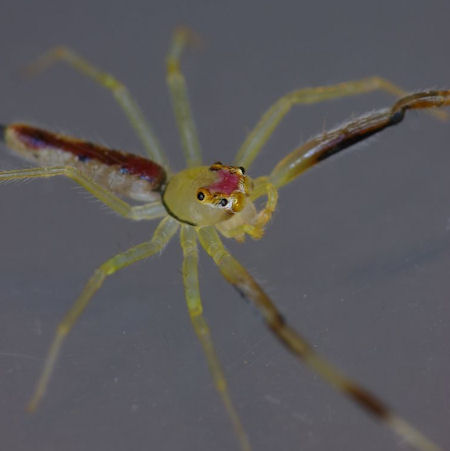 |
| Astilodes mariae
|
Astilodes mariae
|
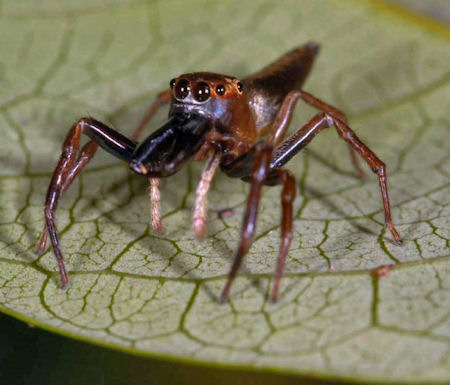
Genus Bathipus
 |
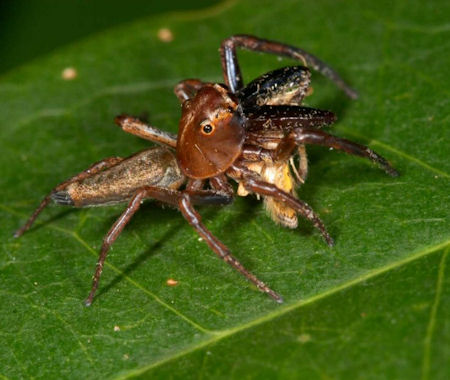 |
| Bathippus montrouzieri ? |
Bathippus montrouzieri ? |
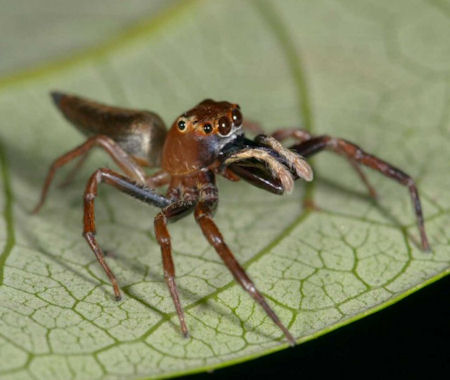 |
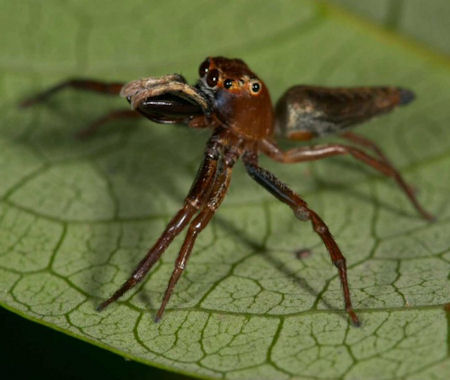 |
| Bathippus montrouzieri ? |
Bathippus montrouzieri ? |
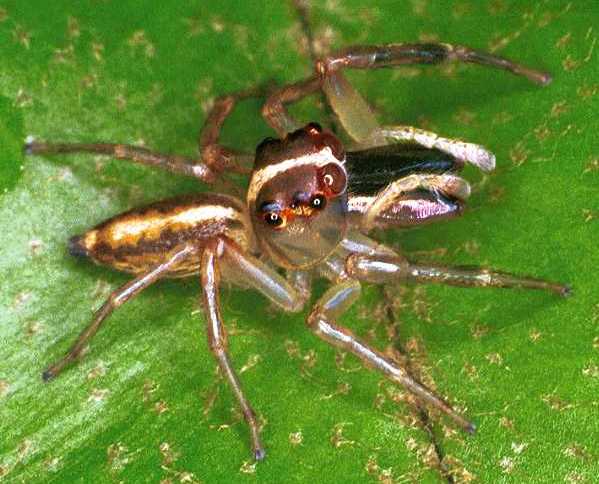
Genus Canama
|
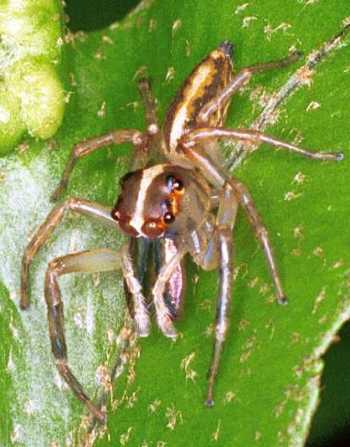
|
|
| Canama (possibly hinnuleus) |
Canama (possibly hinnuleus) |
Genus Clynotis
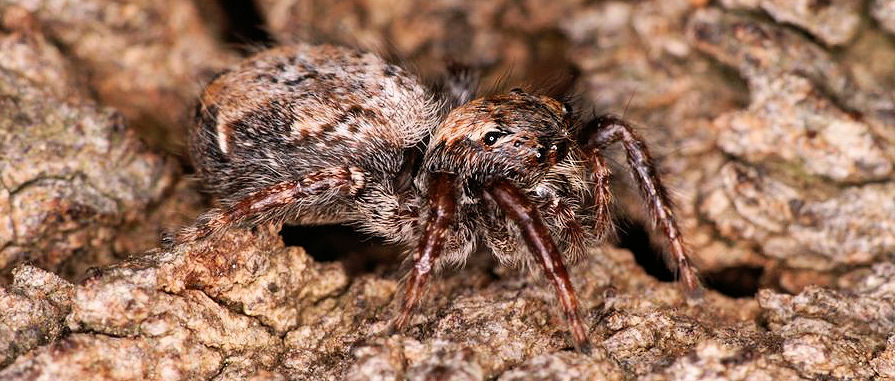
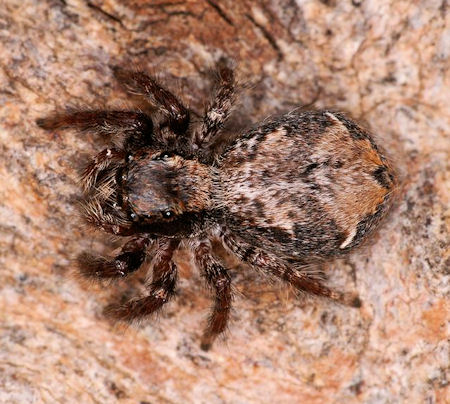
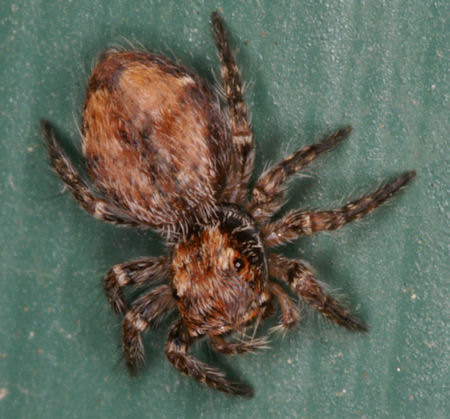
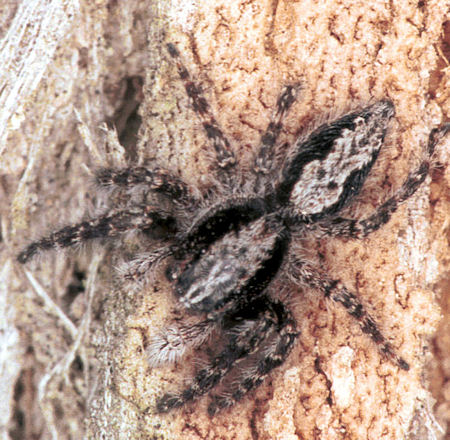
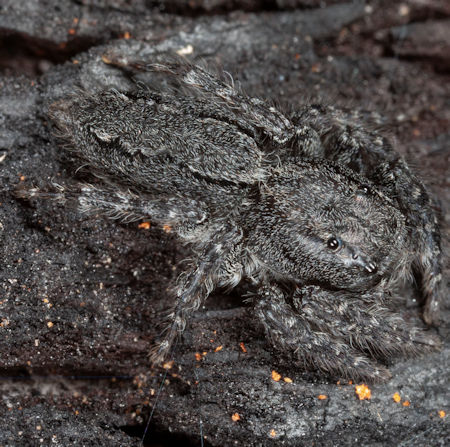
Clynotis severus
(Bark jumping spider or Stern jumping spider)
is very variable in colour and appearance. It hunts on the bark of
trees
Its size varies between 5 and 9 mm.
 |
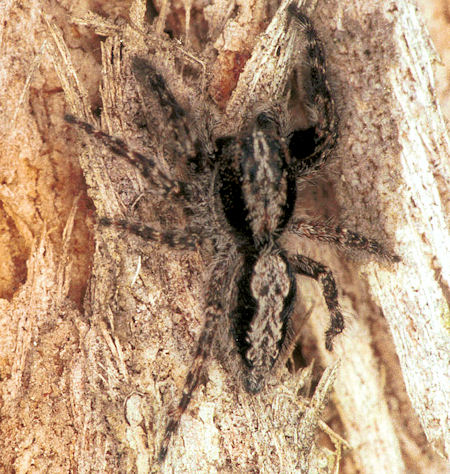 |
| Clynotis severus
(Bark jumping spider) |
Clynotis severus |
 |
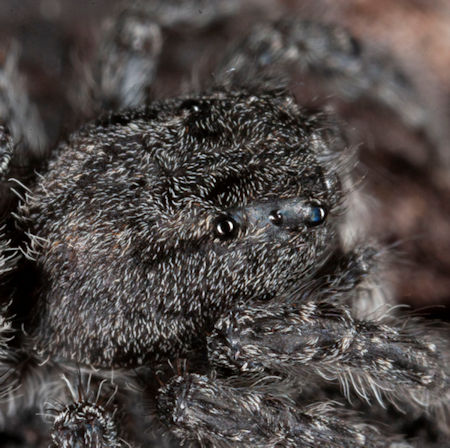 |
| Clynotis severus
(Picture Roy Barnes) |
Clynotis severus (Picture Roy Barnes) |
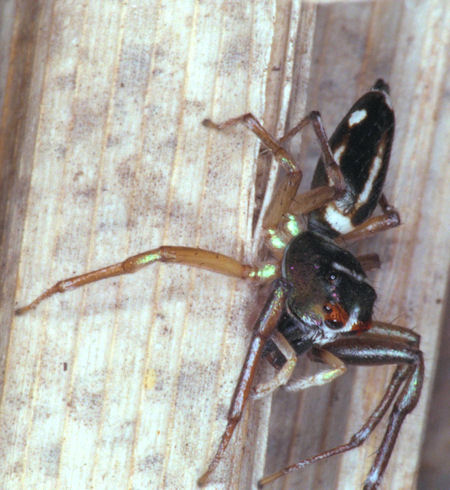
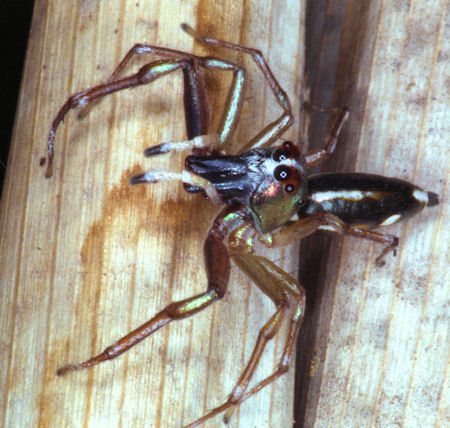
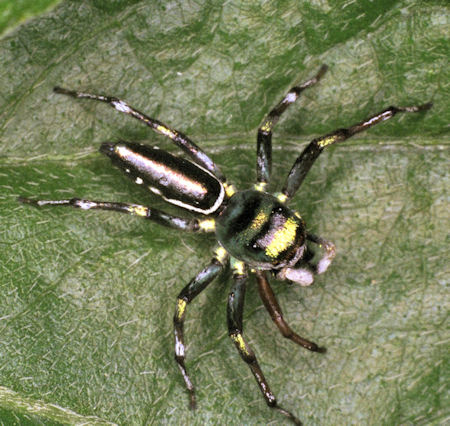
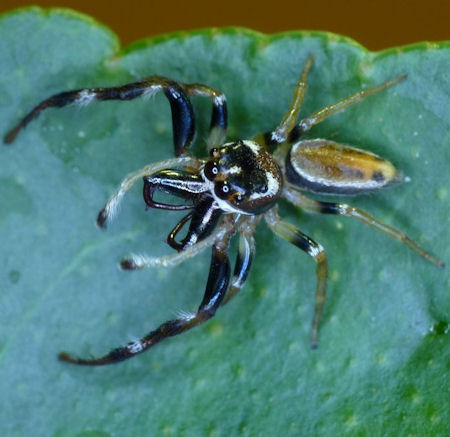
Genus Cosmophasis
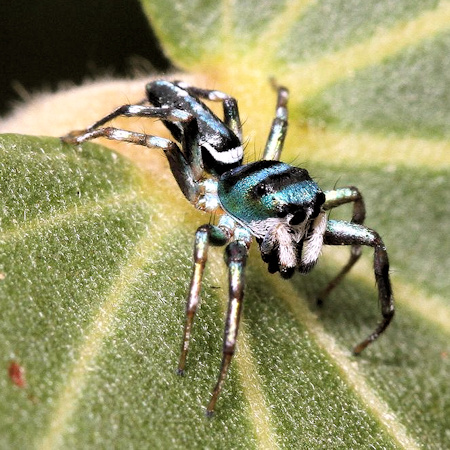
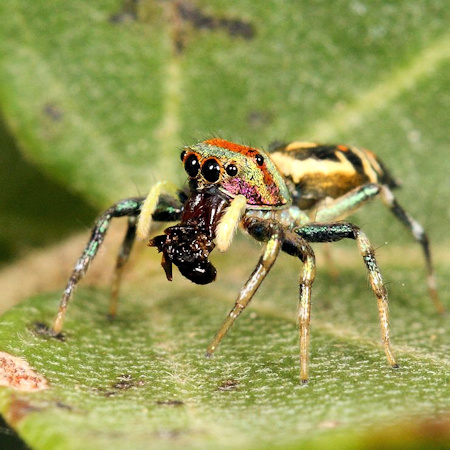
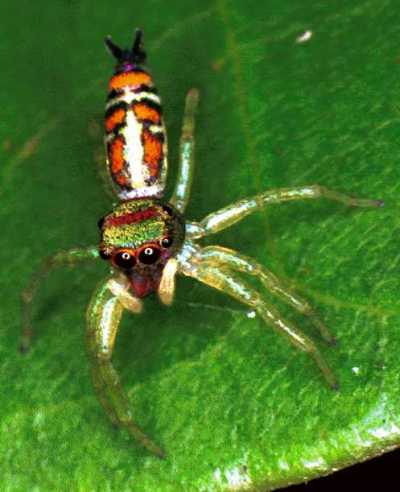
The head of this spider has a metallic green and black coloring. The
chelicera (jaws) are extremely long. It waves its white palps very quickly.
Genus Cytaea
GenusDamoetas
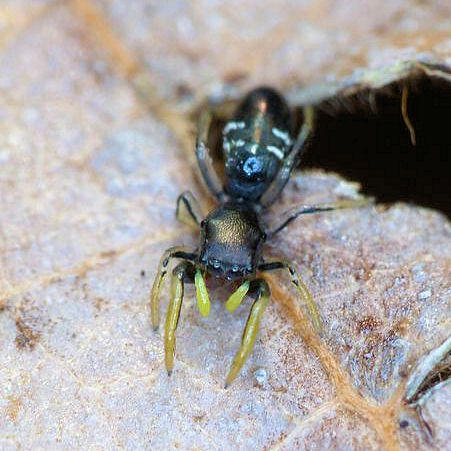 |
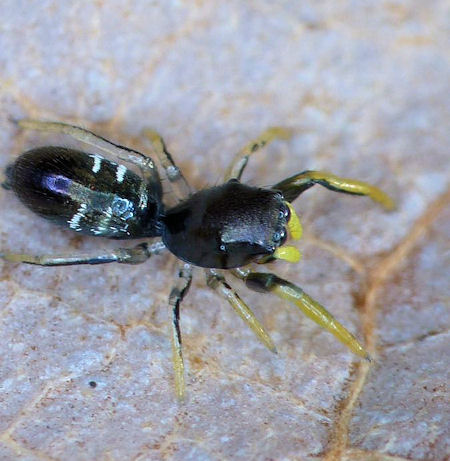 |
| Damoetas nitidus |
Damoetas nitidus |
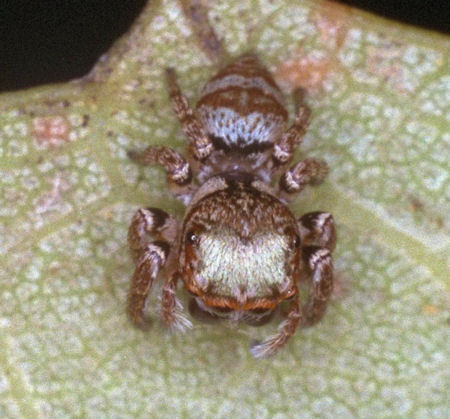
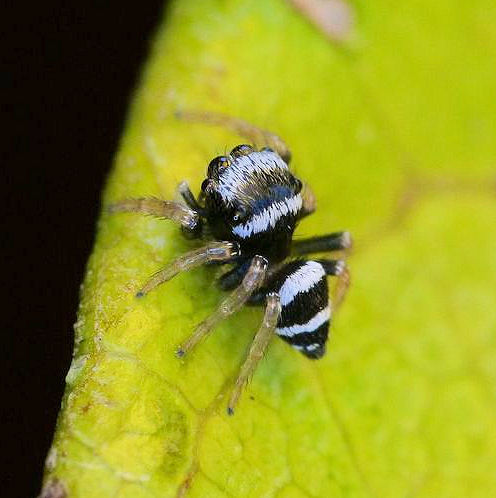
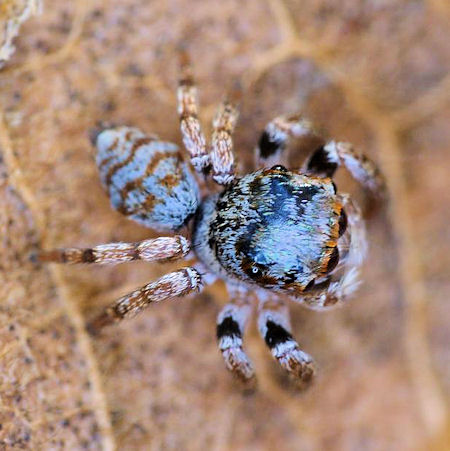
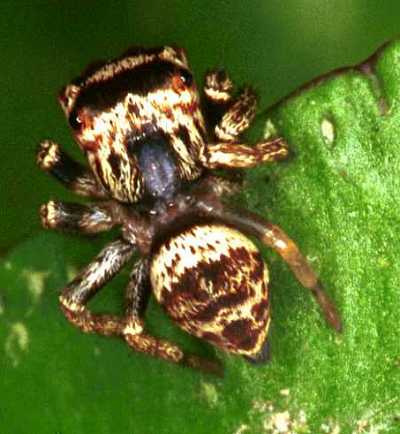
Genus Euryattus
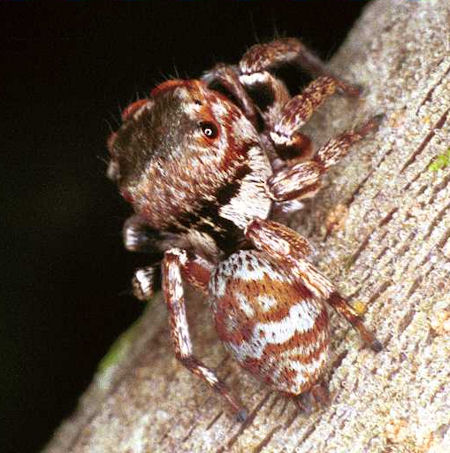 |
 |
| Euryattus bleekeri |
Euryattus bleekeri |
 |
 |
| Euryattus bleekeri |
Euryattus bleekeri |
 |
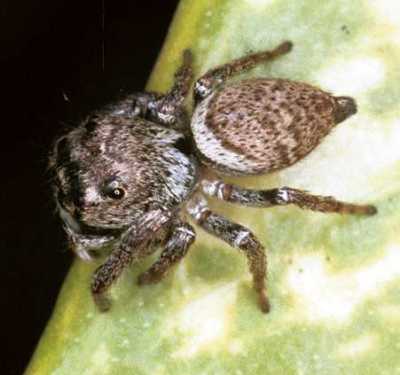 |
| Eryattus bleekeri |
Eryattus bleekeri |
Genus Hasarius
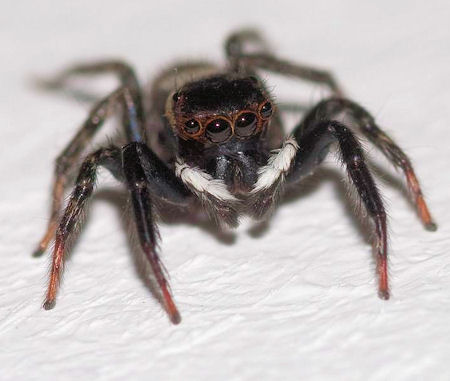 |
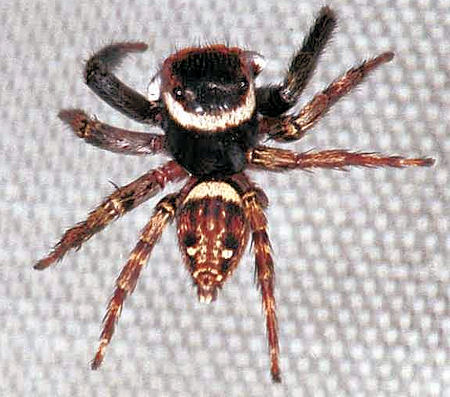 |
| Hasarius adansoni (Adanson's House Jumper) |
Hasarius adansoni |
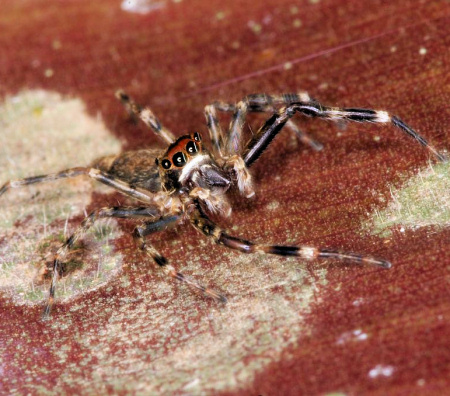
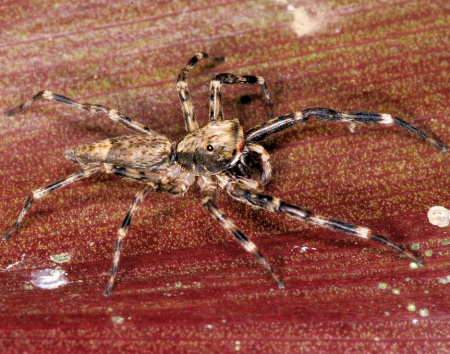
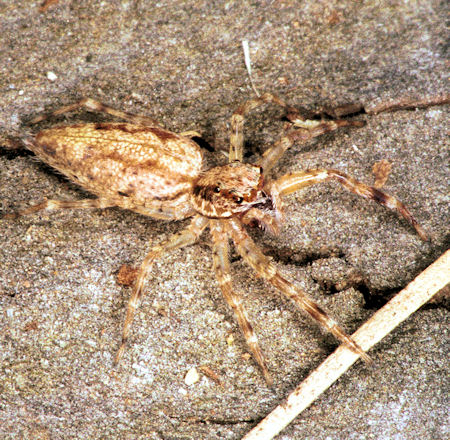
Genus Helpis
In Australia three species occur in this genus. These spiders are active
hunters on leaves during the day in shaded situations.
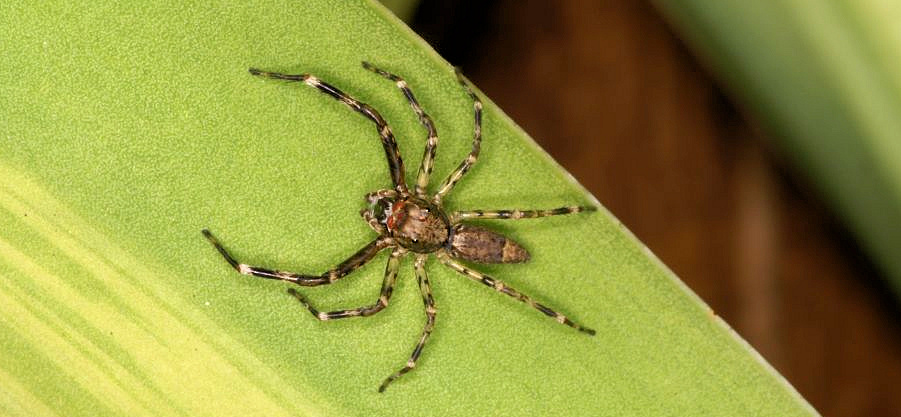 |
Helpis minitabunda male
The common name of this spider is Bronze aussie jumper. The spider is
between 8 - 10 mm and the malse are larger than the females. Females have
another and lighter colour pattern. The males front pair legs are longest.
These spiders ocuur in QLD, VIC and NSW |
 |
 |
 |
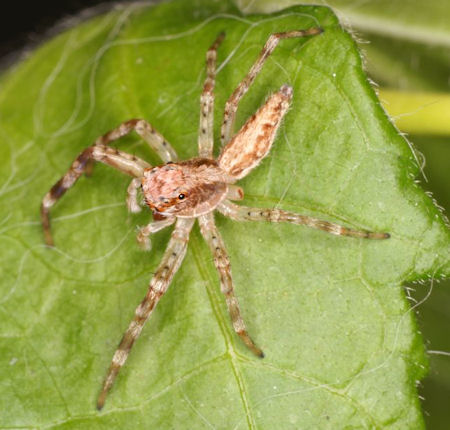 |
| Helpis minitabunda female |
Helpis minitabunda female |
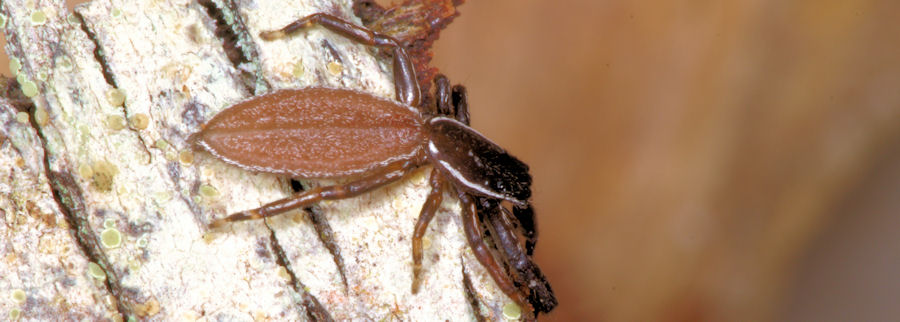
Genus Holoplatys
|
|
| |
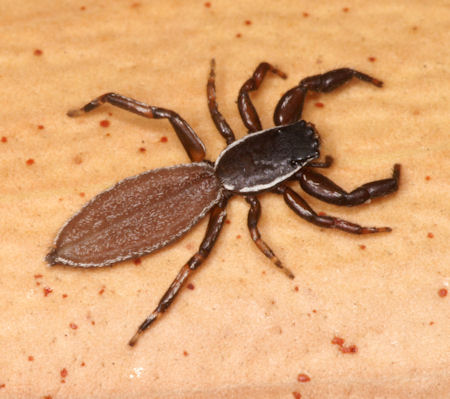
Holoplatys lhotsky |
|
A small jumping spider, with a body adpated for entering cracks and
folds in bark. This spider can be found in the cracks and folds in bark,
especially the eucalypt bark.
Its long slender body is adapted to its surroundings. |
 |
|
|
Holoplatys lhotsky |
Genus Hypoblemum renamed to Maratus
The in 2019 renamed spider names in this genus were again renamed In 2021.
See
Australian jumping spiders of the genus Hypoblemum,J Otto and D Hill
To be short:
Hypoblemum villosum -> Hypoblemum griseum -> Maratus griseum
Hypoblemum albovittatum ->
Hypoblemum griseum -> Maratus
griseum
Hypoblemum scutulatus ->
Hypoblemum scutulatum -> Maratus scutulatum
|
 |
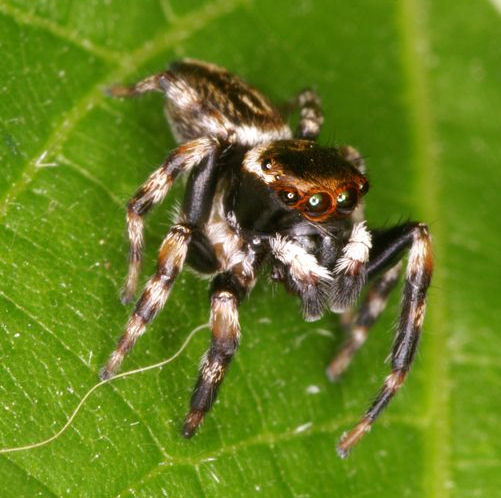 |
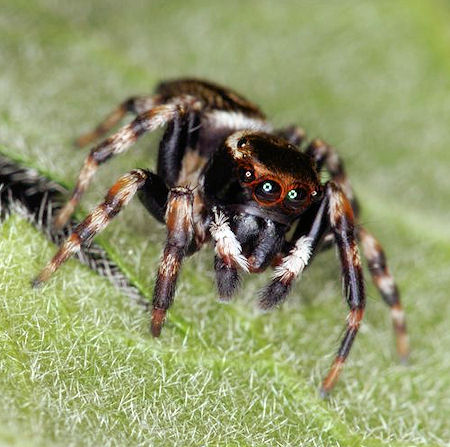
| Hypoblemum albovittatum male now
Maratus griseum |
Hypoblemum albovittatum male now
Maratus griseum |
 |
 |
| Hypoblemum villosum now
Maratus griseum from New Zealand Northern
island |
Hypoblemum villosum now
Maratus griseum from New Zealand Northern
island |
 |
 |
| Hypoblemum albovittatum From QLD now
Maratus griseum |
Hypoblemum albovittatum From QLD now
Maratus griseum |
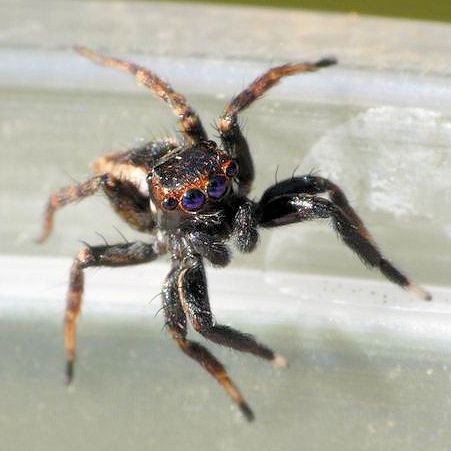
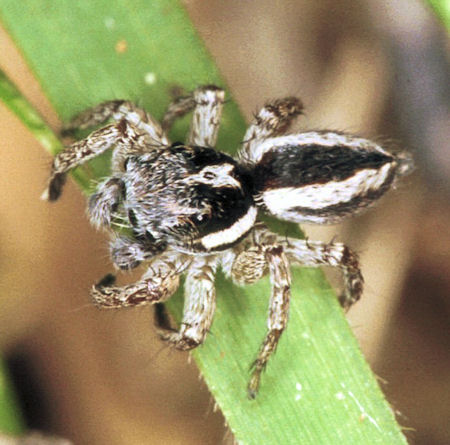
Genus Jotus
 |
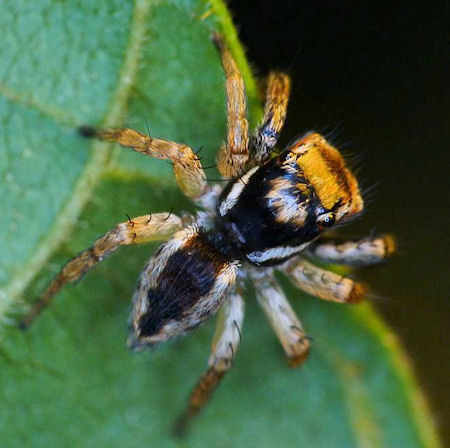 |
| Jotus minutus |
Jotus minutus |
 |
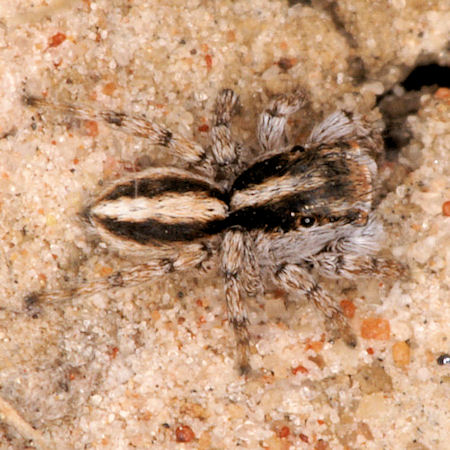 |
| Jotus minutus |
Jotus ZZ566 |
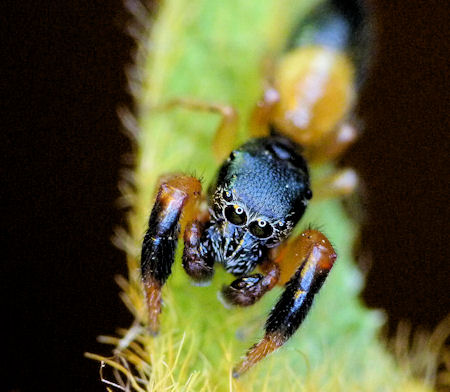
Genus Judalana
|
 |
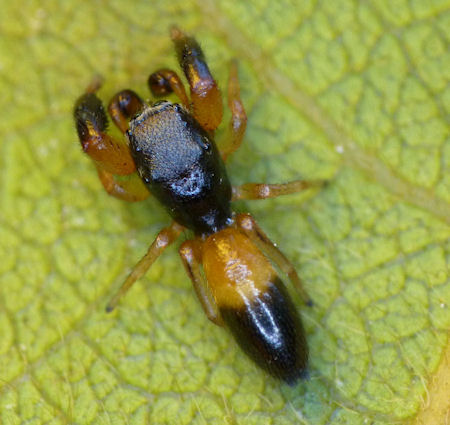 |
Judalana lutea Yellow ant-mimicking spider. The only member
in this genus and found only in Queensland
|
more info here --> |
Genus Ligonipes
 |
|
Ligonipes semitectus an ant-mimicking spider. |
Ligonipes semitectus |
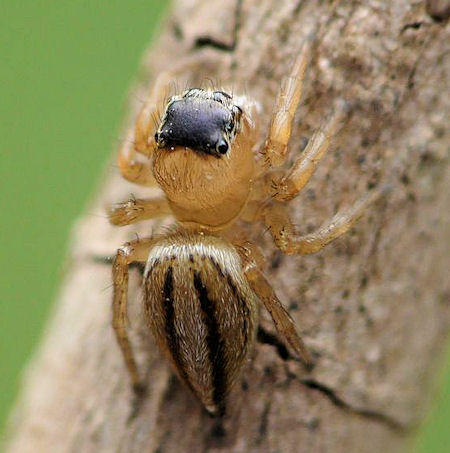
Genus Maratus ex Lycidas
 |
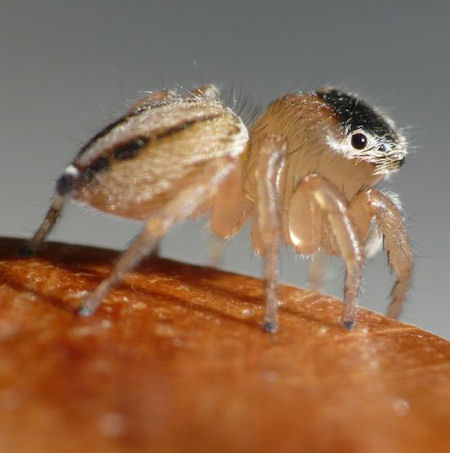 |
| Maratus scutulatus ex Lycidas |
Maratus scutulatus ex Lycidas |
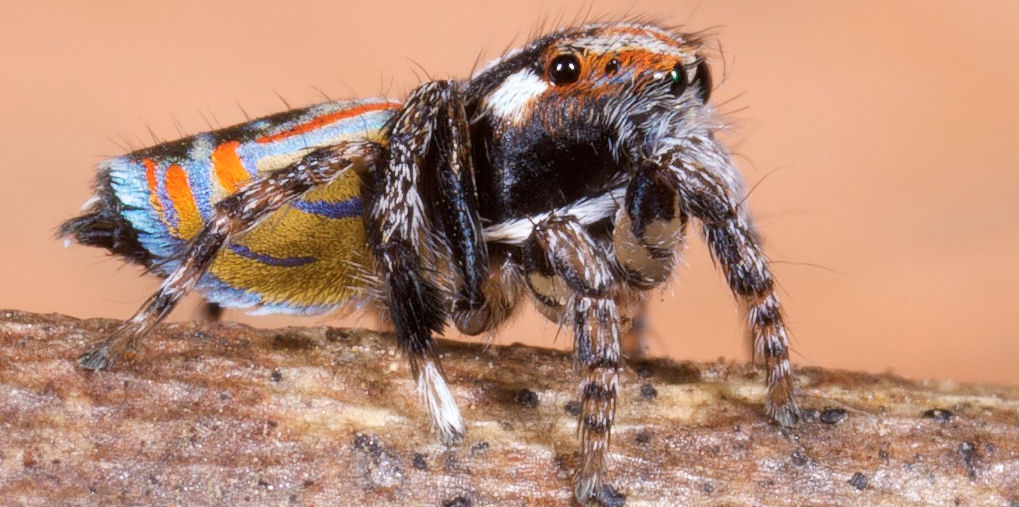
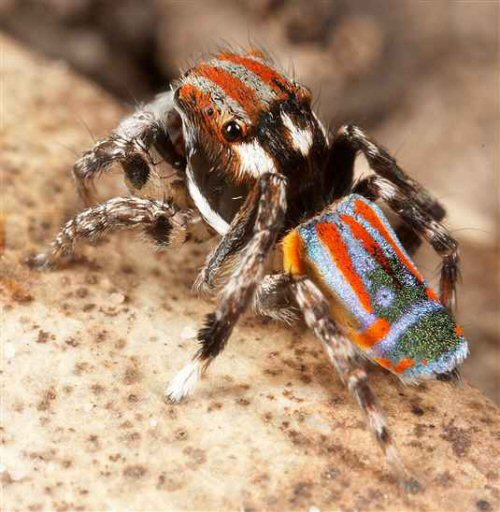
Genus Maratus formerly Saitis
All Maratus volans images copyright Jurgen Otto
An illustrated
review of the known peacock spiders of the genus Maratus from Australia, with
description of a new species, Jürgen C. Otto and David E. Hill, PECKHAMIA
96.1, 1 December 2011, 1―27
PECKHAMIA_148.4.pdf Catalogue of the Australian peacock spiders,
Jürgen C. Otto and David E. Hill
Genus Menemerus
 |
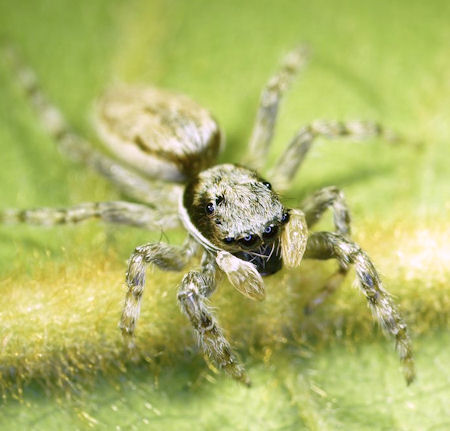 |
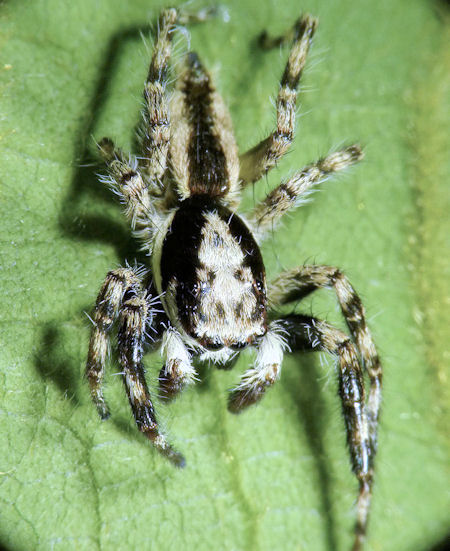
| Menemerus bivittatus male |
Menemerus bivittatus male |
Genus Mopsus
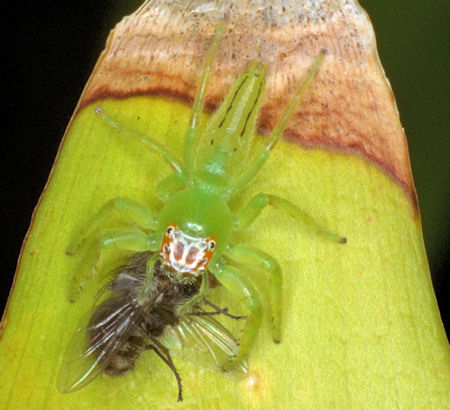
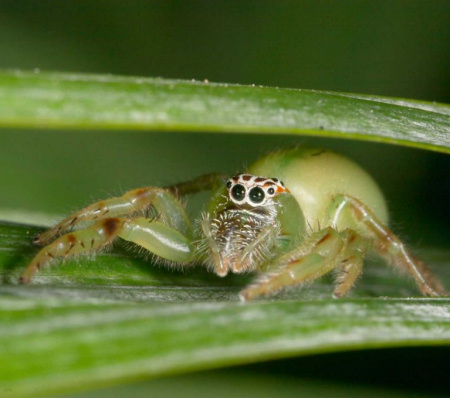
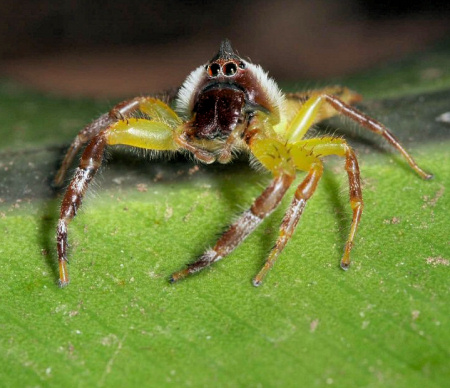
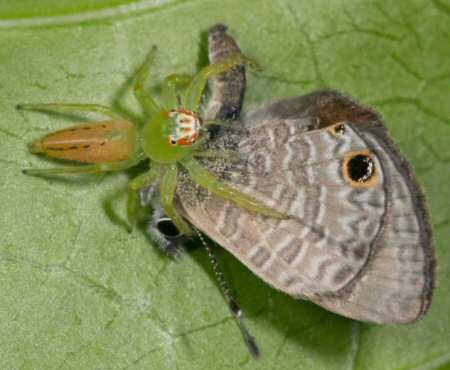
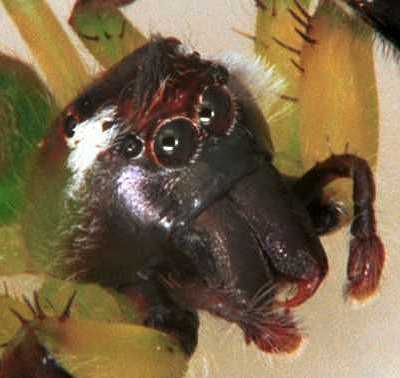
A genus with only one spider named Mopsus mormon, formerly also named
Mopsus penicillatus.
The common name of this spider is Green jumping spider or Northern green
jumping spider. They are found in Eastern Australia and New Guinea.
This is Australia's largest jumping spider. The female measures up to 18 mm
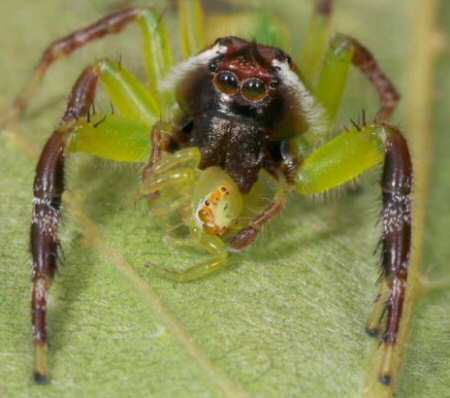
while the male is around 12 mm in body length. The spider catches large prey
during day-time with its stout two front pairs of legs. Their colour varies
widely with their surrounding but is predominantly green. They can be found on
broad green leaves and tree trunks.
|
 |
|
|
Mopsus mormon female |
Mopsus mormon male. Note the white whiskers on its head. |
 |
 |
| |
|
|
 |
 |
| And her front legs are capable of catching large prey. |
 |
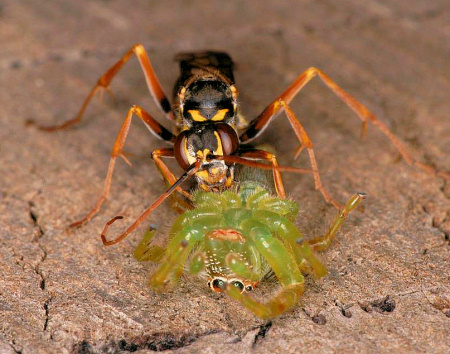 |
| Mopsus mormon male. Even his own kind is taken. |
But wasps are also serious enemies. |
Genus Myrmarachne
Genus Ocrisiona
 |
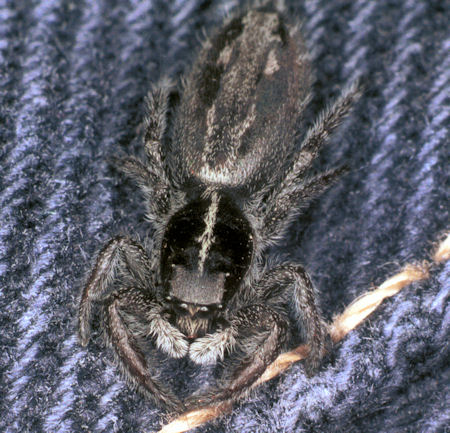 |
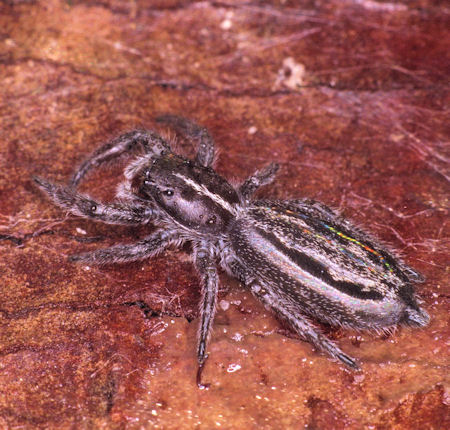
| Ocrisiona leucocomis? was found under the bark of a
tree near Brisbie Island. The spider was hidden beneath a sheet of silk. |
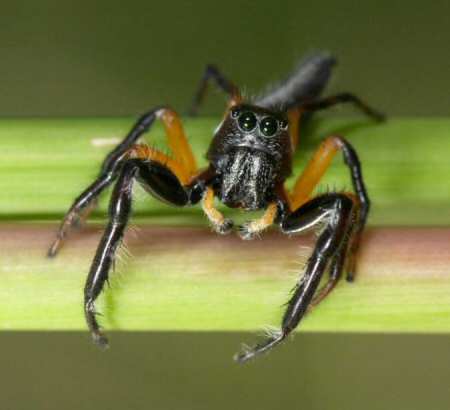
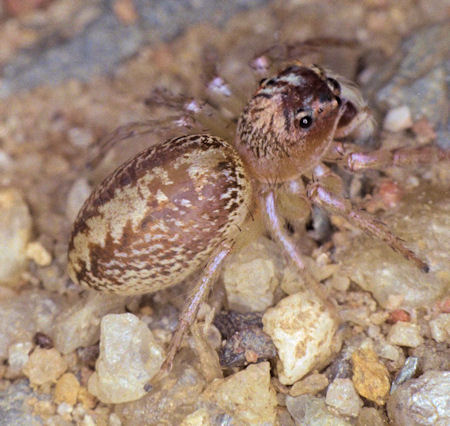
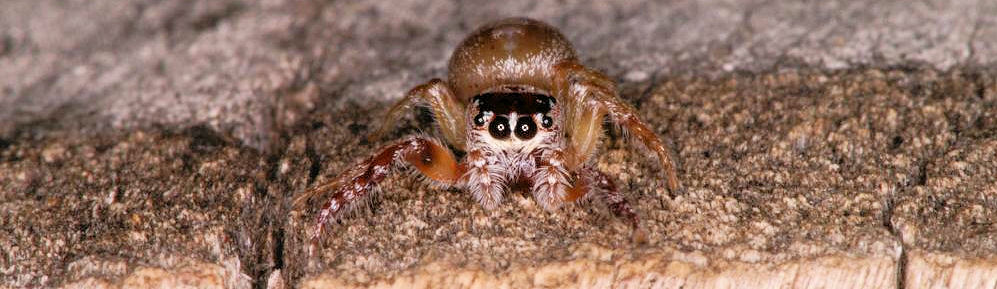
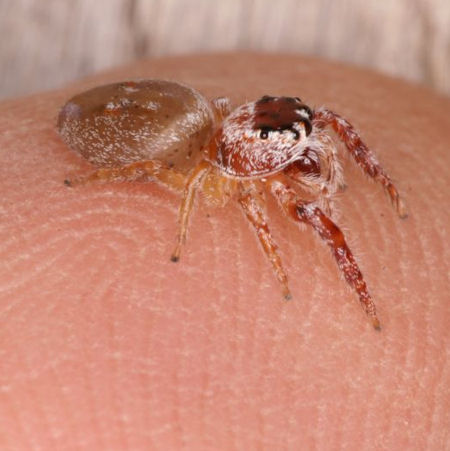
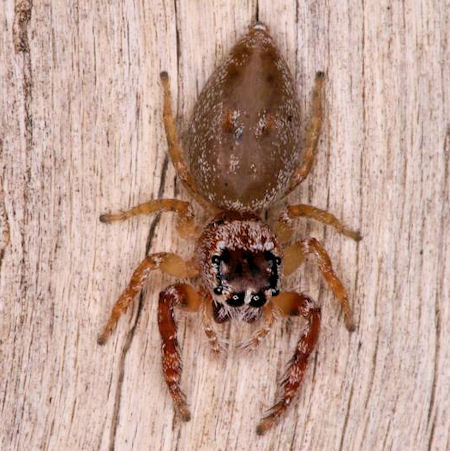
Genus Opisthoncus
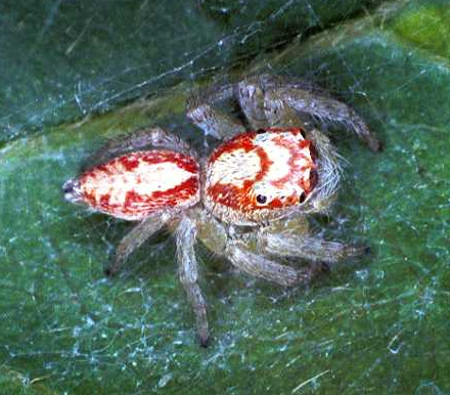
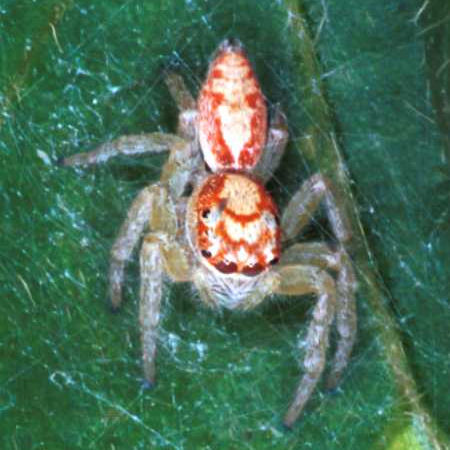
With 25 describes species Opistoncus is one of the largest genera of
the Australian Salticidae.
Males often differ substantially from females in colour pattern.
The spiders are often brown to black and often have a pattern white, grey,
brown or black zig-zag pattern on the abdomen.
The cephalothorax (head-breast part) has often patches of white, brown or
yellow patches and brown to red rings around their eyes.
The spider hunts during day-time like most salticids.
 |
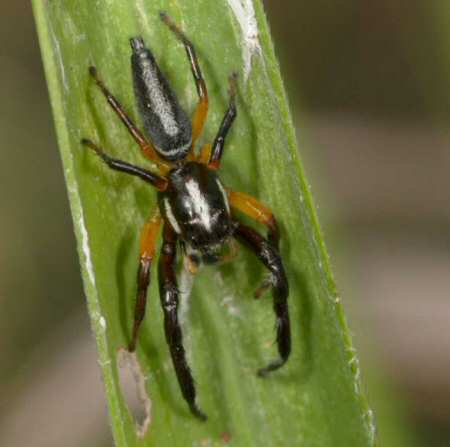 |
| Opisthoncus mordax male QLD |
Opisthoncus mordax male QLD |
 |
 |
| Opisthoncus? ZZ053 |
Opisthoncus ZZ031 |
 |
 |
 |
| Opisthoncus ZZ398 |
Opisthoncus ZZ398 |
 |
 |
| Opisthoncus_ZZ049 |
Opisthoncus_ZZ049 |
Genus Pellenus
 |
 |
|
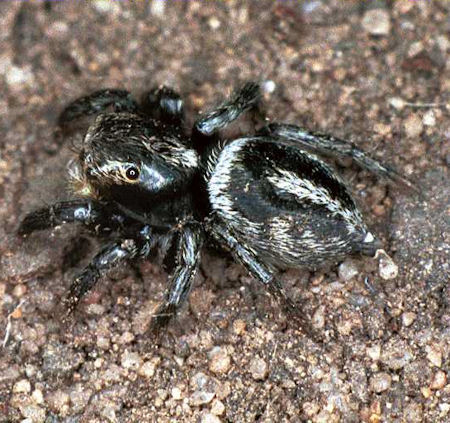
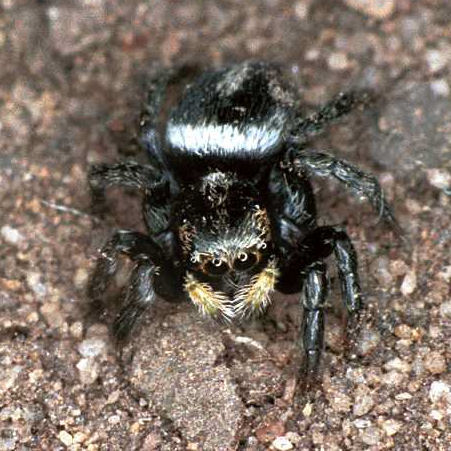
Pellenes bitaeniatus |
Pellenes bitaeniatus |
Genus Plexippus
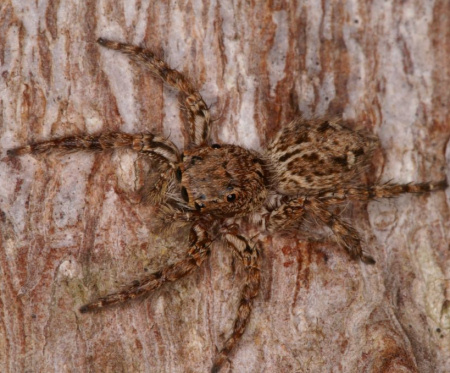
The common name of this spider is house fly catcher. The female is 7-9 mm
long and the male 6-7 mm. It lives throughout the tropics
 |
 |
| Plexippus petersi male |
Plexippus petersi male |
 |
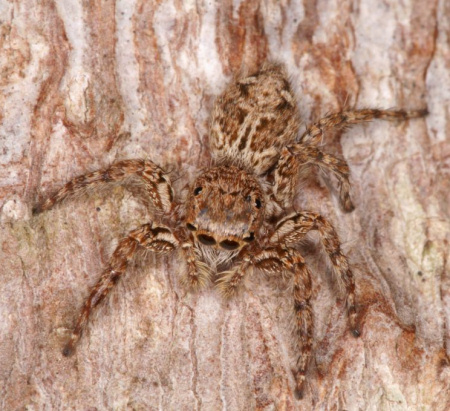 |
| Plexippus petersi |
Plexippus petersi |
Genus Prostheclina
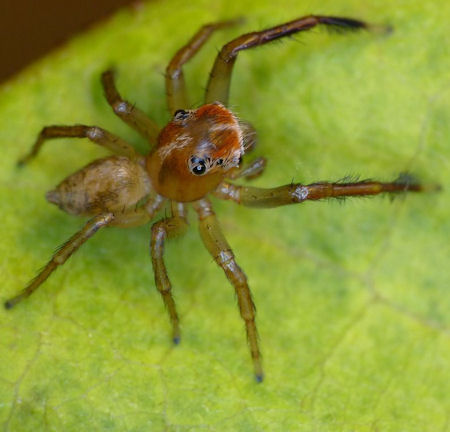 |
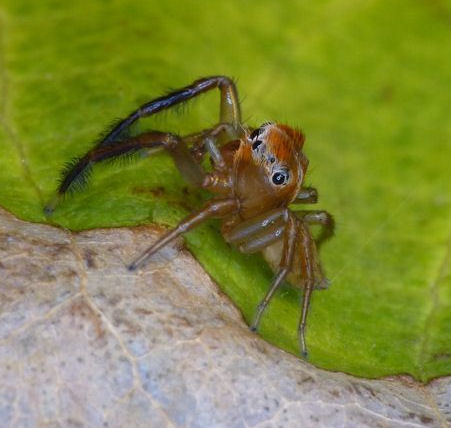 |
| Prostheclina bulburin male |
Prostheclina bulburin male |
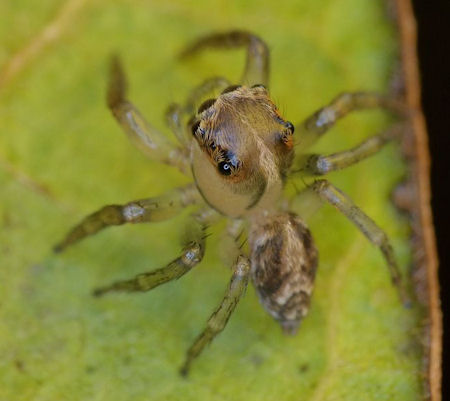 |
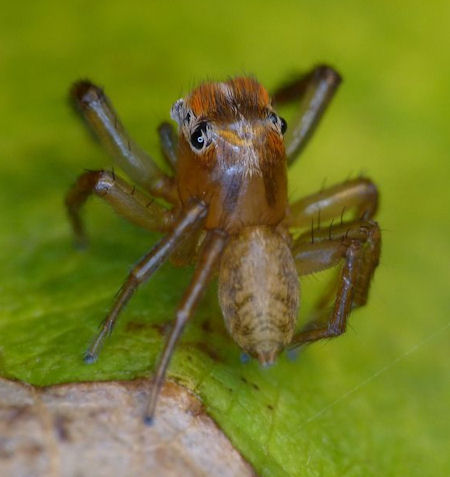 |
| Prostheclina bulburin female |
Prostheclina bulburin male |
Genus Rhombonotus
|
 |
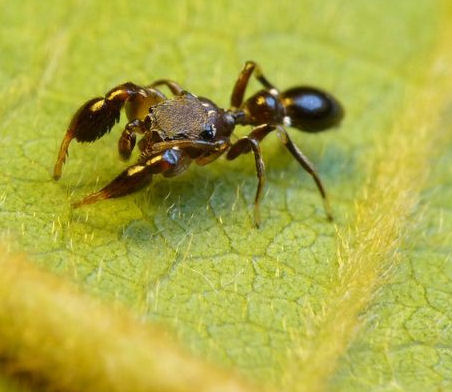 |
| Rhombonotus gracilis ant mimicking spider 3 - 4 mm long |
Rhombonotus gracilis Common name: Graceful Rhombonotus
More here:
saveourwaterwaysnow.com.au |
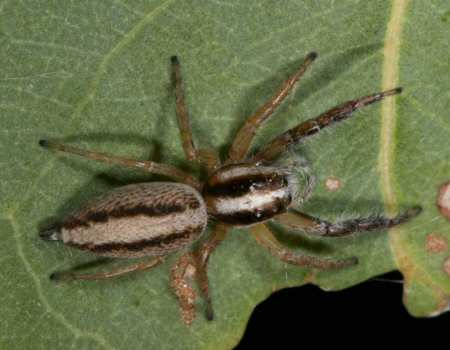
Genus Sandalodes
 |
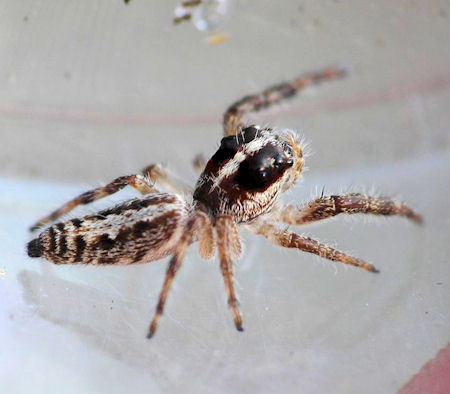 |
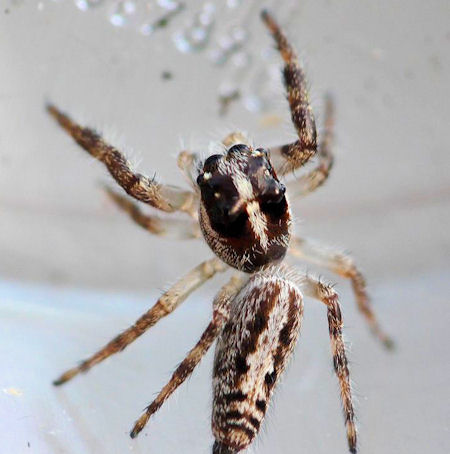
| Sandalodes bipenicillatus? |
Sandalodes bipenicillatus? |
 |
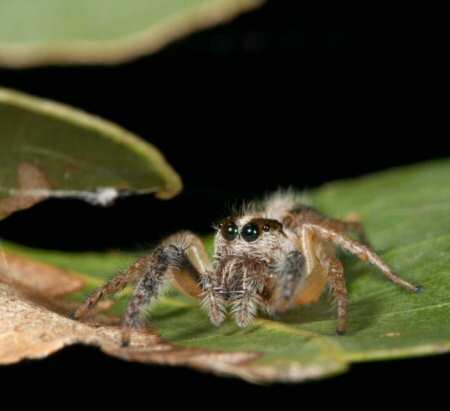 |
| Sandalodes? bipenicillatus? |
Sandalodes? bipenicillatus? |
Genus Servaea
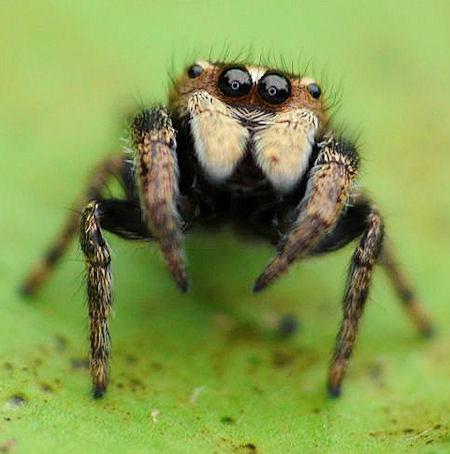
Genus Simaetha
 |
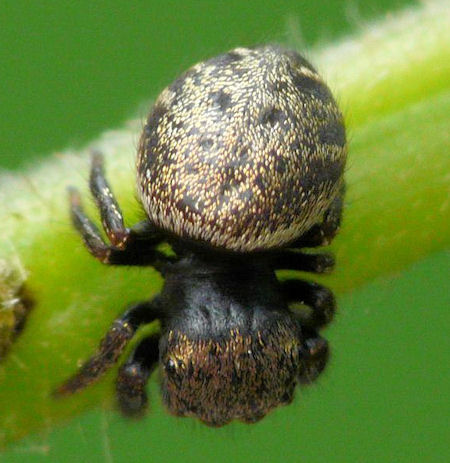 |
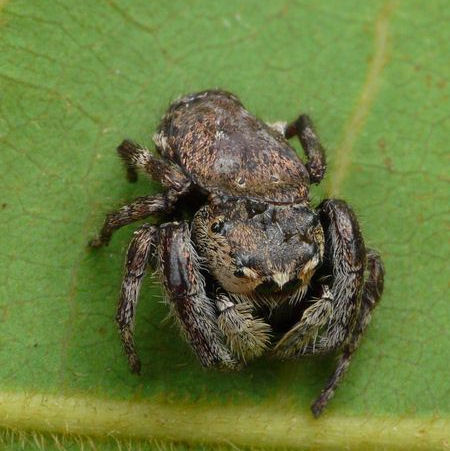
| Simaetha tenuidens
|
Simaetha tenuidens
juvenile |
 |
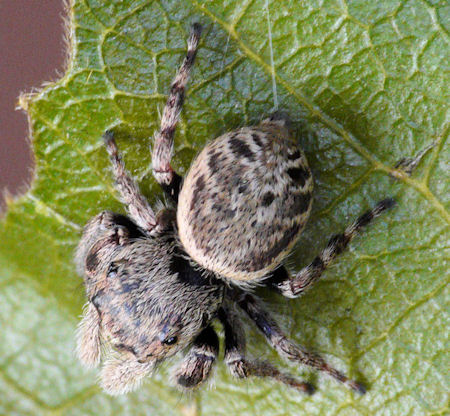 |
| Simaetha tenuidens male |
Simaetha tenuidens
female |
 |
 |
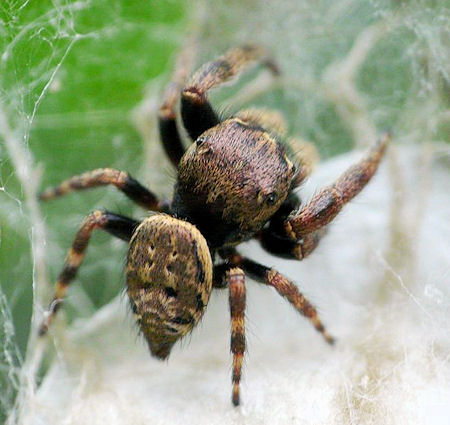
| Simaetha tenuidens
female |
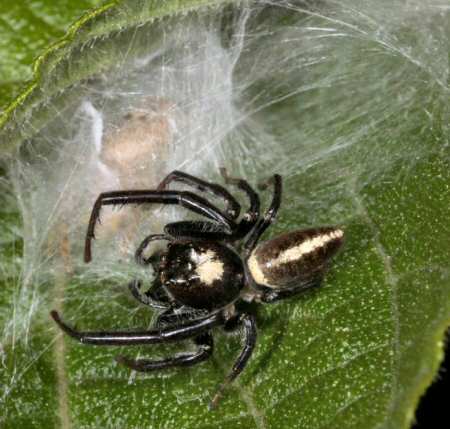
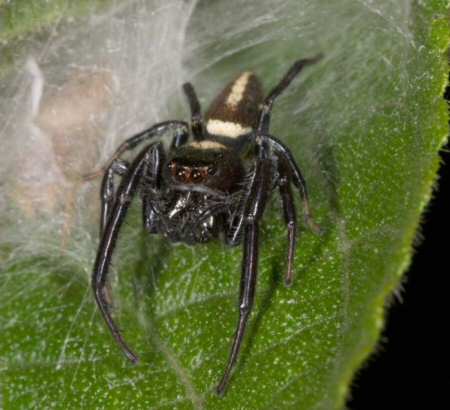
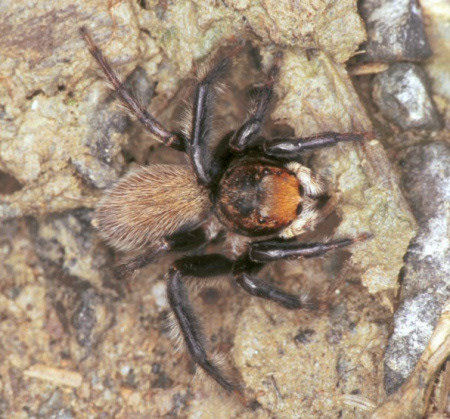
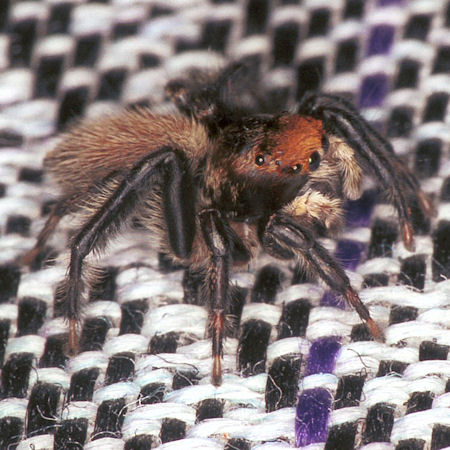
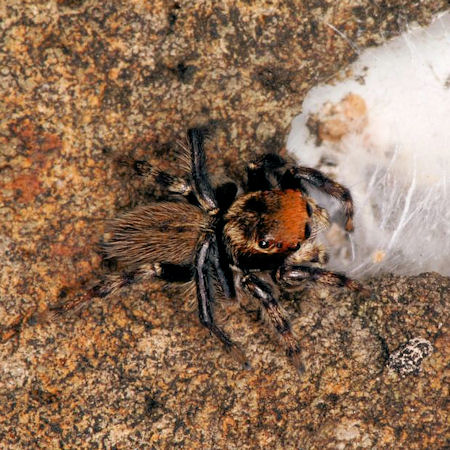
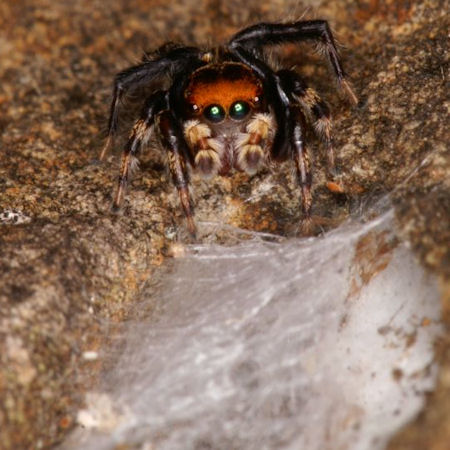
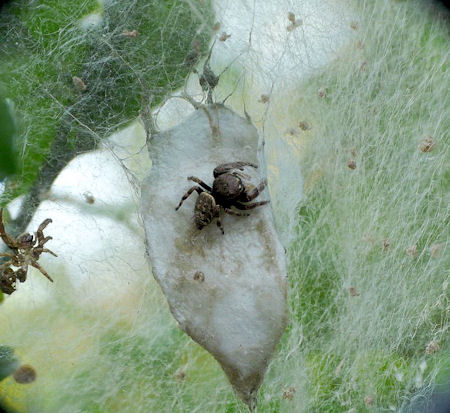
Simaetha tenuidens on her nest |
| Simaetha tenuidens is very similar to Simaetha thoracica
and are called Brown jumpers. These spiders are 5 - 8 mm long. young spiders
are covered with golden hairs they loose when older. The female has
attractive whiskers |
|
| Eight species of
Simaetha occur in Australia |
|
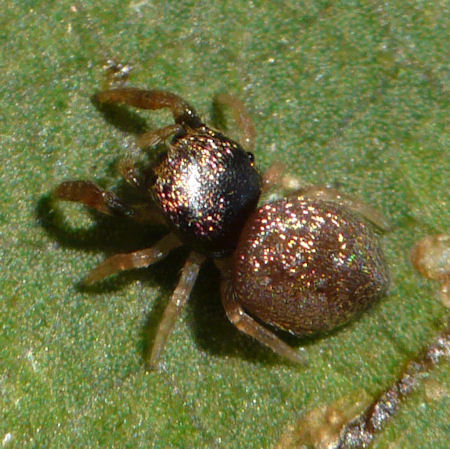
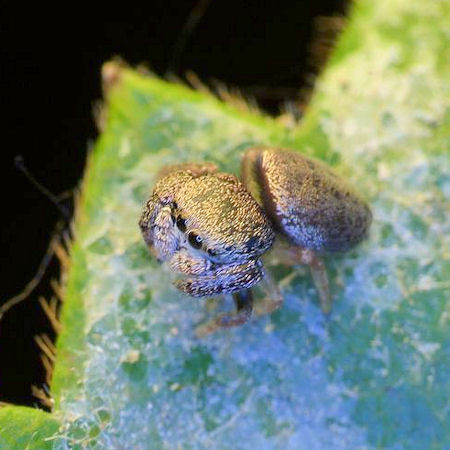
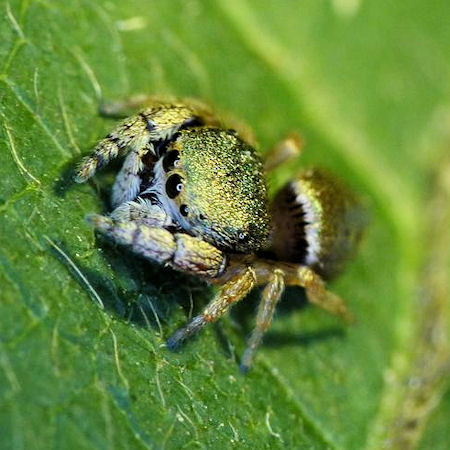
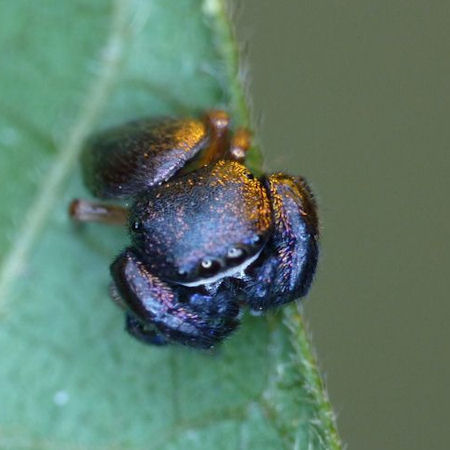
Genus Simaethula
These small jumping spiders closely related to Simaetha
but they are smaller.
Females are generally 2-4 mm and males 1-3 mm. |
|
 |
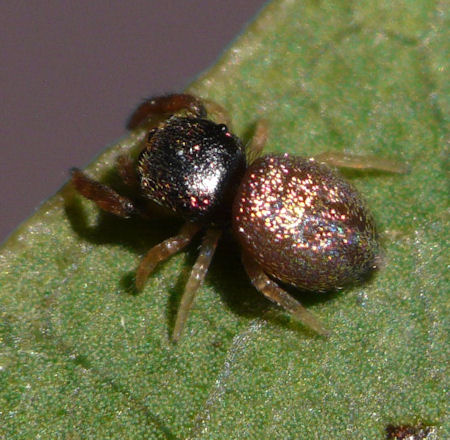 |
| Simaethula auratus |
Simaethula auratus |
 |
 |
| Simaethula ZZ483 |
Simaethula ZZ507 |
 |
|
| Simaethula ZZ559 |
|
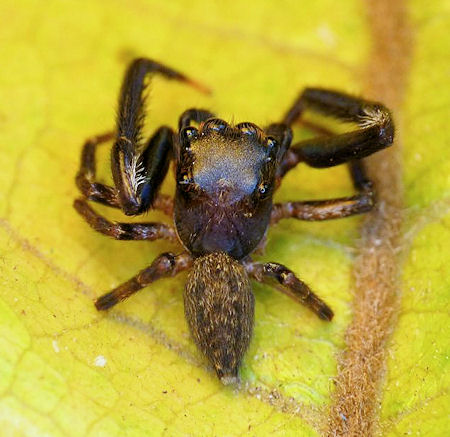
Genus Sondra
 |
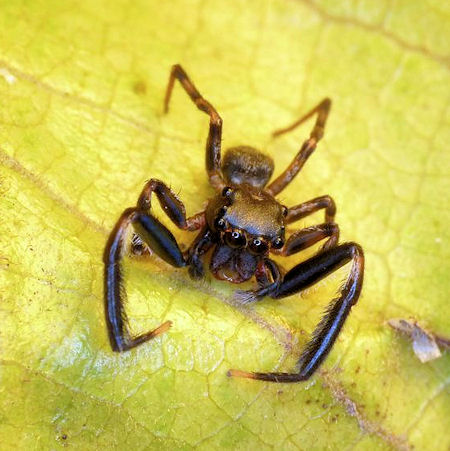 |
| Sondra nepenthicola |
Sondra nepenthicola |
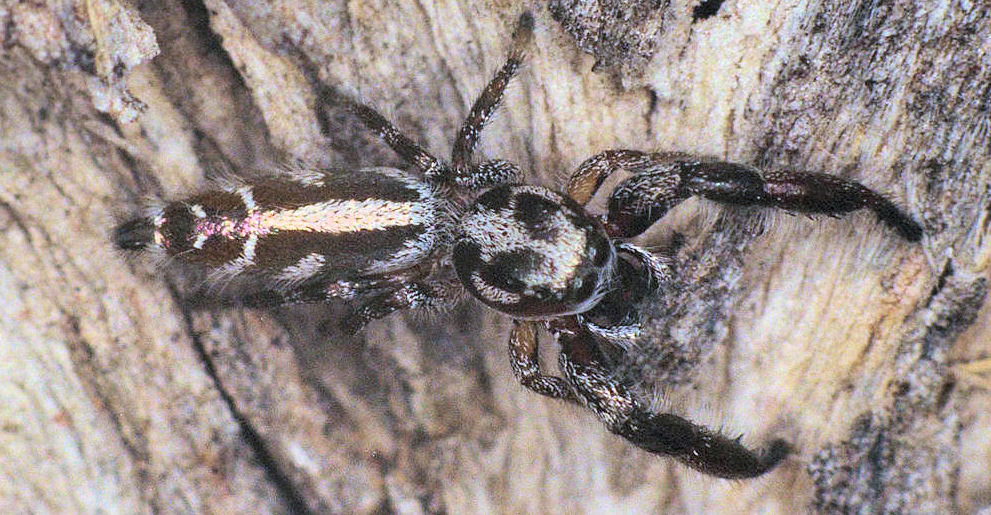
Genus Thyene
|
|
| |
Thyene ZZ026 |
|
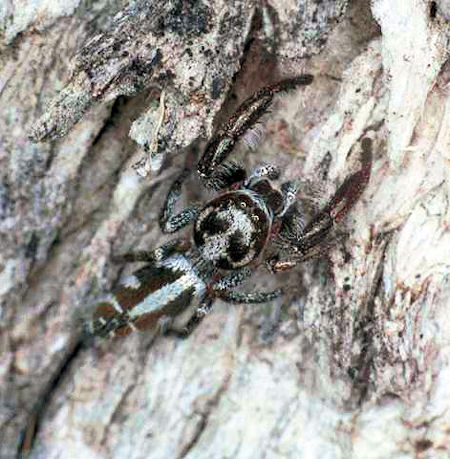
|
A small jumping spider. |
|
Thyene ZZ026
|
|
Genus Zenodores
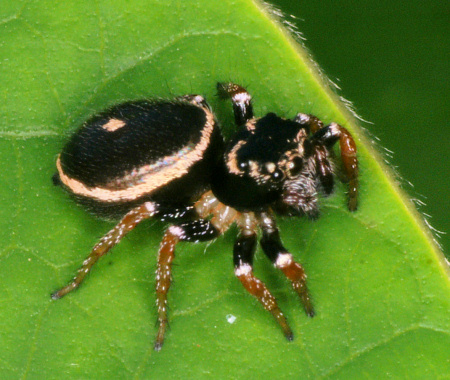
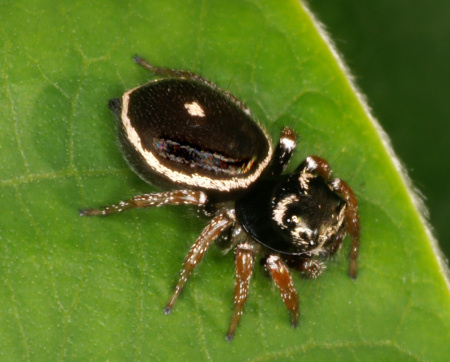
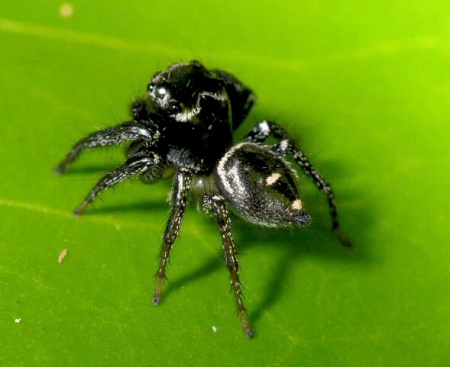
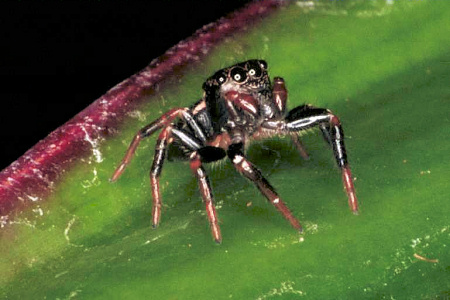
Zenodorus orbiculatus
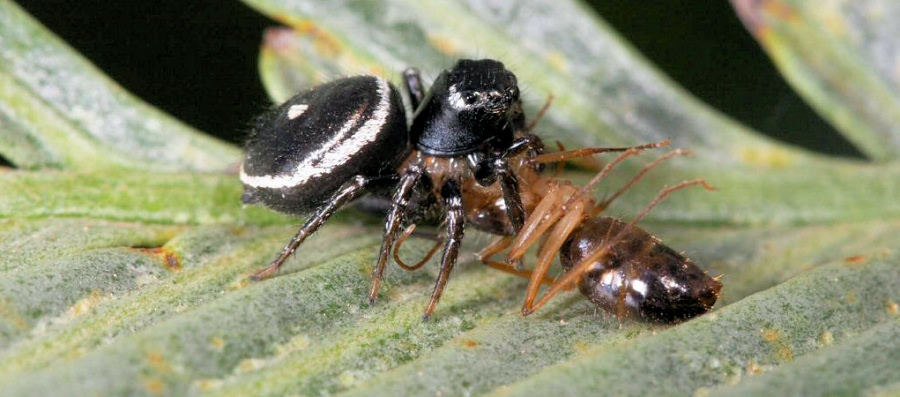 |
| This 7-9 mm long spider can found
between grass, on leaves or bark hunting soft bodied bugs and flies. It are
active hunter in shady situation during the day. The spider can be found in
coastal heathland in QLD and NSW . Male and females are similar in
appearance.
The spider name was formerly named Pystera orbiculata. |
 |
 |
|
Zenodorus orbiculatus |
Zenodorus orbiculatus |
 |
 |
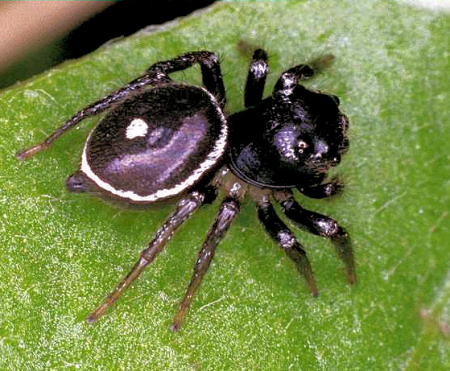
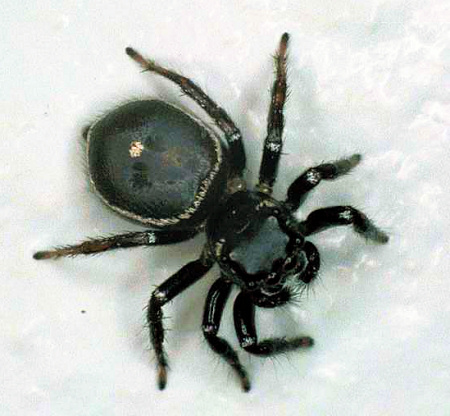
| The spider name was formerly Pystera orbiculata.
This 7-9 mm long spider can found hunting on soft bodied bugs and flies. |
Zenodorus orbiculatus |
 |
 |
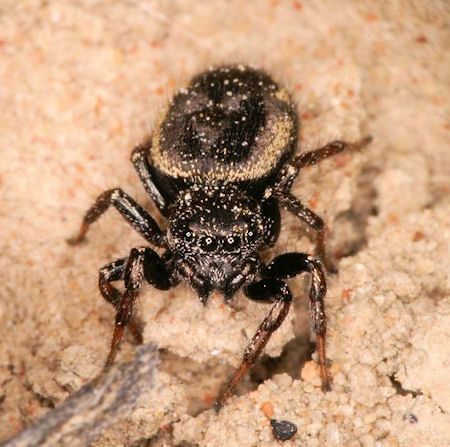
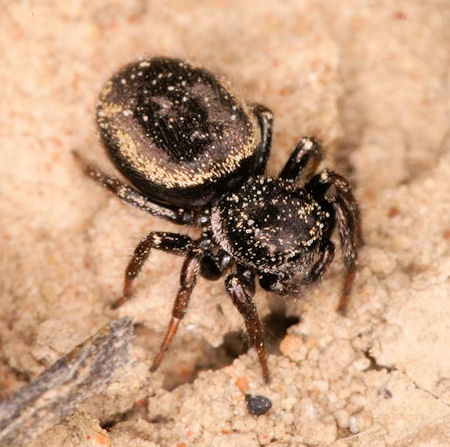
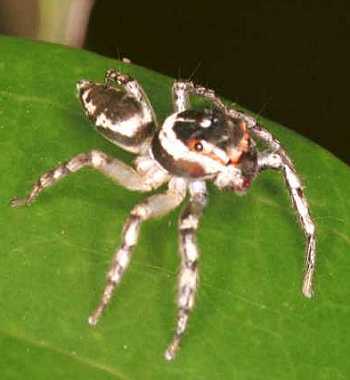
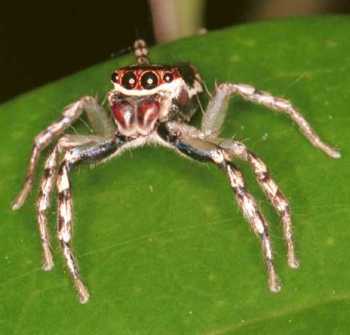
Unknown genera
 |
 |
| ZZ565 |
ZZ565 |
|
|
|
|
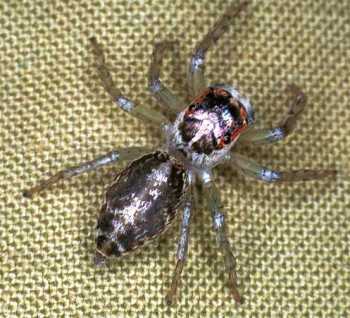
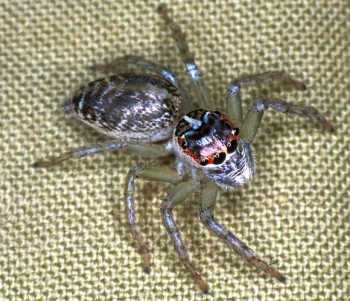
Cytaea ZZ046
|
Cytaea ZZ046
|
|
|
|
|
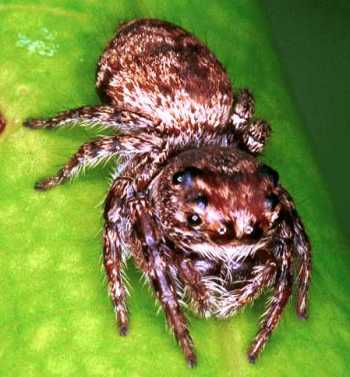
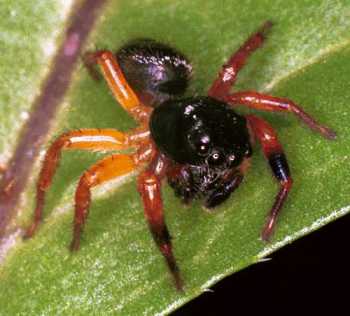
species ZZ051
|
species ZZ051
|
|
|
|
|
Simaetha ZZ047
|
Omoedus ZZ040 |
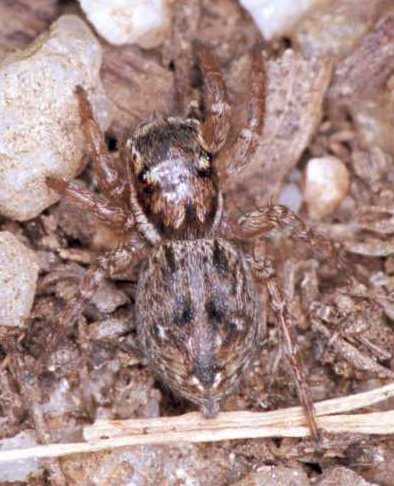 |
|
| Hypoblemum ZZ136 |
|
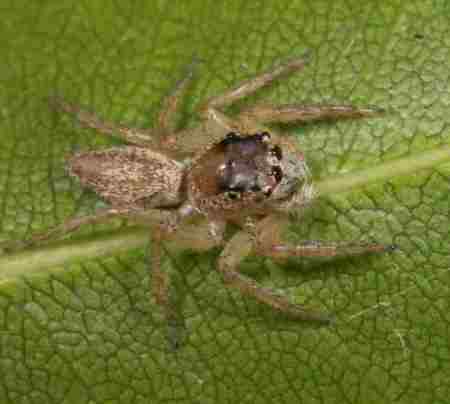 |
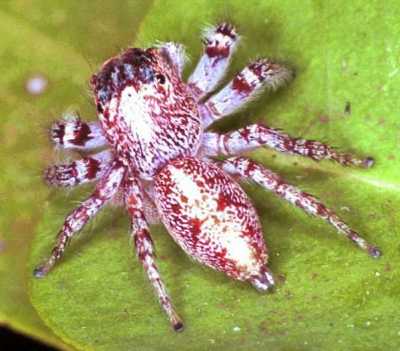 |
| Opisthoncus ZZ277 |
species ZZ188 |
|
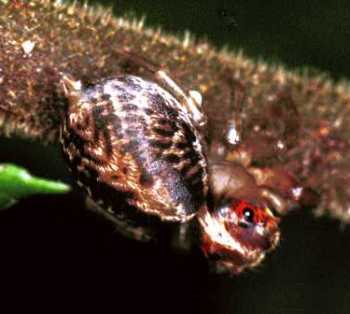
|
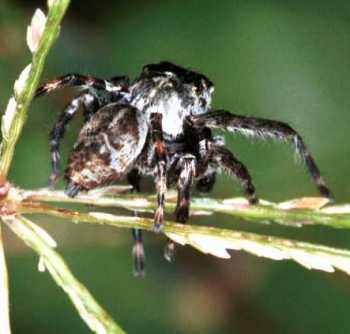
|
|
species ZZ027 |
species ZZ038 |
Ed Nieuwenhuys, 21 march 2023
14 november 2022, 10 may 2022, 27 January 2017, 8 february 2015 18 August 2012 , 28 December
2011, 20 april 2011,
14 december 2010 , 17 april
2010, 9 august 2009, 14 december 2008 , 15 november 2008,
26 november 2006, 14
juli 1996
Pictures on this page if not noted by Ronald Loggen, Jurgen Otto, Robert Whyte and Ed
Nieuwenhuijs
Copyright ã 1997-2023