The Sparassidae are sometimes incorrectly named 'tarantulas' or 'giant crab
spiders'.
Tarantulas is a name given to the large and hairy spiders belonging to the
families Ctenizidae, Dipluridae and Theraphosidae.
The largest spiders found in Australia is a huntsman with a leg span up to 160
mm! The family Sparassidae in australia contains >13 genera and more than 94
described species.
All spiders in this family have a flattened body, which allow them to find
shelter between loosened bark. They have eight eyes set in two rows of four.
Huntsman are nocturnal. At the start of the evening the spiders leave their
hiding places and wander around searching for prey.
When found, they kill the victim with a bite from its strong, curved fangs.
Because a spider has to change their skin, the skin of these giants can be
found hanging on trees or wires.
The Selenops family has only one member, Selenops australiensis.
This is a relative small spider, about 8 mm long, with a different
eye-setting; a row with six eyes on top and two on the second row.
Huntsman are widely spread in large numbers throughout the country and may
find shelter at your home.
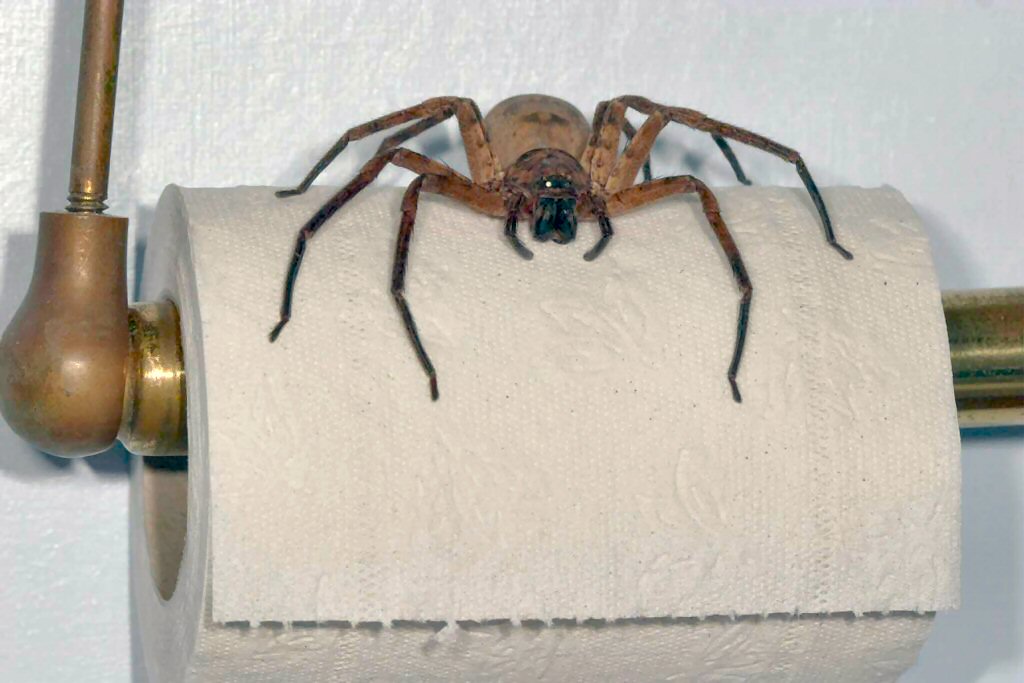
And .... sit on the toilet roll.
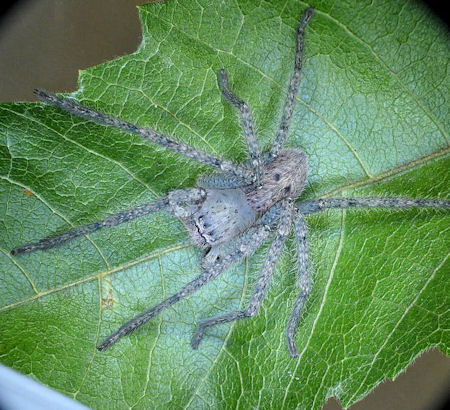
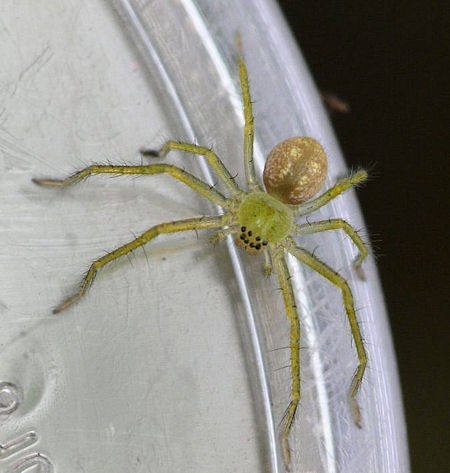
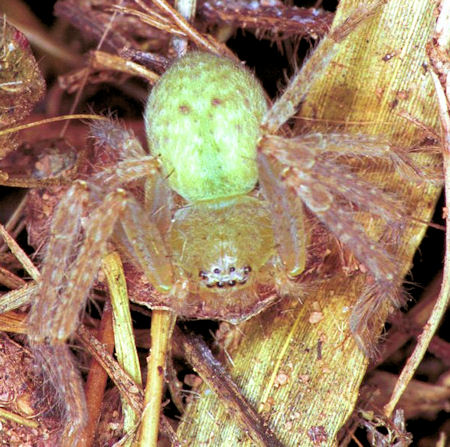
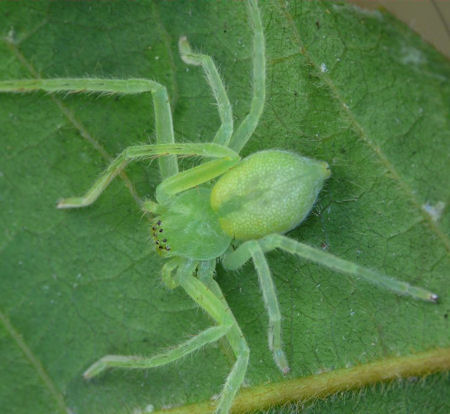
Genus Neosparassus formerly Olios
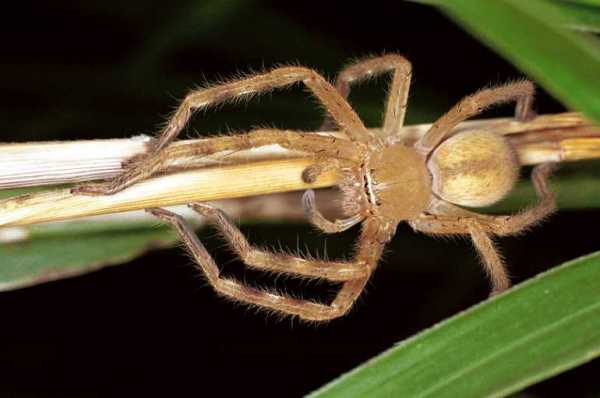 Neosparassus
salacius female Neosparassus
salacius female |
|
25 species are known in this genus and their body size is
around 15 mm. With their long legs they appear large. |
|
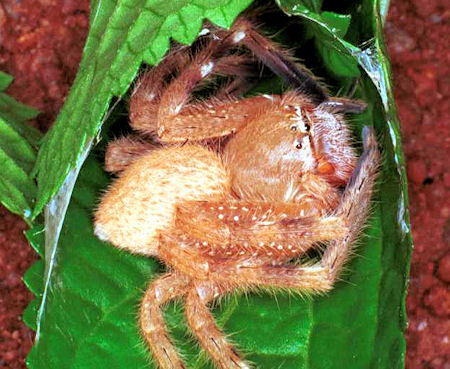
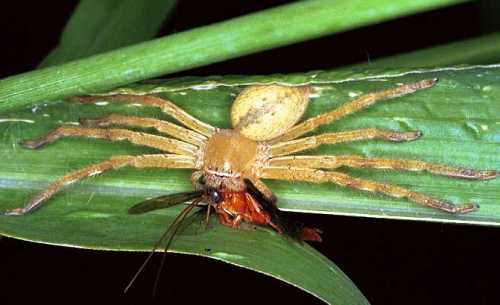 Neosparassus salacius female. This spider hides during the day in leaves, under bark or inside houses in curtains |
 |
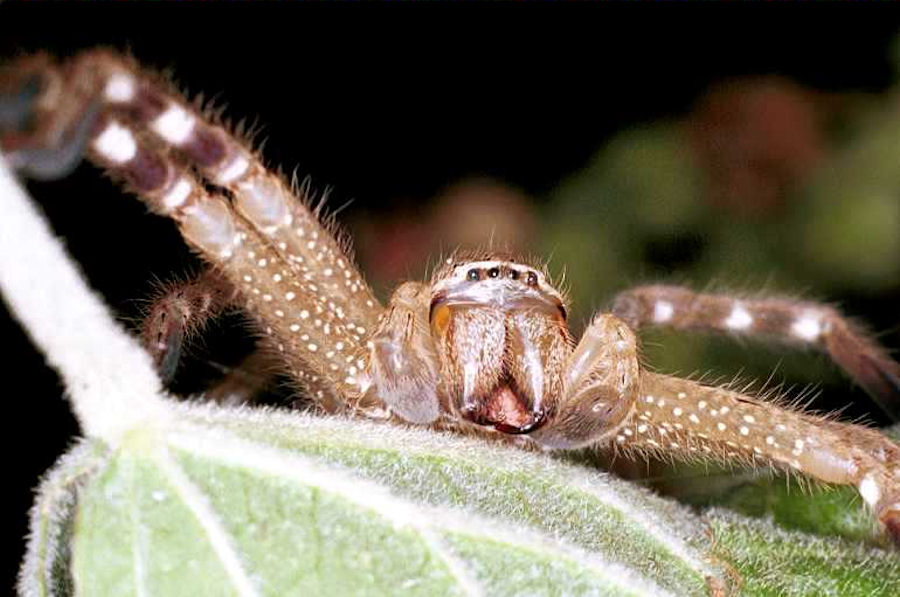 Neosparassus salacius male |
|
 |
 |
| Neosparassus diana by Brad McGinniss TAS | Neosparassus diana by Brad McGinniss TAS |
 |
 |
| Neosparassus ZZ593 | Neosparassus or Typostola ZZ489 |
 |
 |
| Neosparassus ZZ154 | Neosparassus ZZ572 Green huntsman spider |
 |
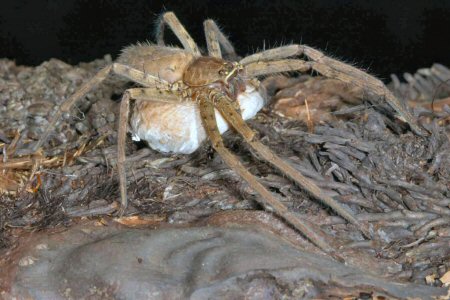 |
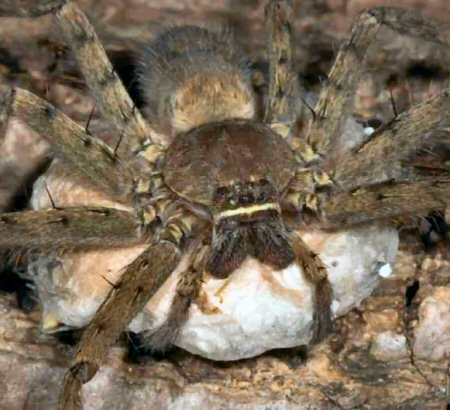
| Neosparassus? ZZ278 | Neosparassus? ZZ278 |
 |
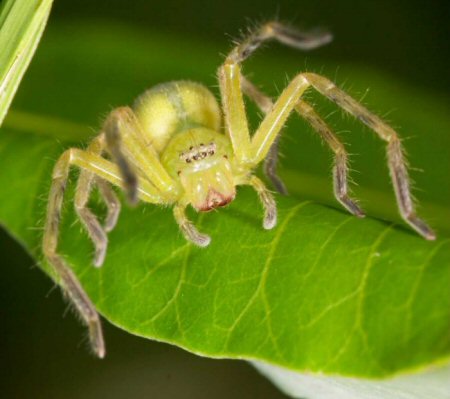 |
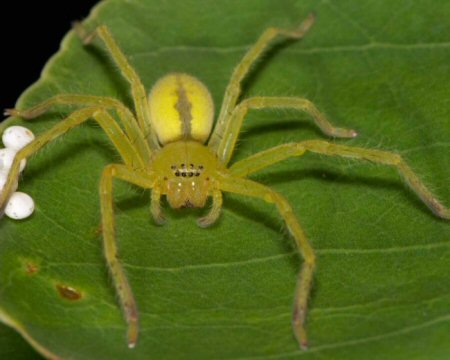
| Neosparassus_sp. ZZ280 | Neosparassus_sp. ZZ280 |
Genus Delena
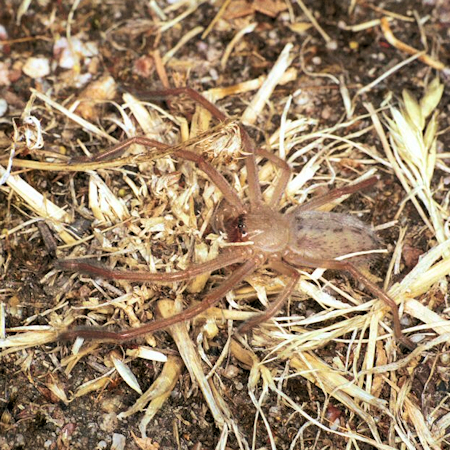 |
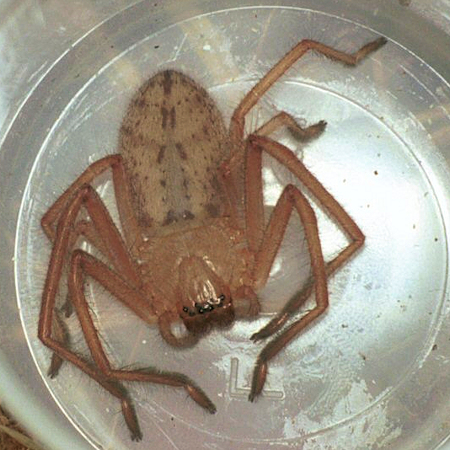 |
| Delena cancarides | Delena cancarides |
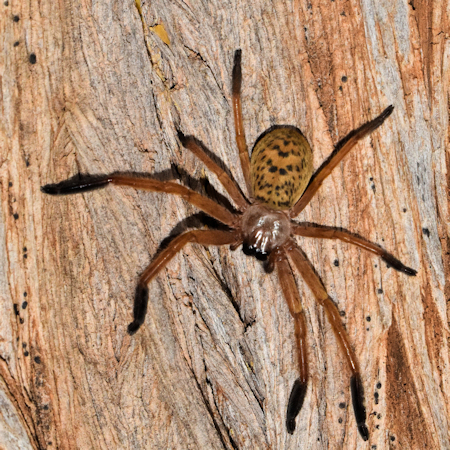 |
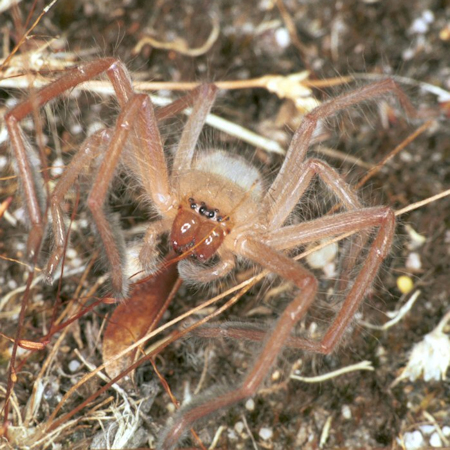 |
| Delena gloriosa Picture by Donna Newton SA | Delena_cancarides_F1643 |
Delena cancarides has been reported as being a social spider. A social
spider is defined as a "cooperation among mutually tolerant individuals".
About 20 spider species has been described as social. They fulfil the main
criterion of sociality; cooperation in prey capture and in brood care.
This is also the spider that featured in the movie Arachnophobia. The spider was imported from New Zealand, where it lives around Avondale, because Australian regulations prohibited their export from there.
(This message was originally sent to the Arachnology Mailing List by David Rowell) Delena cancerides (Sparassidae, or Heteropodidae if you like) is found pretty much all over Australia, wherever there are suitable trees. It is the only social sparassid reported, and can live in colonies of up to 300 spiders under bark. Adult females can have a leg spread exceeding 14cm. Delena cancerides has been well characterised chromosomally and allozymically, and is particularly unusual as it possesses a number of distinct chromosomal races that differ by carrying different combinations of chromosomal fusions. This is a useful marker as it has made it possible to determine from where in Australia New Zealand's "Avondale spider" originated. Several of the chromosomal races can hybridise and produce fertile offspring, resulting in distinctive hybrid zones. In the best studied of these, animals can have anything from 22 to 43 chromosomes and produce viable sperm. I have students currently studying the social behaviour of this species as it is particularly unusual. It is one of only 2 social spiders reported which do not build a web snare, and it shows marked intercolony aggression. Very little is known about its dispersal and mating system, however it is clearly outbreeding, as it is among the most allozymically polymorphic (and heterozygous) of all spiders - in contrast to other social spiders, which tend to show very low heterozygosity levels. It's hard to understand how outbreeding is facilitated, given that colonies tend not to tolerate the presence of individuals from other colonies.
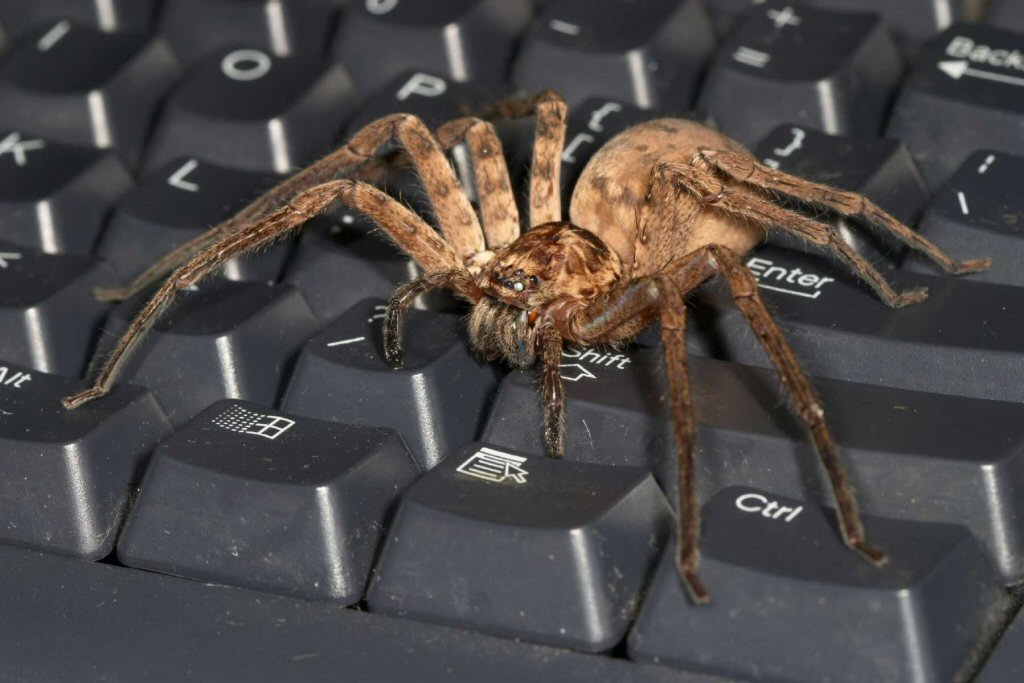
Heteropoda sp. ZZ279
 |
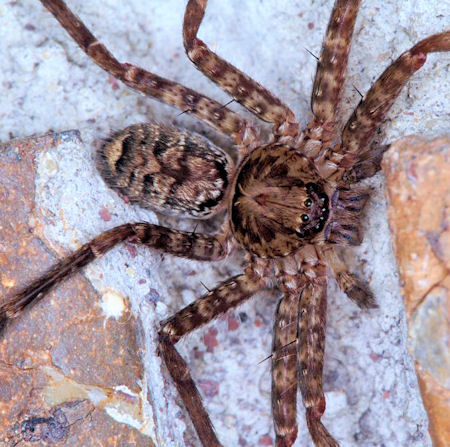 |
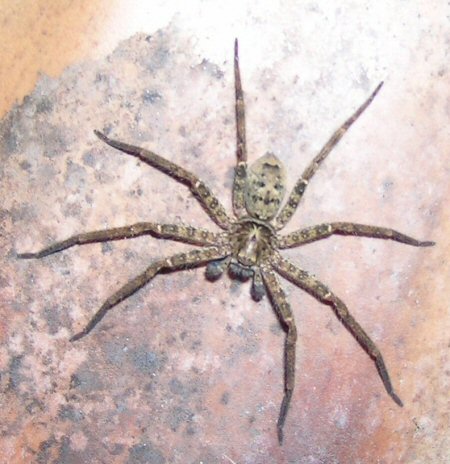
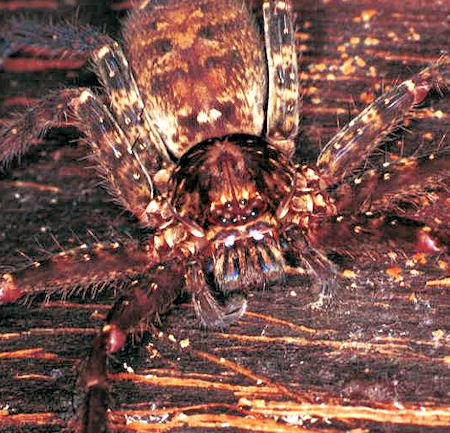
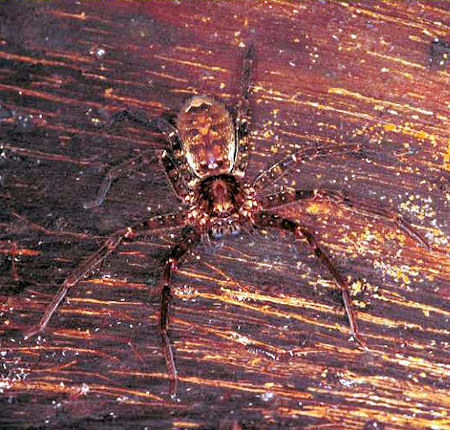
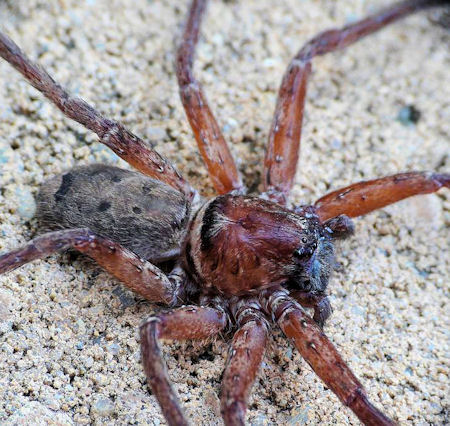
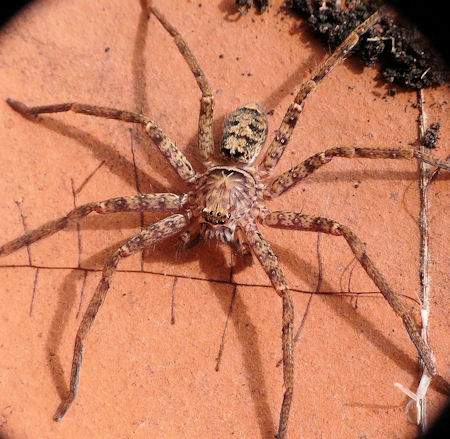
| Heteropoda cervina or brown huntsman spider | Heteropoda jugulans |
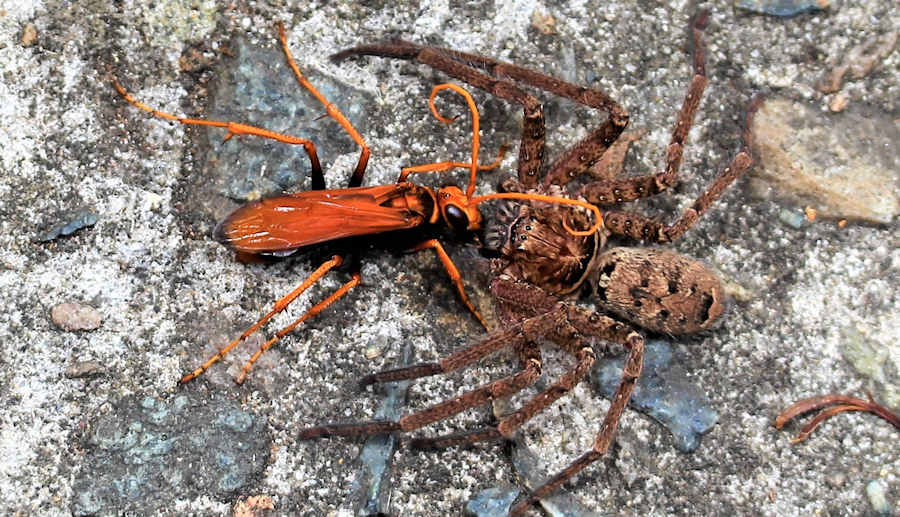
Heteropoda jugulans attacked by Cryptocheilus bicolor, A member of Tarantula Hawks and Allies Subfamily Pepsinae. Picture by Greg Russell-Jones |
|
 |
|
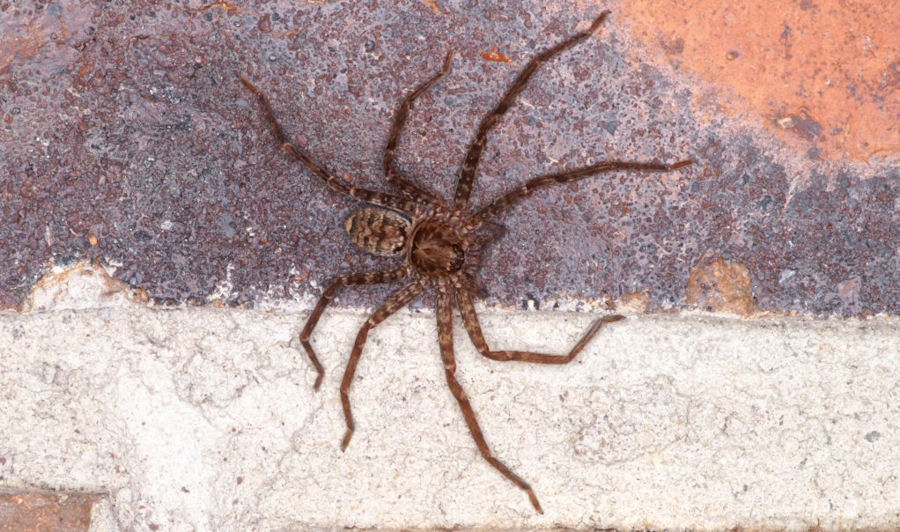
| Heteropoda jugulans | |
 |
 |
| Heteropoda jugulans | Heteropoda jugulans |
 |
 |
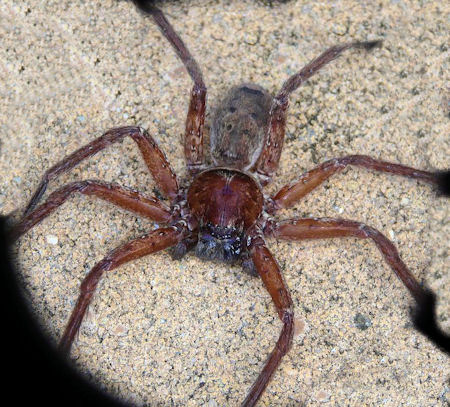
| Heteropoda cervina | Heteropoda cervina |
 |
|
| Heteropoda cervina | Heteropoda cervina |
Genus Holconia (former Isopeda)
 |
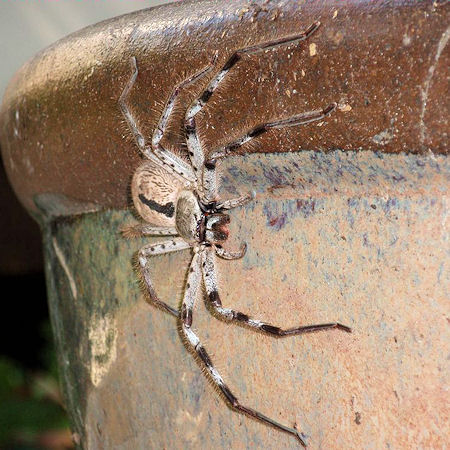 |
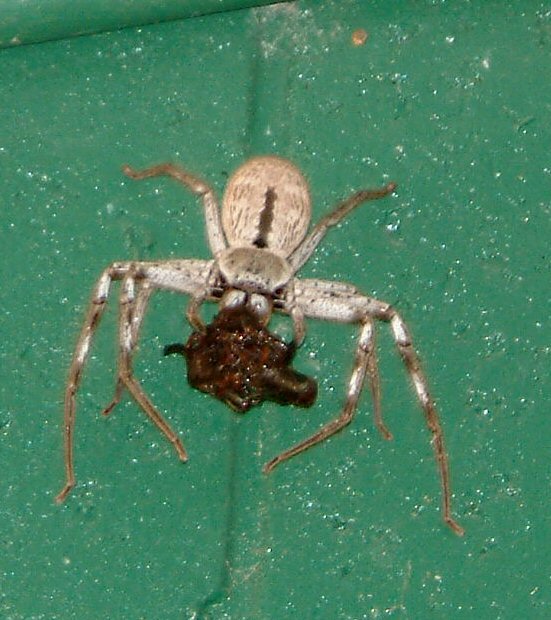
| Holconia immanis by Rob Girard. | Holconia immanis |
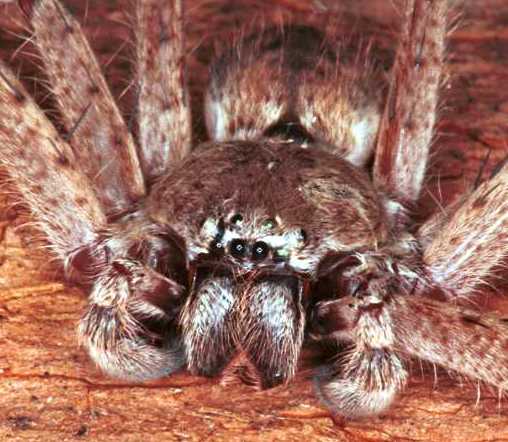
This female Giant grey huntsman spider can measure up
to 45 mm and is one of the larger Australian spiders. They live on eucalypt
trees but also like to live in houses and sheds. |
|
 |
 |
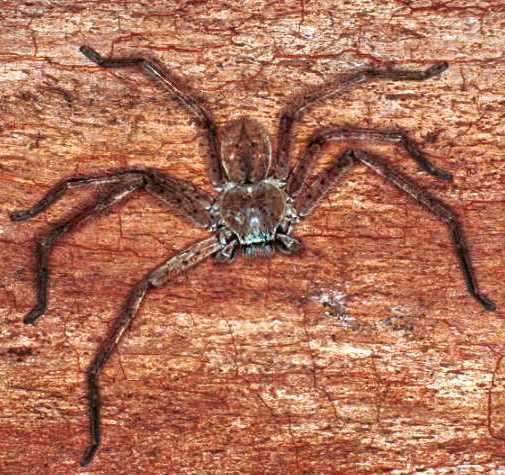
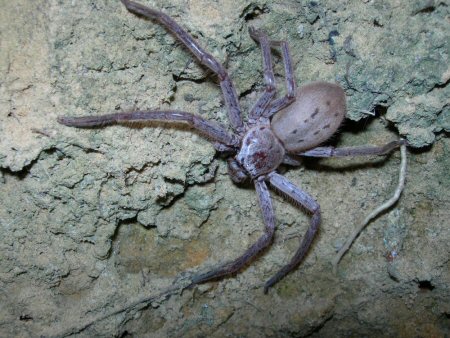
| Holconia flavida | Holconia flavida |
 |
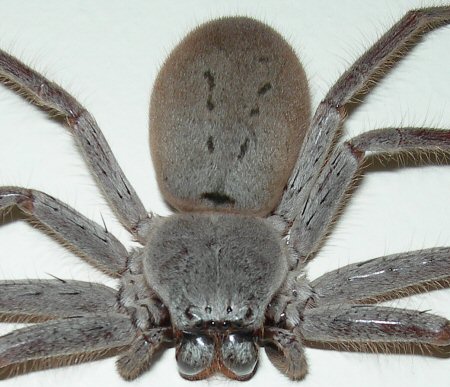 |
| Holconia vasta (by Colin Halliday) (QLD) | Holconia vasta (by Colin Halliday) (QLD) |
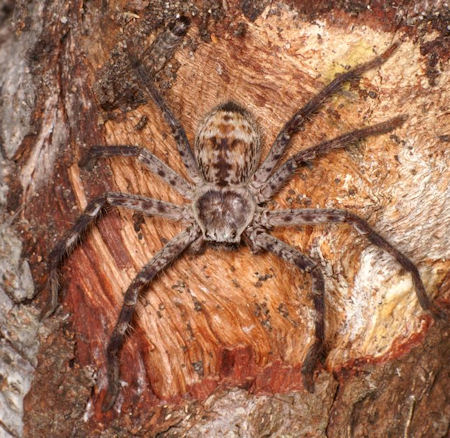
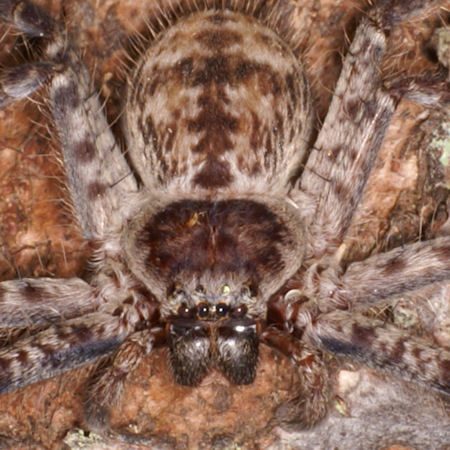
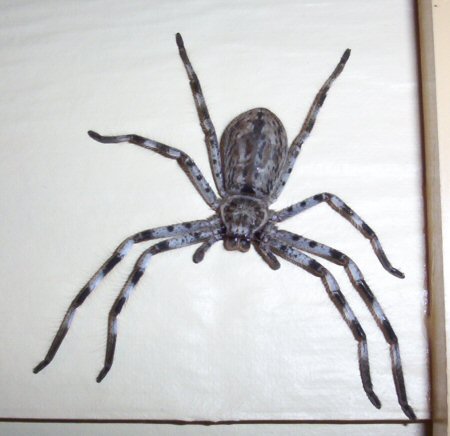
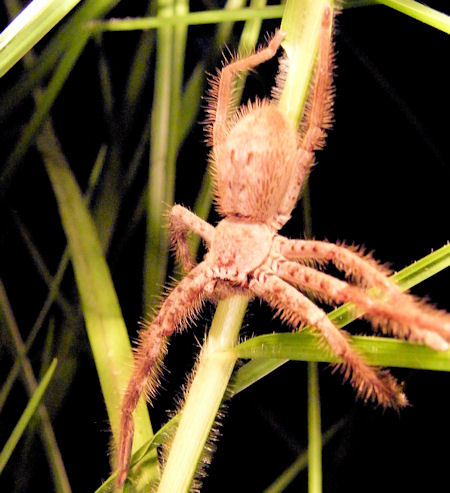
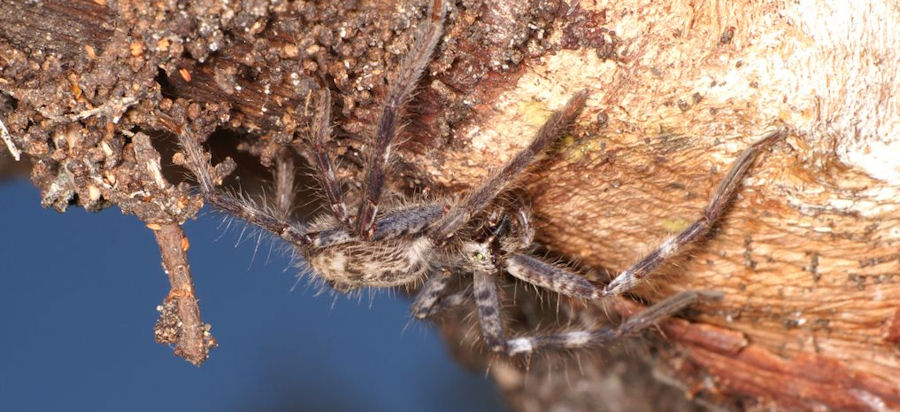 Holconia insignis. This spider is also known as the banded huntsman spider. The male is 25-30 mm and the female 32-40 mm large. This species is one of the largest in its genus in Australia. |
|
 |
 |
| Holconia insignis | Holconia insignis |
 |
 |
| Holconia insignis by Rosemary Robinson Megalong
Valley, Blue Mountains. |
Holconia ZZ450 by Wendy Eiby (WA) |
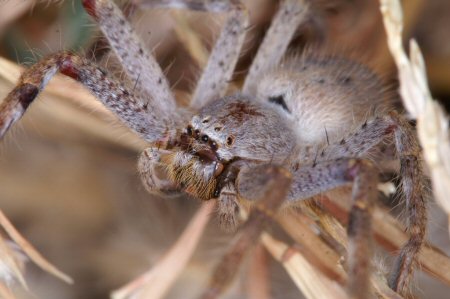 |
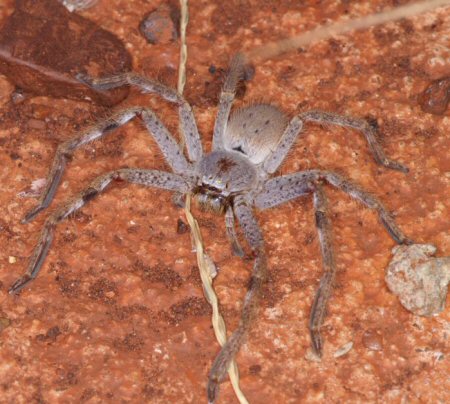 |
| Holconia ZZ306 (WA) | Holconia ZZ306 (WA) |
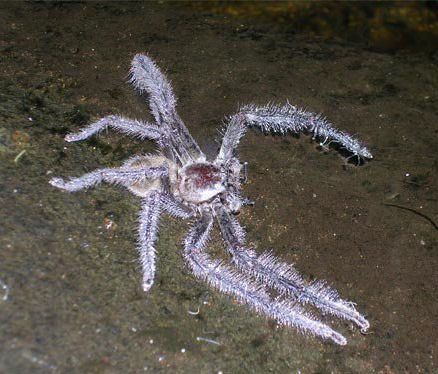 |
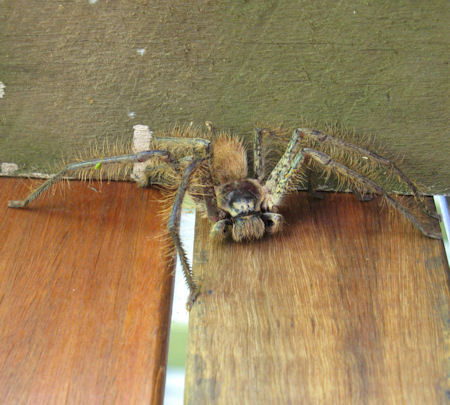 |
| Holconia insignis? by Christopher Worgan (VIC) | Holconia? ZZ601 (SA) |
Genus Pediana
 |
|
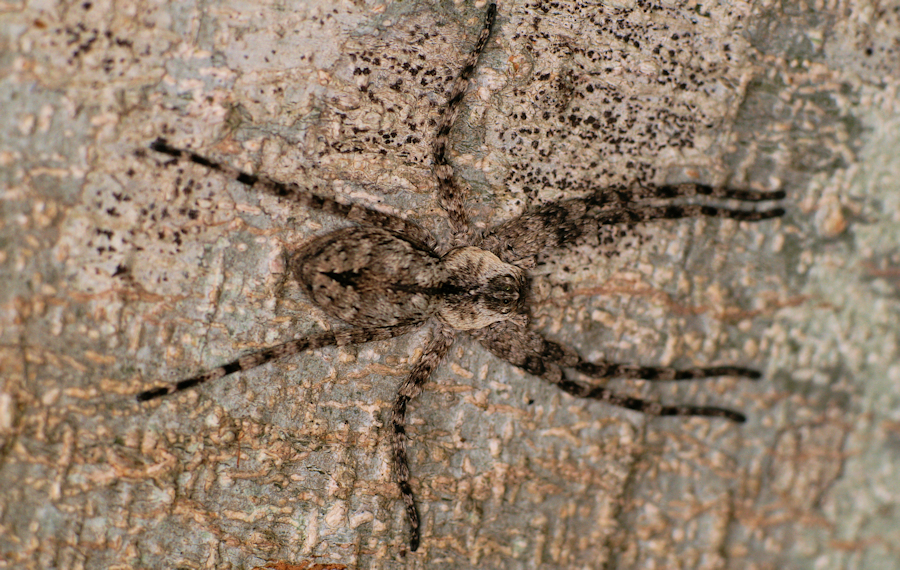
| Pediana regina | Wide spread in QLD. Living on and under bark. |
 |
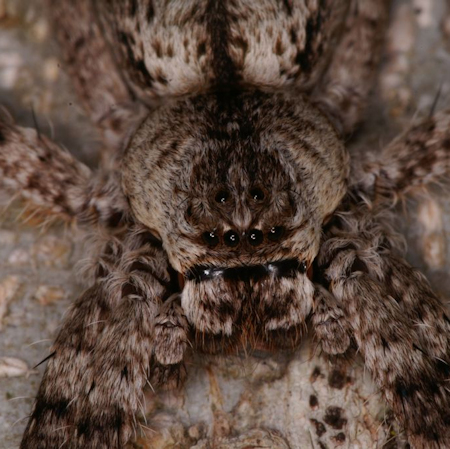 |
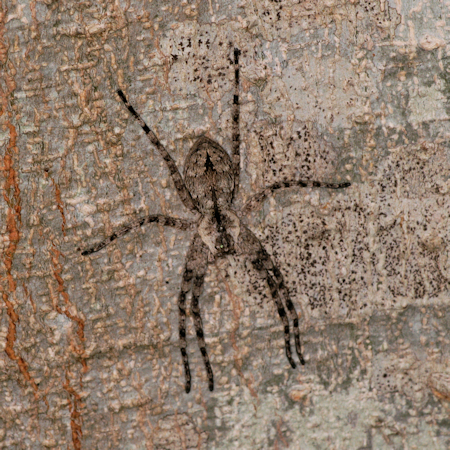
| Pediana regina | Pediana regina |
 |
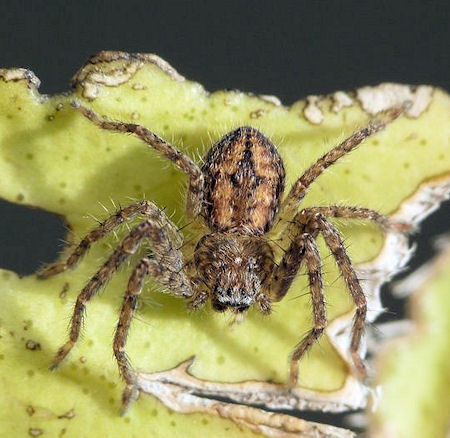 |
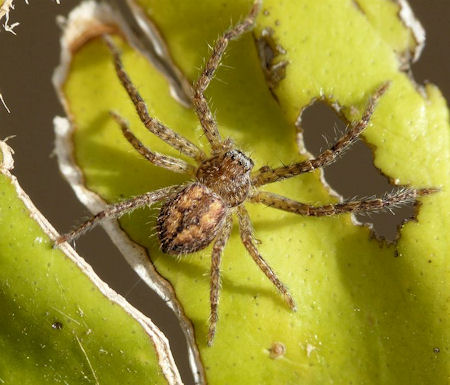
| Isopedella victorialis | Isopedella victorialis |
Genus Pediana
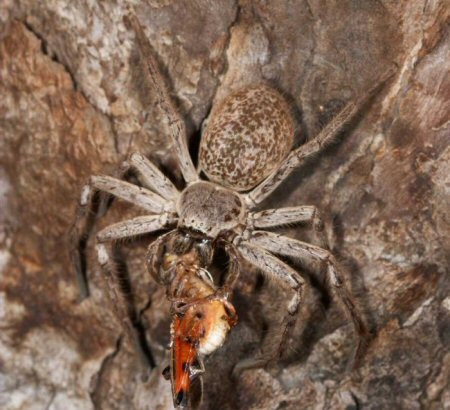
Four species are described of this genus. The spider is rare and usually found near the base of trees. |
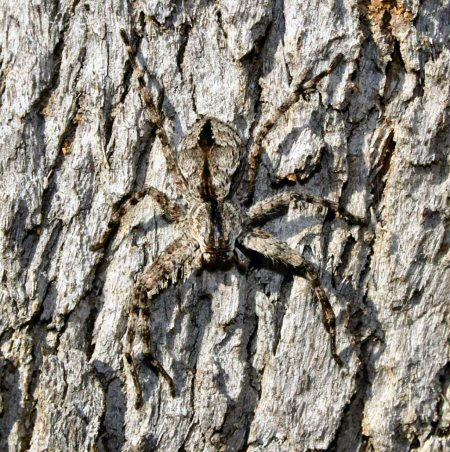 |
| Pediana regina |
 |
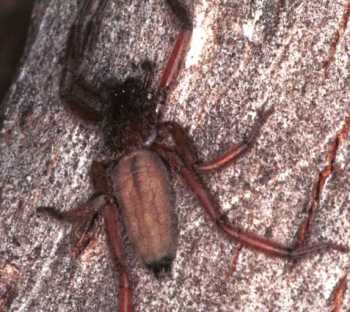 |
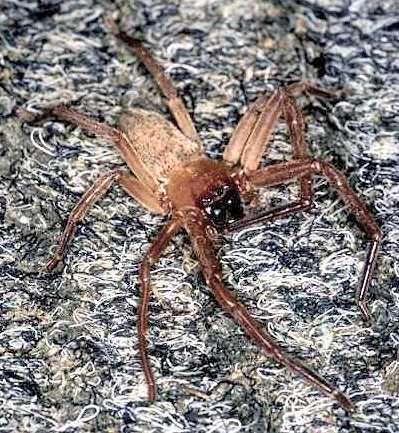
| Huntsman ZZ281 | This spider, found in Carnavon park, was very large and fast. It is not a huntsman but resembles it much. It is a Gnaphosidae, genus Hemicloea. |
 |
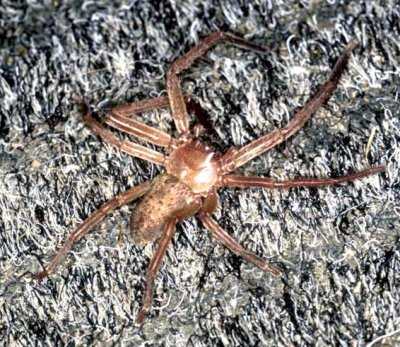 |
| Huntsman ZZ147 | Huntsman ZZ147 |
Family Selenopidae (Flatties)
 |
|
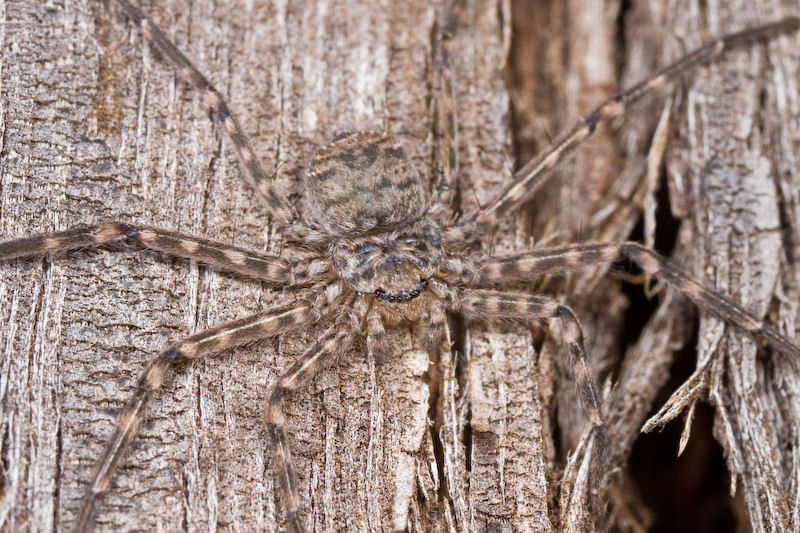
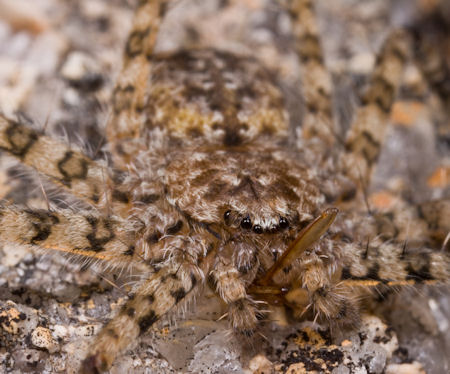
| Selenops australiensis Pictures by Fahran Bokhari | |
| The only described member so far of this family living in Australia. They are also called Wall crab spider. Selenops australiensis move sideways like a crab. The spider is flat and their coloring makes them difficult to spot. They can be found on trees, rocks and of course walls. Because they are so flat they can hide under bark. |
 |
Ed Nieuwenhuys, Ronald Loggen, Jurgen Otto, Robert Whyte, 10 may 2022
15 September 2018, 24 August 2011, 5 November 2006, March 2005, April 2006
Copyright ã 1997-2023