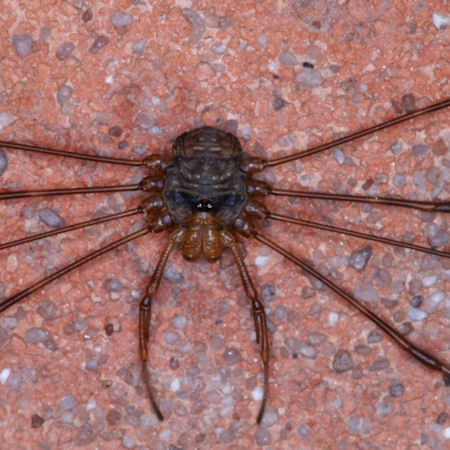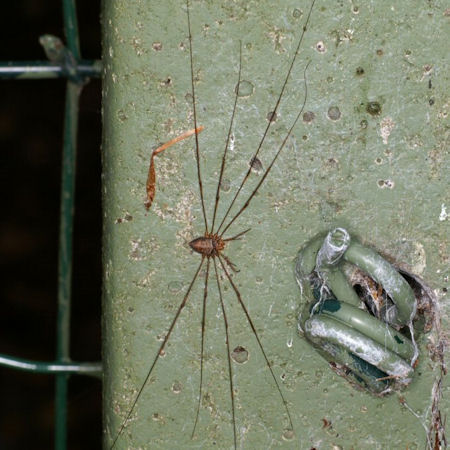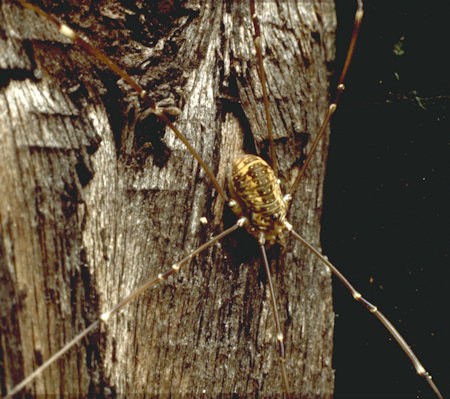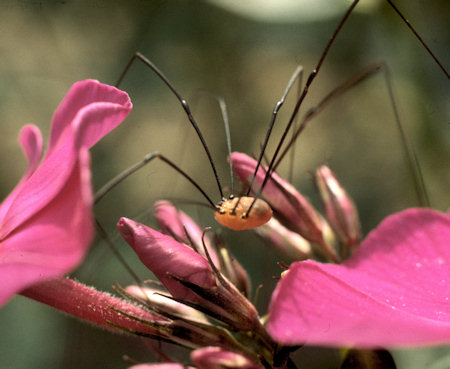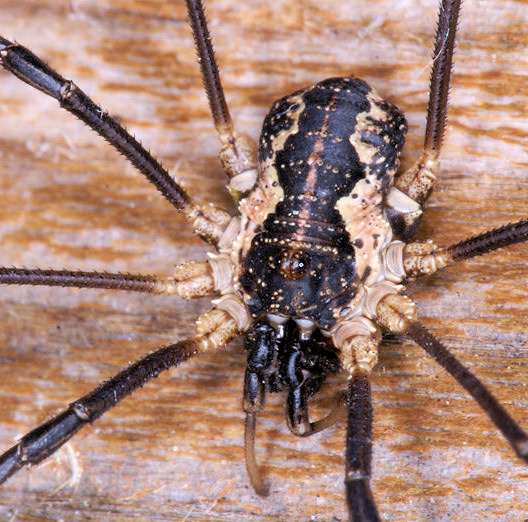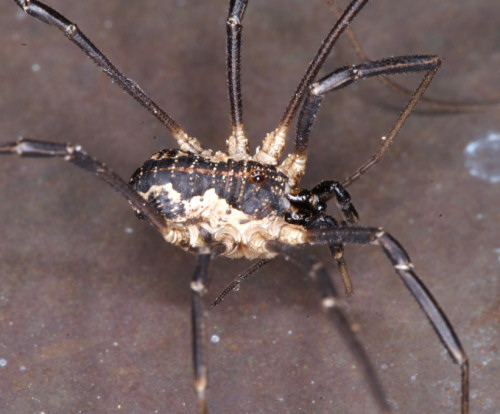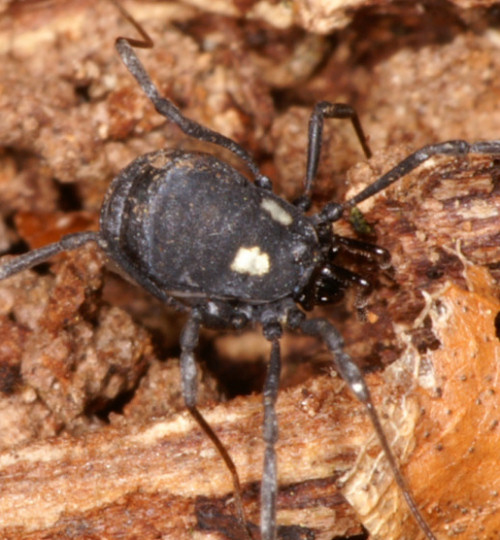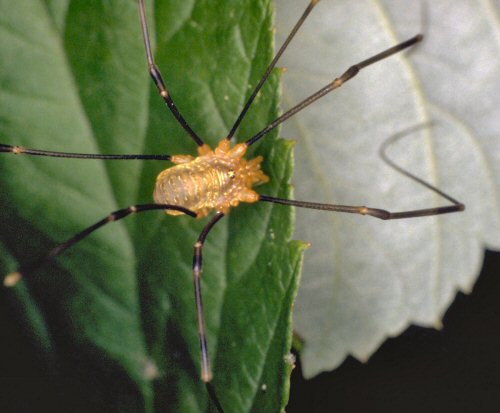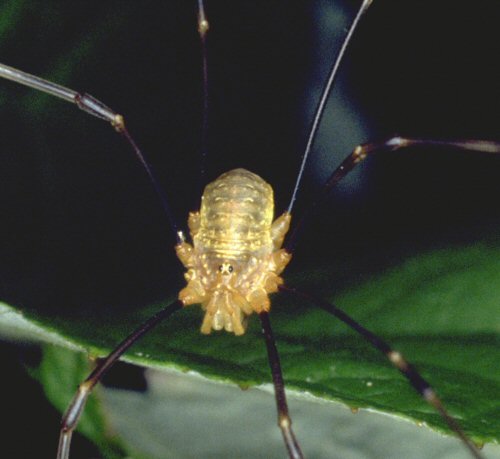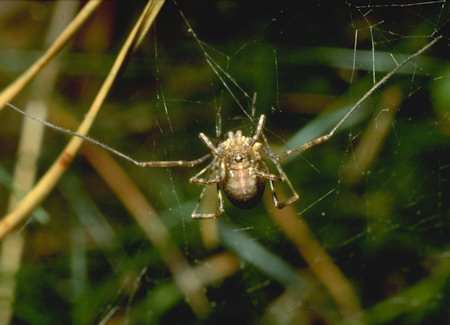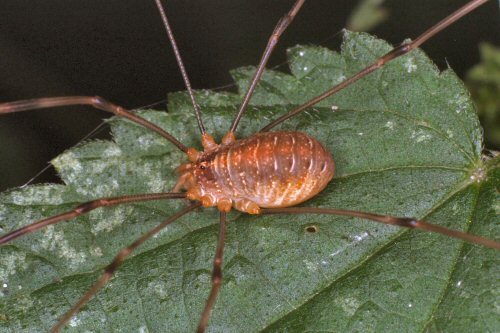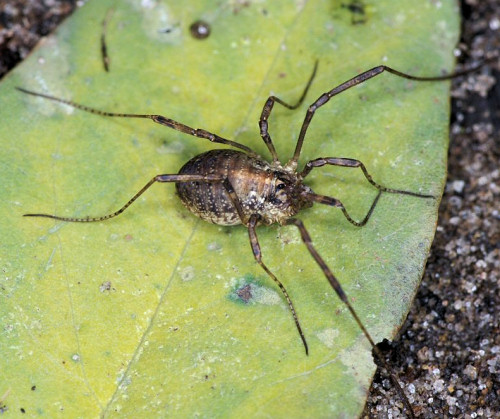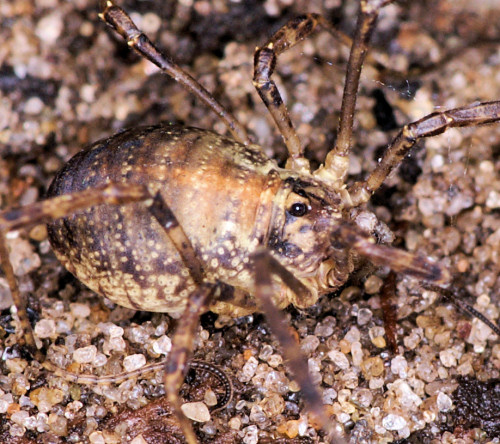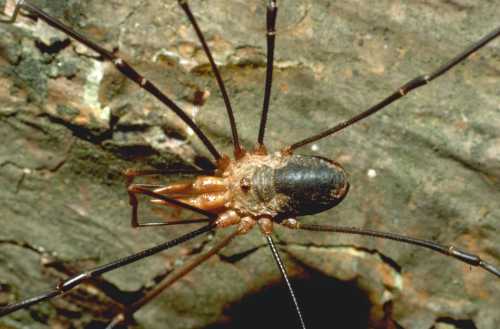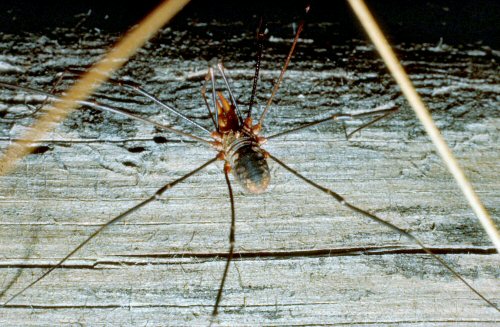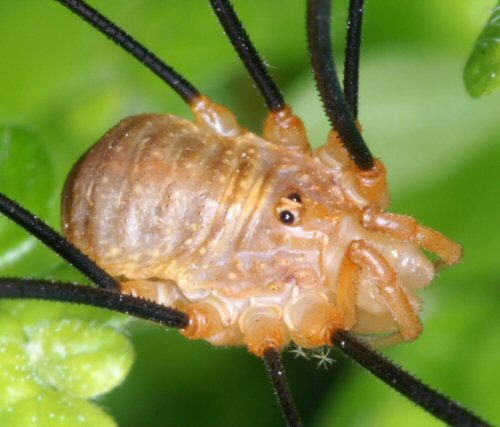
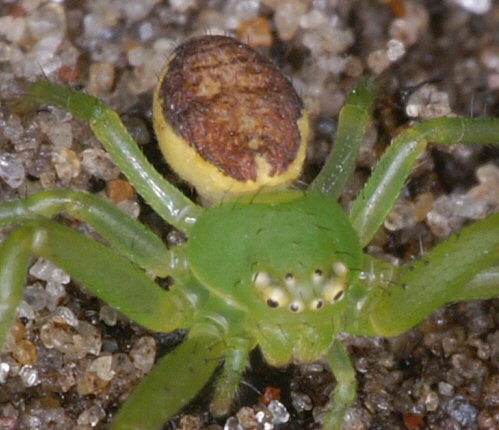
These are not real spiders, but resembles the spiders very much because they also have eight, sometimes very long, legs.
They belong to the class Arachnida like the spiders, ticks and mites, scorpions and pseudoscorpiones.
World-wide over 6000 known species are known. Over 100 species can be found in NW-Europe.
Some common ones are showed on this page.
|
|
| Opilione; one body and two eyes | Spider; two body sections and eight eyes |
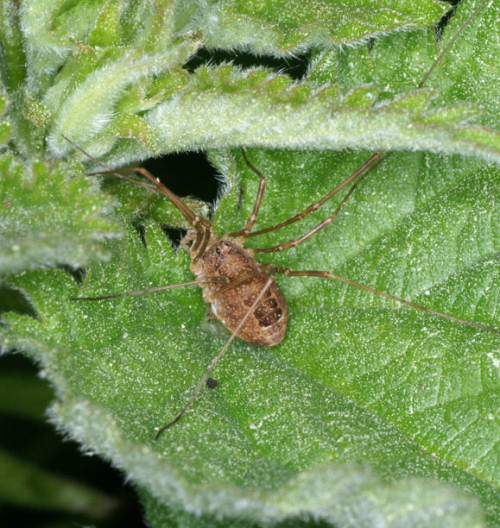
Harvestmen have an oval shaped body. The front and back of the body is grown
together in contrast to spiders where the front and back end is separated by
a stalk (pedicel).
They have two eyes in the middle of their head looking sideways.
They are also known as "harvestmen". Most of the harvestmen have long legs,
but not all.
Harvestman do not have booklungs but breath through trachea only.
They should not be confused with the "daddy
longlegs" (Pholcidae).
Opiliones do not possess poison glands but has instead glands that produce a stinky odor. They also have no silk glands or spinners.
Harvestmen eat everything (omnivorous). They catch small insects or eat the decays of any dead animal, bird dung and other facial material, all kind of plant material and fungi.
Normally they are active during the night.
Copulation is, in contrast to the spiders directly, directly with a penis. There is no foreplay and the copulation is no longer than a few minutes and may be repeated several times.
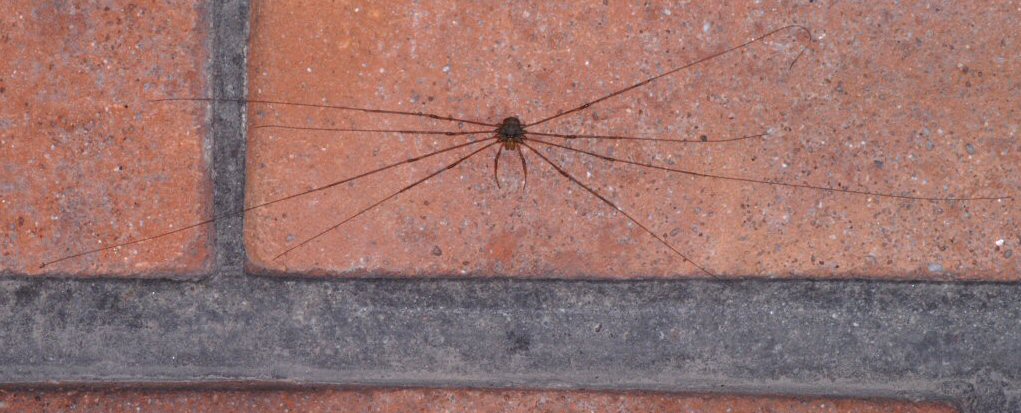 Dicranopalpus ramosus |
|
|
|
|
|
Dicranopalpus ramosus |
Dicranopalpus ramosus |
 |
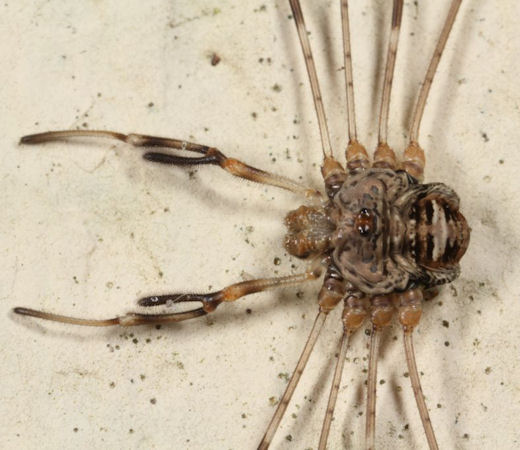 |
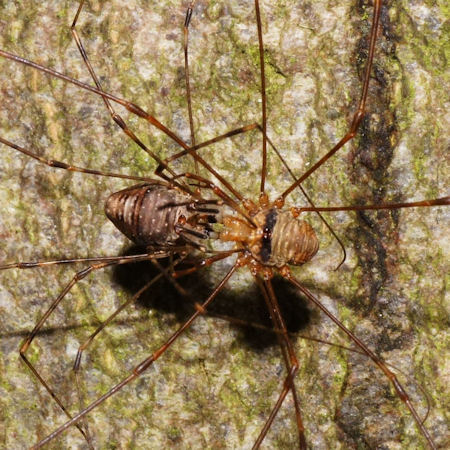
| Dicranopalpus ramosus male and female by Hans Jonkman | Dicranopalpus ramosus |
 |
|
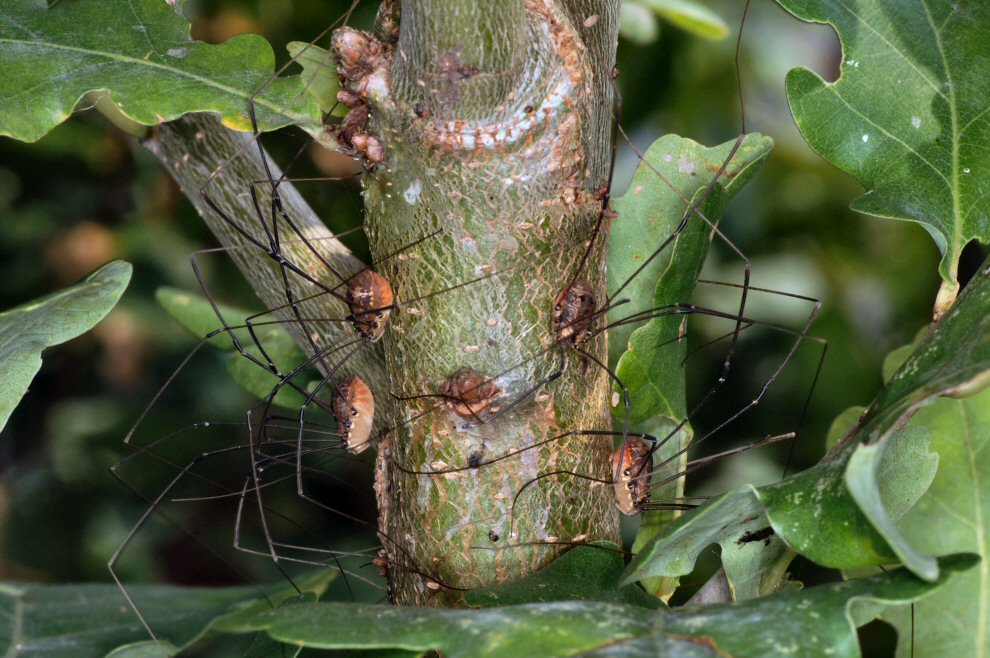
| Leiobunum rotundum often crawl together forming a bunch of legs and bodies. | |
 |
|
 |
 |
|
Leiobunum rotundum male |
Leiobunum rotundum female |
|
|
|
|
Leiobunum rotundum female |
Leiobunum rotundum male |
|
|
|
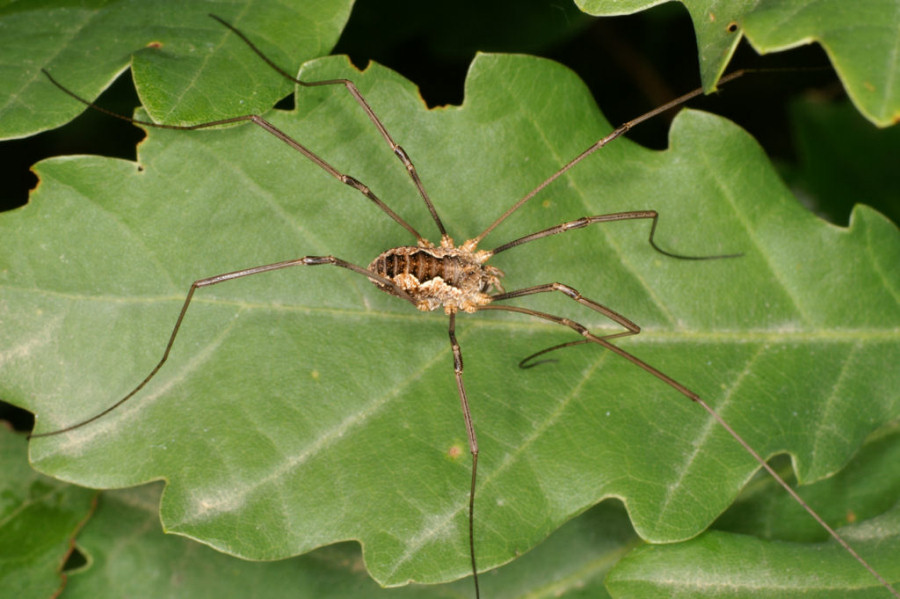
| Mitopus morio male |
Mitopus morio male |
 |
|
| Mitopus morio female | |
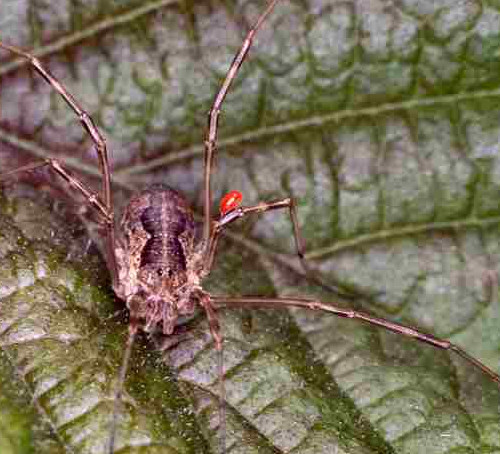
Mitopus morio infested with a mite (red dot on leg)
|
 |
 |
|
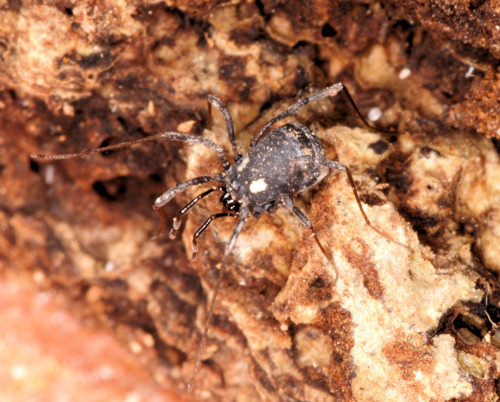
| Nemastoma lugubre | Nemastoma lugubre |
|
|
|
|
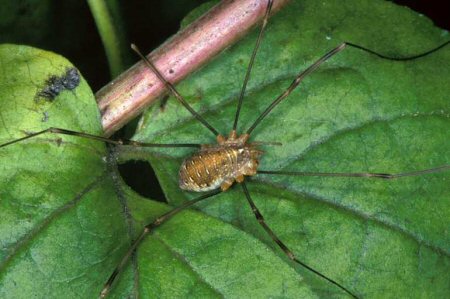
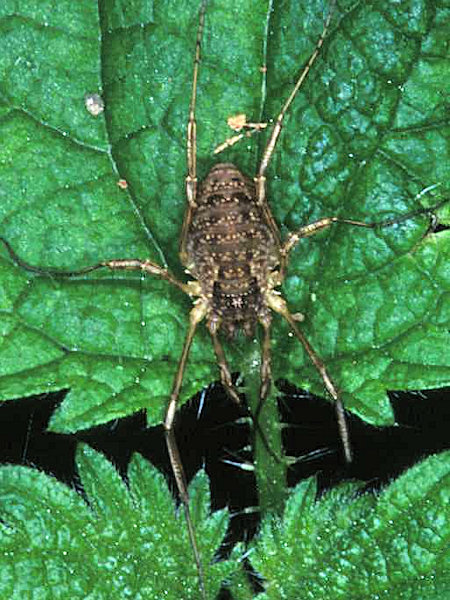
Opilio canestrinii man |
Opilio canestrinii man |
 |
 |
| Opilio canestrinii | Oligolophus tridens vrouw |
|
|
|
Paroligolophus agrestis in a stolen web? |
Opilio canestrinii |
|
|
|
|
Paroligolophus agrestis |
Paroligolophus agrestis |
|
|
|
|
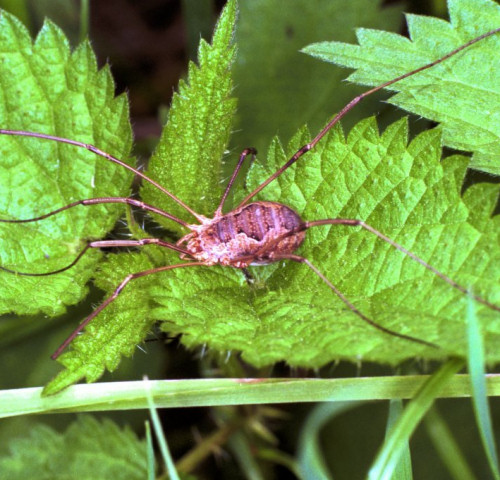
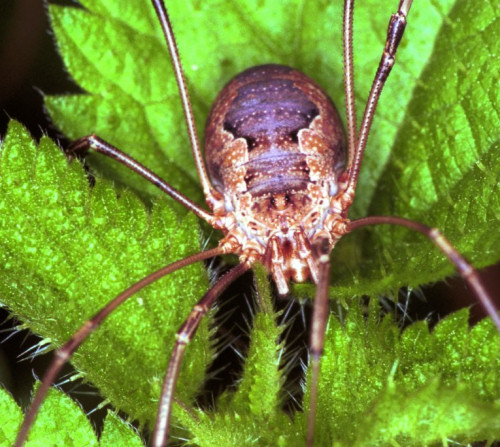
Phalangium opilio male |
Phalangium opilio male |
 |
 |
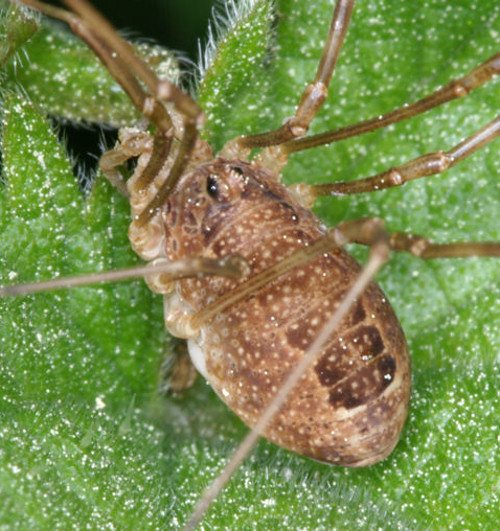
| Phalangium opilio female | Phalangium opilio female |
 |
 |
| Rilaena triangularis | Rilaena triangularis |
With thanks to
Luc Vanhercke.
H. Wijnhoven, De Nederlandse hooiwagens, Opiliones, Entomologische tabellen, 3/2009, ISSN 1875-760x.
Ed Nieuwenhuys, 25 October 2014
5 december 2012,30 april 2010, 4 november 2008, 15 march 2007, April 24, 1999