The
Western
Front
Museum
Last updated:
Identification
Pistol & rifle cartridges
Headstamps (small calibre)
Rifle clips
Howitzer & canon cartridge cases
Headstamps (large calibre)
Fuze types:
American
Austro-Hungarian
Belgian
British
Dutch
French
German
Italian
Russian
Fuze, primer & shell markings
Reference


Fuze types and markings
Dear Visitor,Should you happen to have or know about a fuze or shell which is dated before 1919 and have no longer use for
it or is just gathering dust in some forgotten corner, we would very much like to hear from you. The museum's collection can always use expansion. |
These lists were put together once we had established the origin of most of the fuzes and shells we collected over the years, and we are very much aware that they are far from complete.
Please drop us a line if you happen to have additional information.
|
TOP
Terminology
Cartridge case
An item which is designed to hold an ammunition primer and propellant and to which a projectile may be affixed; its profile and size conform to the chamber of the weapon in which the round is fired.
Cordite
Cordite is a family of smokeless propellants developed and produced in the United Kingdom from 1889 to replace gunpowder as a military propellant. Like gunpowder, cordite is classified as a low explosive because of its slow burning rates and consequently low brisance. These produce a subsonic deflagration wave rather than the supersonic detonation wave produced by brisants, or high explosives. The hot gases produced by burning gunpowder or cordite generate sufficient pressure to propel a bullet or shell to its target, but not enough to destroy the barrel of the firearm, or gun.
Driving band
The driving band or rotating band is part of an artillery shell, a band of soft metal near the middle of the shell, typically made of gilding metal,[1] copper or lead. When the shell is fired the pressure of the propellant swages the metal into the rifling of the barrel, both providing a seal preventing the gases from blowing past the shell, as well as engaging with the rifling to spin-stabilize the shell. In a rifle, the entire bullet is typically covered in copper or a similarly soft alloy, so the entire bullet is its own driving band.
Friction Primer
The primer tube would have a lanyard attached, with length proportional to the size of the gun, which when pulled caused friction inside the tube which ignited a powder charge, much like striking a match. Single-use. Originally of 'Copper' and 'Quill' types, replaced by the 'T' tube by late 1890s. They were used in great quantities by field artillery and will be found on old British battlefields up to 1904, e.g. in South Africa. They were inserted in a "radial" vent on top of the breech, or later in axial vents running lengthwise through the centre of the breech such as with the BL 15 pounder. The T design, with the friction wire to which the lanyard was attached running through the crosspiece of the T, ensured that when the lanyard was pulled and the gun recoiled the wire was pulled smoothly out of the T piece without exerting force on the vertical part of the T and hence affecting the gas seal.
From 1904, the new generation of field artillery was QF with propellant in brass cases with self-contained percussion primers, while small naval QF cases had self-contained electric primers. Hence from then onwards tubes were only used for guns of 60 pounder (5 inch) and upwards, usually Percussion tubes; and for a few small BL guns such as the 2.75 inch mountain gun, usually Friction tubes. However, Britain entered World War I with many old BLC 15 pounders which continued to require T Tubes until phased out by 1916. To approach a QF rate of fire they used a special "push" version of the T friction tube which was inserted into an axial vent in the breech like a BL percussion tube and fired by a similar mechanism to a firing pin activated by a lever rather than being pulled by a lanyard.
Tubes could also be used with QF cartridges fitted with tube adaptors in place of primers, as with the QF 12 pounder.
Fuze
The most common spelling for this usage in the militaries of most English-speaking countries is 'fuze', and some suggest this is derived from 'fuzee' meaning a tube filled with combustible material itself derived from 'fusée' meaning a spindle, whereas other types of fuse derive from 'fusus' and 'fundu' meaning to melt.
An artillery fuze is the type of munition fuze used with artillery munitions, typically projectiles fired by guns (field, anti-aircraft, coast and naval), howitzers and mortars. A fuze is a device that initiates an explosive function in a munition, most commonly causing it to detonate or release its contents, when its activation conditions are met. This action typically occurs a preset time after firing, or on physical contact with or detected proximity to the ground, a structure or other target.
Gun Cotton
Guncotton is made by treating cotton (used as the source of cellulose) with concentrated sulfuric acid and 70% nitric acid cooled to 0 °C to produce cellulose trinitrate. While guncotton is dangerous to store, the hazards it presents can be reduced by storing it dampened with various liquids, such as alcohol. For this reason, accounts of guncotton usage dating from the early 20th century refer to 'wet guncotton'.
The power of guncotton made it suitable for blasting. As a projectile driver, it had around six times the gas generation of an equal volume of black powder and produced less smoke and less heating.
Primer
Projectile
see 'Shell'.
Round
The complete set of components needed to fire the gun once. Consists of a Shell (projectile), a propellant Cartridge and Primer or Igniter Tube. A Fixed Round had all the components integrated into a brass cartridge case with the projectile attached, e.g. a rifle cartridge or QF 18-pounder round, in which case Round is synonymous with Cartridge. A Separate round required the projectile and propellant Cartridge (either in bags or brass Case) to be loaded separately.
Shell
A shell is a payload-carrying projectile, which, as opposed to shot, contains an explosive or other filling, though modern usage includes large solid projectiles previously termed shot (AP, APCR, APCNR, APDS, APFSDS and proof shot). Solid shot may contain a pyrotechnic compound if a tracer or spotting charge is used. Shells are usually large rounds fired by artillery, armored fighting vehicles (including tanks), and warships. Shells usually have the shape of a cylinder topped by an ogive-shaped nose for good aerodynamic performance, possibly with a tapered base; but some specialized types are quite differently shaped.
Shrapnel
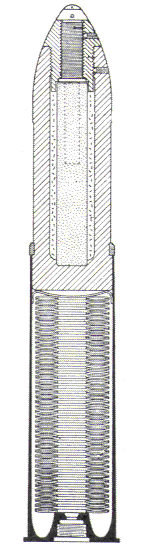
Shrapnel is named after Major-General Henry Shrapnel (1761-1842), an English artillery officer, whose experiments, initially conducted in his own time and at his own expense, culminated in the design and development of a new type of artillery shell.
Shrapnel shells were anti-personnel artillery munitions which carried a large number of individual bullets close to the target and then ejected them to allow them to continue along the shell's trajectory and strike the target individually. They relied almost entirely on the shell's velocity for their lethality. The munition has been obsolete since the end of World War I for anti-personnel use, when it was superseded by high-explosive shells for that role. The functioning and principles behind Shrapnel shells are totally different from high-explosive shell fragmentation.
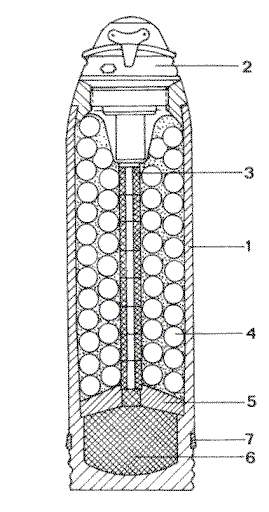 German 7.7cm Shrapnel | |
| 1. | Pressed steel body |
| 2. | Doppelzünder Model 96 |
| 3. | Gunpowder filled tubing |
| 4. | Leadbullets (300 pieces of 10 gram each) |
| 5. | Steel ejection plate |
| 6. | Bottom main charge (80 gram gunpowder) |
| 7. | Red copper drivingband |
TOP

Fuze types
American Time & Percussion fuzes
| M1907M This fuze is a combination percussion time type, designed for use with shrapnel. These fuzes will always be issued assembled to shell. The fuze contains two actions, percussion and time. The percussion action is always operative and will function on impact unless prior functioning has been caused by the time action. When percussion action is required, it is only necessary to set the graduated time train ring at safe (S) or for a time longer than the expected time of flight. The time train ring is similar to that of other powder time train fuzes and is graduated for 21.2 seconds. Material: Brass. | 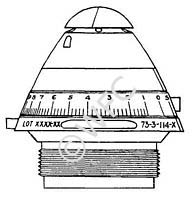 |
Austro-Hungarian (impact) fuzes
| M1 (Muster 1901) Material: Brass. Used with:
|  |
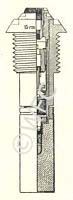
| M6 (Muster 1906) This fuze is like the 1880 pattern percussion fuzes ; but has a metal case, containing a gaine, screwed to the base. It is marked with the calibre, as well as the year of manufacture; e.g.'12 cm. M. 6', '21 cm. M. 6'. Material: Brass with steel or brass gaine. Used with Ekrasitgranate, 1880 pattern:
|  |
| M75 (Muster 1875) Material: Brass. Used with:
| |
| M80 (Muster 1880) Fuzes intended for 12 cm. shell are marked "8 L," and are closed by a plain zinc plug. Fuzes for 15 cm. and 18 cm. shell are marked "4 L."; the plug has a detent spring. Material: Brass. Used with 1880 powder-filled and Ekrasit shell, for:
| |
Austro-Hungarian Time & Percussion fuzes
| M2 (Muster 1902) Used with:
| |
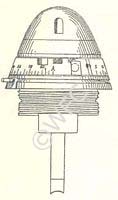
| M5 (Muster 1905) Graduation from 5 to 61 in hundreds of metres. Each of the smaller divisions represents 50 metres. V (Vortempierung), shrapnel burst about 200 metres from muzzle. K (Kartätschshrapnel), bursts 5-10 metres from muzzle with case-shot effect. A (Aufschlag), bursts on percussion. Material: Bronze. Used with:
|  |
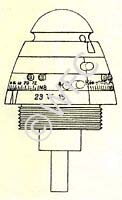
| M8 (Muster 1908) Graduations from 5 to 61 in hundreds of metres. (Later fuzes of 1908 pattern, are graduated as far as 73.) Smaller divisions represent 50 metres each. Letters V, K and A, as in 1905 pattern. Material: Bronze. Used with:
|  |
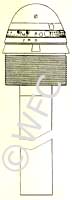
| M12 (Muster 1912) Graduations from 5 to 61, in hundreds of metres. "A " (Aufschlag), Percussion. "K" Kartätschshrapnel), case-shot. "V" (Vortempiening), for burst about 300 metres from muzzle. Material: Brass body with steel gaine. Used with New ammunition (1912) for:
|  |
| M95 (Muster 1895) Graduations from 5 to 30 in hundreds of metres. Also a graduation for percussion "A" (Aufschlag) ; and one "45" for a burst 450 metres from muzzle. Material: Bronze. Used with Shrapnel M. 96/95 and 94/95 for:
| |
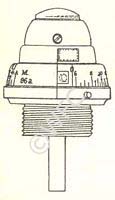
| M96 (Muster 1896) Graduations from 6 to 48 in hundreds of paces. The fuzes are set for percussion when setting-mark is at "A" (Aufschlag). M. 96 a and 96 c can also be set for case-shot effect at "K" (Kartätschshrapnel). Material: Brass. Used with: Shrapnel, 1875, '91, '96, for
|  |
| M99 10 cm (Muster 1899) Graduations from 4 to 56 in hundreds of metres, only even numbers shown. Material: Brass. Used with:
| |
Austro-Hungarian trench mortar fuzes
TOPAustro-Hungarian base fuzes
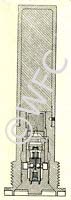
| M9 (Muster 1909) The fuze is borne on the base-plate of the shell, which is fuzed in two different ways. In earlier models the fuze was screwed down to a large plug, which in turn was screwed into the base-plate. Material: Brass. Used with Ekrasit shell for:
|  |
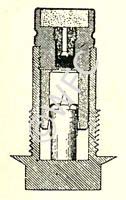
| M98 (Muster 1898) Material: Brass. Used with:
|  |
Belgian percussion (impact) fuzes
| Fusée à percussion de place | |
British percussion (impact) fuzes
| N°101 I & II | 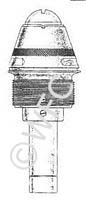 |
| N°106 II Material: Brass body with steel cap. | 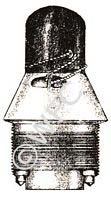 |
| N°110 | 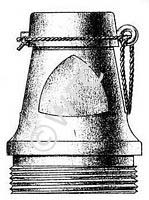 |
| N°131 | |
British Time & Percussion fuzes
| N°25 | |
| N°31 | 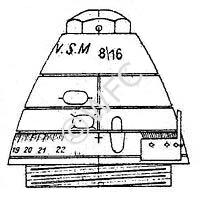 |
| N°44 | |
| N°60 | |
| N°80 | 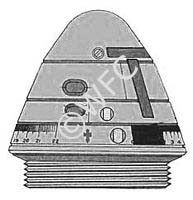 |
| N°83 Material: Brass. | 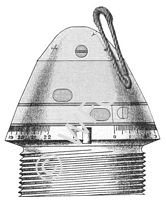 |
| N°85 | |
| N°88 | |
| N°121 | |
British trench mortar fuzes
TOPBritish base fuzes
TOPItalian (impact) fuzes
TOPItalian Time & Percussion fuzes
TOPFrench percussion fuzes (Fusée Fusante Detonateur Percutante)
| 22/31 Mle 1897 | |
| 24/31 Mle 1899-15 | 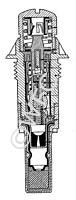 |
| Mle 1915 | |
| 24/31 Mle 1916 | |
| 24/31 Mle 1918 | |
| 24/31 Schneider Mle 1916 | |
| 24/31 T.C.A.L. Mle 1917 | |
| 24/31 RY Mle 1917 | |
| 24/31 RYG Mle 1918 | |
French Time & Percussion fuzes (Fusée Fusante à Double Effet)
| 25/38 Mle 1880 | |
| 30/38 Mle 1884, 86, 87 | |
| 30/55 Mle 1886/89, 1889 T or 1913 The fuze is graduated in seconds and half-seconds by means of the oval holes on the spiral, as shown in the plate. Intermediate tenths of a second are indicated by four vertical lines between the large and. small holes. The setting of the fuze is indicated by a square hole punched in the spiral, the position of the left edge of this square hole giving the fuze-setting in tenths of a second. The large holes are numbered from 1-49, these numbers being equivalent to seconds. Material: Brass. | 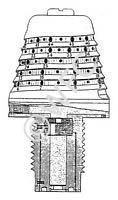 |
| 40/55 Mle 1880/93 | |
| 22/31 Mle 1897 or 1916 (Fusée à double effet de 22/31, Modèle 1897) The fuze is graduated in seconds and half-seconds by means of the oval holes on the spiral, as shown in the plate. Intermediate tenths of a second are indicated by four vertical lines between the large and. small holes. The setting of the fuze is indicated by a square hole punched in the spiral, the position of the left edge of this square hole giving the fuze-setting in tenths of a second. The large holes are numbered from 1-24. Material: Brass. | 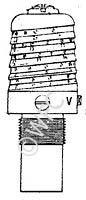 |
| 24/31 Mle 1915 or 1916 | |
| 24/31 A Mle 1916 or 1918
Material: Brass. | 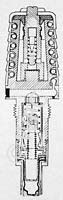 |
| 24/31 LD 1917 | |
German percussion fuzes (Granatzünder)
| EHZ17 (Empfindlicher Haubitz Zünder 1917) This fuze is issued closed at the top by a lead seal, which is pulled off just before loading and a short rod inserted. This rod projects about an inch. Its lower extremity fits into the needle holder:on impact, the rod drives the needle into the percussion cap. Across is stamped on fuzes used withgas shell. This fuze is also used with 10 .5 cm. yellow cross gas shell, for which the maximum ranges are probably somewhat less than those given in the table above. When used with yellow cross gas shell, this fuze is painted green, or possibly black and green. When used with the 1915 pattern H.E. shell it is painted black. Material.: Zinc alloy; the projecting rod is hollow and made of steel. | 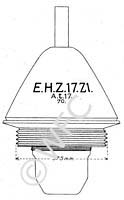 |
| EKZ 16 (Empfindlicher Kanonen Zünder 1916) The E.K.Z. 16 C. fuze is apparently of the same type as the E.K.Z. 16 , but is possibly more elongated than the latter. Material: Zinc alloyand steel, or allsteel. The projecting rod is either a solid rod of aluminium or else a hollow steel rod. | 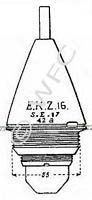 |
| EKZ 17 (Empfindlicher Kanonen Zünder 1917) This fuze is issued closed at the top by a lead seal, which is pulled off just before loading and a short rod inserted. This rod projects about an inch. its lower extremity fits into the needle holder. On impact, the rod drives the needle into the percussion cap. A cross is stamped on fuzes used withgas shell. When used with yellow cross gas shell, this fuze is .painted green, or possibly green and black. When used with the 1914 pattern H.E. shell, itis painted black. Material: Zinc alloy and cast-iron. In some specimens, cap and body are in one piece and of zinc alloy. The projecting rod is either a solid rod of aluminium or else a hollow steel rod. | 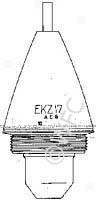 |
| Gr Z 04 (Granat Zünder 1904) There is a variation of this fuze known as Gr.Z.04/14. It is used with the 1914 and 1914 A pattern 21cm. shells and with the German-made shell for the 20.3 cm. (8") Russian howitzer, and is externally identical with Gr.Z.04, except for the designation. Material: Brass body, steel cap and steel gaine. Specimens have been found made of zinc alloy. | 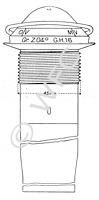 |
| Gr Z 04/14 (Granat Zünder 1904 pattern 1914) It is used with the 1914 and 1914A pattern 21cm. shells and with the German-made shell for the 203 cm. (8") Russian howitzer, and is externally identical with Gr.Z.04, except for the designation. Material: Brass body, steel cap and steel gaine. Specimens have also been found made of zinc alloy. | 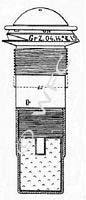 |
| Gr Z 14 (Granat Zünder 1914) This fuze was introduced with the 1914 and 1914 A patterns of H.E. Shell to meet the demand for a comparatively simply made non-delay action percussion fuze. The following variations of this fuze have been found : G.Gr.Z.14 and Kz.Gr.Z.14 in which G and X probably stand for "Grosser" and "Kurzer" (large and short), which possibly refer to the size of the exploder and the consequent length of the gaine. Gr. Z.14 n/A. Material: Brass and steel. | 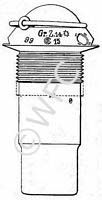 |
| Gr Z 14 n/A (Granat Zünder 1914 Neuer Art) A steel cover is fastened over the projecting conical portion by two screws. When used with gas shell, there is no set screw to hold the gaine, but the joint between the gaine and the shell is sealed with cement of the magnesium oxychloride type. Material: Brass body with steel cap and steel gaine. | 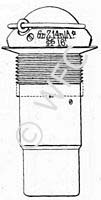 |
| Gr Z 17 (Granat Zünder 1917) This fuze replaces the Gr. Z. 14 n.A. fuze. Material: Steel and white metal. | 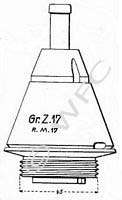 |
| Gr Z 92 (Granat Zünder 1892) This fuze was used in conjunction with an exploder in a steel or brass gaine, Zdlg. 92. Material: Brass. | 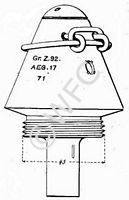 |
| Gr Z 96 (Granat Zünder 1896) Material: Brass body with steel cap and steel gaine. | |
| Gr Z 96/04 (Granat Zünder 1896 pattern 1904) Material: Brass body with steel cap and steel gaine. | 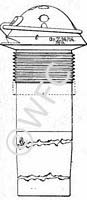 |
| HZ 05 Schr Graduated from 3 to 70 (lowest and highest figures are either 3 or 4, and 70) in hundreds and-fifties of metres (68 = 6,800 metres). When the setting mark is opposite the cross, the fuze is set for percussion. Material: Body usually of zinc alloy, with aluminium time rings and steel cap. | |
| HZ 11 Material: Brass, or brass body with steel cap. | |
| HZ 14 Material: Brass, or brass body with steel cap. | |
| HZ 14 Fb This fuze has largely replaced the original H.Z. 14 fuze, which was introduced towards the end of 1914 together with the 1914 pattern light field howitzer H.E. shell, and was considered liable to cause prematures in the bore. The H.Z. 14 fuze is, however, still used with gas shell (green cross). The H.Z. 14 Fb. fuze differs internally from the H.Z.14 fuze by the addition ofa centrifugal safety bolt(Fliehbohen). Externally,itdiffers only in the marking. Material: Brass, or brass body with steel cap. | 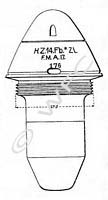 |
| HZ 14 Vorst Fliehb. (Haubitz-Zünder, 1914, mit Vorstecker und Fliehbolzen) This fuze has replaced the original H.Z. 14 Vorst. fuze, from which it differs chiefly by the addition of a centrifugalsafety bolt (Fliehbolzen). Externally, it differs only in the marking. Fuzes have also been found with Vrst. and Vst. after the designation HZ.14:Vorst., Vrst. and Vst. are abbreviations for VorStecker (safety pin). Material: Brass, or brass body withsteel cap. | 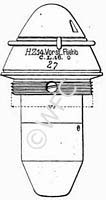 |
| HZ 16 According to a German document, this fuze has replaced by the instantaneous fuze E.H.Z. 16. This fuze is also used with 10.5 cm. blue cross gas shell, for which the maximum ranges are probably some what less than those given inthe table above. Material: Mildsteel, painted grey. | 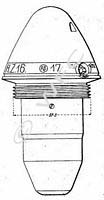 |
| KZ 14 Material: brass, aluminium, or zinc, with either a brass or a steel cap. | |
| KZ 14 Fb | 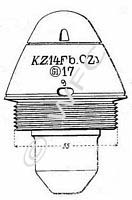 |
| KZ 14 n/A This fuze has largely replaced the original K.Z.14 fuze (non-delay percussion), which was introduced towards the end of 1914 at the same time as the 1914 pattern field gun shell, and was liable to cause prematures in the bore. The K.Z. 14 fuze is, however, still used for long gas shell (green cross). The K.Z.14 n.A. fuze differs internally from the K.Z. 14 fuze in that the safety powder pellet is in a brass sleeve ; externally, it differs only inthe marking and in the shape of the cap, which is more pointed. Another variation of the K.Z. 14 fuze, marked K.Z. 14 m.V., was formerly used with the 7.7 cm. long shell, but has been replaced by the pointed fuze L.K.Z.16 m.V. It was a delay action percussion fuze designed for ricochet fire. Material: Zinc body and steel cap. The original X.Z. 14 fuze is made of brass, aluminium, or zinc, with either a brass or a steel cap. | 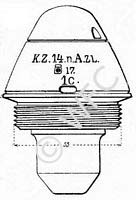 |
| KZ 16 m/V The fuze proper is placed in a cap of mild steel. This fuze has been superseded by the L.K.Z.16 m.V. fuze. Material: Mildsteel, painted grey. | 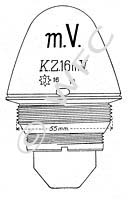 |
| LKZ 16 mV = Langer Kanonen Zünder 1916 mit Versogerung (i.e. with delay). Non-delay action fuzes are marked L-K.Z.16 O.V. (o. V. ohine Verztigening, i.e., without delay). Delay action fuzes are markedL.K.Z.16m.V.(m.V. Mit Versogerung, i.e.,withdelay). The non-delay action fuze has been superseded by the instantaneous fuzes, E.K.Z.16 and E.K.Z.17. The fuze proper is placed in a pointed, mildsteel cap, designed for penetrative effect and increased range. Material: Mildsteel, painted grey. | 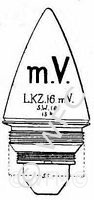 |
German Time & Percussion fuzes (Doppelzünder)
| Dopp Z 15 (Doppel Zünder 1915) Graduated from 2 to 41 in seconds and quarters of a second (lowest and highest figures are 2 and 40). When the setting mark is opposite the cross, the fuze is set for percussion. Material: Brass and steel. | 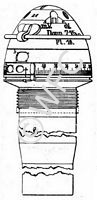 |
| Dopp Z 16 (Doppel Zünder 1916) To set the fuze, the steel housing is turned by means of a fuze setter to the desired position. A stud on the housing, and a stud and a recess on the base" serve as the points of application of the fuze setter. Material.: Brass body, with steel cap and steel housing ; aluminium housing for the percussion system. | 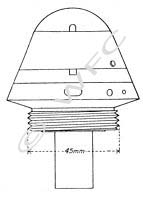 |
| Dopp Z 86 (Doppel Zünder 1886) | 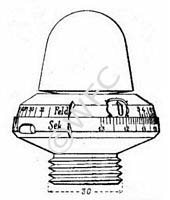 |
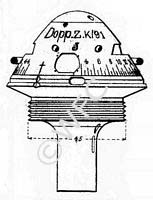
| Dopp Z 91 (Doppel Zünder 1891) Graduated from 3 to 45 inhundreds of metres. Maximum range (time fuze), 4,921 yards. Material: Brass. Used with:
|  |
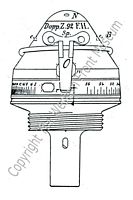
| Dopp Z 92 (Doppel Zünder 1892) Graduated from ¾ to 28 in seconds and eighths of a second (lowest and highest figures are 1 and 28). When the setting mark is opposite the cross, the fuze is set for percussion. Material: Brass. Used with:
|  |
| Dopp Z 92 n/F (Doppel Zünder 1892 Neuer Form) Material: Brass. | 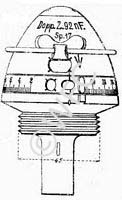 |
| Dopp Z 92 lg.Brlg (Doppel Zünder, 1892 lange Brennlänge) Graduated from 2 to 41 inseconds and quarters of a second (lowest and highest figures are 2 and 40). When the setting mark is opposite the cross, the fuze is set for percussion. Material: Brass. | 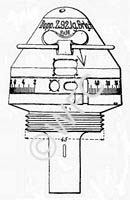 |
| Dopp Z 92 lg.Brlg n/F (Doppel Zünder 1892 lange Brennlänge Neuer Form) Graduated from 2 to 41 inseconds and quarters of a second (lowest and highest figures are 2 and 40). When the setting mark is opposite the cross, the fuze is set for percussion. Material: Brass. | 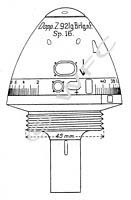 |
| Dopp Z 96 (Doppel Zünder 1896) Graduated from 4 to 50 in hundreds of metres. This fuze is similar in appearance to Dopp. Z. 96 n/A, by which it was superseded. Used with 7.7cm field gun (96 n/A.) and 7.7 cm. gun on casemate mounting: '96 H.E. and shrapnel : maximum range (time fuze), 5,468 yards. Material: Brass and aluminium withsteel cap. | 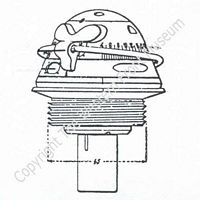
|
| Dopp Z 96 n/A (Doppel Zünder 1896 Neuer Art) Graduated originally from 2 to 53½ then from 2 to 65, and in fuzes of more recent manufacture from 6 to 70 (lowest and highest figures are 6 and 70) in hundreds of metres (50 = 5,000 metres) ; each of the smallest divisions is equivalent to 50 metres of range. When the setting mark is opposite the cross on the disc covering the gas escape, the fuze is set for percussion. The fuze is set at X when the shell is intended for use as case shot (this X is sometimes omitted). Material: Aluminium with cap of brass or steel. | 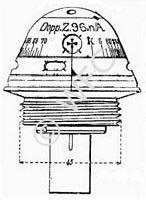 |
| Dopp Z 98 (Doppel Zünder 1898) | 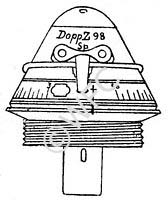 |
| HZ 05 Gr (Haubitz Zünder 1905 Granate) Graduated from 7 to 70 (lowest and highest) in hundreds of metres (52 = 5,200 metres); each of the smallest divisions is equivalent to 50 metres of range. When the setting mark is opposite the cross, the fuze is set for percussion. The original pattern of H.Z. 05 Gr. fuze was graduated from 7 to 53 in hundreds of metres, and a later pattern was graduated up to 63, the maximum ranges with time fuze being 5,796 and 6,890 yards, respectively. When the fuze was set to the red mark, the shell burst from 30 to 90 yards from the muzzle with shrapnel effect. According to a German document, the latest pattern of this fuze is only graduated up to 5,000 metres (5,468 yards). Material: Brass body with aluminium time rings and steel cap. | 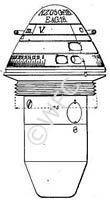 |
| HZ 05 Schr (Haubitz Zünder 1905 Shrapnel) Graduations.— Graduated from 3 to 70 (lowest and highestfigures are either 3 or 4, and 70) in hundreds and-fifties of metres (68 = 6,800 metres). When the setting mark is opposite the cross, the fuze is set for percussion. Material: Body usually of zinc alloy, with aluminium time rings and steel cap. | 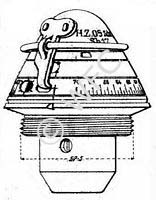 |
| KZ 11 Gr (Kanonen Zünder 1911 Granate) Graduated from 2 or 4 to 72 in hundreds of metres (72 =7,200 metres) :each of the, smallest divisions from 2 to 15 is equivalent to 100 metres of range, those. from 15 to 72 are equivalent to 50 metres. When the setting mark is opposite the cross on the disc covering the gas escape, the fuze is set for percussion. This fuze is used principally against aeroplanes. It is a modification of K.Z. 11, introduced in 1916, for use with H.E. shell, but not with the universal shell. It differs externally from the K.Z.11 fuze in that the setting stud, the marks G and S, and the corrector scale are omitted. The most recent pattern of this fuze is sometimes marked K.Z.11Gr.1.8., or the letters l.B. are stamped elsewhere on the fuze. The cap of the K.Z. 11 Gr. fuze, when used with the 1915 pattern 7.7 cm H.E. shell issued to anti-aircraft guns, is painted yellow. Material: Aluminiumalloy and steel. | 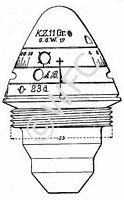 |
| KZ 11 lb. (Kanonen Zünder 1911 lange Brennlänge ) | |
| KZ 11 Sb. (Kanonen Zünder 1911) Graduated from 2 or 4 to 72 in hundreds of metres (72 =7,200 metres) : each of the, smallest divisions from 2 to 15 is equivalent to 100 metres of range, those. from 15 to 72 are equivalent to 50 metres. When the setting mark is opposite the cross on the disc covering the gas escape, the fuze is set for percussion. This fuze is used principally against aeroplanes.It is a modification of K.Z. 11, introduced in 1916, for use with H.E. shell, but not with the universal shell. It differs externally from the K.Z.11 fuze in that the setting stud, the marks 'G' and 'S', and the corrector scale are omitted. Material: Aluminiumalloy and steel. | 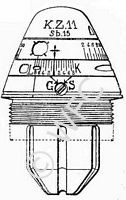 |
| LKZ 11 Gr (Langer Kanonen Zünder 1911 Granate) Graduated from 4 to 72 (lowest and highest in hundreds of metres (68 = 6,800 metres). Each of the smallest divisions from 2 to 15 is equivalent to 100 metres of range, those from 15 to 72 are equivalent to 50 metres. According to a German document, the latest pattern of this fuze is only graduated up to 5,000 metres (5,468 yards). When the setting mark is opposite the cross on the disc covering the gas escape, the fuze is set for percussion. Material: Cap of zinc alloy; aluminium timerings. | 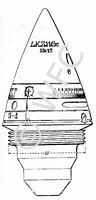 |
German trench mortar fuzes
| LWMZdr (Leichter Wurf-Mine Zünder) Graduations. Graduated from 7 to 24 in seconds and fifths of a second (lowest and highest figures are 7 and 24). When the setting mark is opposite the cross, the fuze is set for percussion.This fuze is an improved pattern of the original fuze, which was marked I.W.M. 2dr. and was graduated as above. The fuze is generally used as a percussion fuze, but is set toact by time from 1 to 4 seconds after impact, as a precaution in case the percussion arrangement misses fire. The fuze cover used for night firing is shown in the plate. It is made of thin sheet iron, japanned black, and clips or screws on to the recess in the head of the fuze. The original pattern of this fuze terminated in a powerful detonator. the exploder was placed in the top of the tin containing the bursting charge. The present pattern is screwed into the usual type of steel game containing the exploder. Material: Brass, or brass with zinc cap. | 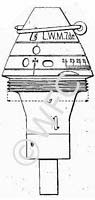 |
| ZmWM (Zünder mittlerer Wurf-Mine) Graduated from 7 to 21 in seconds and' fifths of a second (lowest and highest figures are 7 and 21). When the setting mark is opposite the cross, the fuze is set for percussion. Material: Brass body, with steel cap. | 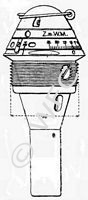 |
| ZglWM (Zünder glatter Wurf-Mine) Graduated from 7 to 21 in seconds and fifths of a second (lowest and highest figures are 7 and 21). When the setting mark is opposite the cross, the fuze is set for percussion. Material: Body and cap of zinc alloy; timerings of brass. | 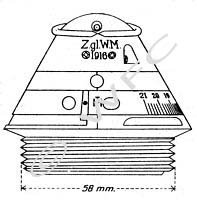 |
| ZsumWM (Zünder schwerer und mittlerer Wurf-Mine) Graduated from 7 to 21 in seconds and' fifths of a second (lowest and highest figures are 7 and 21). When the setting mark is opposite the cross, the fuze is set for percussion. The original pattern of this fuze was marked Z.m.W.M., was identical in appearance and graduation, and only differed in its designation. The present pattern was introduced witha view to replacing Z.S.W.M. {see page 185) and providing a fuze which can be used with either the medium or the heavyMinenwerfer. This fuze is so constructed that the percussion arrangement works equally well whether the projectile strikes the ground point first or base first. Should the percussion arrangement fail to act, detonation is effected by the time arrangement in the fuze, which far this purpose is set to act one or more seconds after impact. The fuze cover used for night firing is shown in the plate.Itis made of thin sheet iron, japanned black, and is screwed on to a flanged washer of the same metal, interposed between the fuze and the head of the shell. Material: Brass body, with steel cap. | 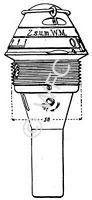 |
| ZsWM (Zünder schwerer Wurf-Mine) Graduations. Graduated from 1 to 15 in seconds and fifths of a second. When the setting mark is opposite the cross, the fuze is set for percussion. This fuze is so constructed that the percussion arrangement works equally well whether the projectile strikes the ground point first or base first. Should the percussion arrangement fail to act, detonation is effected by the time arrangementin the fuze, which for this purppse is set to act one or more seconds after impact. This fuze has been replaced by Z.S.U.HI.W.M., which is used with either the medium or the heavy Minenwerfer. Material: Brass and aluminium. | 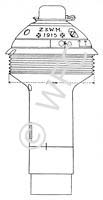 |
German base fuzes
| Bd Z 06 (Bodem Zünder 1906) A base fuze, with or without delay action, similar in appearance to Ig.Bd. Z.10 (Lanager Bodem Zünder 10) Material: Brass with steel gaine. | 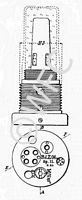 |
| kz Bd Z 10 (Kurzer Bodem Zünder 1910) Percussion, non-delay, short delay or long delay action(vide 0.V., 1V and 2V on the plate). Material: Brass, with steel gaine. | 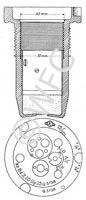 |
Fuze, primer & shell markings
|
MARKING |
DESCRIPTION |
REMARK |
COUNTRY |
|---|---|---|---|
 | Rheinische Metallwaren und Maschinen Fabrik | symbol | Germany |
| A.E.G. | Allgemeine Electrizitats Gesellschaft | Germany | |
| ATS | Atelier de Tarbes | France | |
| A.W. | Ardelwerke (Eberswalde) | Germany | |
| B | Bergmann-Dynamos, Berlin | Germany | |
| BMC | British Munitions Company of Verdun, Quebec | Canada | |
| BT | Parc d'artillerie de Place de Brest | France | |
| C.L. | Ludwig Lowe & Co, Berlin | Germany | |
 | Ludwig Lowe & Co, Berlin | monogram | Germany |
| CSF Co | Cossipore Shell Factory | India | |
| DK & Co. | Dick, Kerr & Co. Ltd, London | England | |
| Dn | Danzig | Germany | |
| Dr | Dresden | Germany | |
| D.W.M. | Deutsche Waffen und Munition Fabrik, Berlin | Germany | |
| E.u.Co | Ehrardt & Co | Germany | |
| E&G | Ehrich & Graetz Metallwarenfabrik AG | Germany | |
| EAC | Eddystone Ammunition Corporation | USA | |
| ECP | Ecole Centrale de Pyrotechnic à Bourges | France | |
| EP | Ecole de Pyrotechnie, Antwerp | Belgium | |
| GB N | Gebrüder Bing, Nürnberg | Germany | |
| Gf | Granatfülling | Germany | |
| GF Sb | Geschossfabrik Strassburg | Germany | |
| GG (W) | Gelsenkirchner Gusstahl Werke | Germany | |
| GK | George Kent Ltd., Luton | England | |
| H.M.A.G. | Hannoversche Machinenbau Aktiengesellschaft | Germany | |
| J | Ingoldstadt | Germany | |
| Kp | Krupp | Germany | |
| Kr | Krupp | Germany | |
| L | Lubenstadt | Germany | |
| M.A.N. | Maschinen Fabrik Augsburg-Nürnberg Aktiengesellschaft | Germany | |
| N.E.Co. | Northern Electric Co. | Canada | |
| N.S.U. | Neckarsulmer Gesellschaft | Germany | |
| P | Polte, Magdeburg | Germany | |
| P & S | Potz und Sandt, Mannheim | Germany | |
| P.B.& Co. | Platt Brothers & Co., Oldham | England | |
| PW | C.E. Pippigs Witwe, Leipzig-Gohlis | Germany | |
| RF | Remscheid Fabrik | Germany | |
| R.M.F. | Rheinische Metallwaren und Maschinen Fabrik | Germany | |
| R.M.C. | Russell Motor Car Co., Toronto | Canada | |
| Sb | Strasbourg | Germany | |
| SC | Naval Factory at St. Chamond | France | |
| SFM | Societe Francaise des Munitions de Chasse, de Tir et de Guerre | France | |
 | Siemens-Halske | monogram | Germany |
| Sg | Siegburg | Germany | |
 | Siemens-Martin | monogram | Germany |
| SMC | Scovill Manufacturing Company | USA | |
| S.N. | Steffens Nölle, Essen | Germany | |
| Sp | Spandau | Germany | |
 | Siemens-Schuckert | monogram | Germany |
| S & Co. | R. Stock & Co., Berlin-Marienfelde | Germany | |
| VSM | Vickers, Sons and Maxim | England | |
| W & M Co | Wallaroo & Moonta Mining and Smelting Co Ltd., Yorke Peninsula | Australia |
TOP
Reference list
- Armi ed Equipaggiamenti Dell'Esercito Italiano Nella Grande Guerra 1915-1918, by Nevio Mantoan (Gino Rossato,Novale 1996)
- l'Artiglieria Austro-Ungarica nella Grande Guerra, by Filippo Cappellano (Gino Rossato, Novale 2001).
- l'Artiglieria Italiana nella Grande Guerra, by Andrea Curami & Allessandro Masignami (Gino Rossato, Novale 1998).
- British Artillery Weapons & Ammunition 1914-1918, by Ian V. Hogg and L.F. Thurston (Ian Allan, London 1972).
- Deutsche Artillerie- und Minenwerfer Munition 1914-1918, by Karl-Heinz Dissberger (Dissberger, Düsseldorf 1984).
- German Artillery of World War One, by Herbert Jäger (The Crowood Press Ltd, Marlborough 2001).
- Handbook of Ordnance, Washington 1919.
- La Flak de 1914-1918 (Part 1 and 2), by B. Delsert, J.J. Dubois and Chr. Kowal (La PLume du Temps, 2000).
- Notes on Austro-Hungarian Fuzes. London 1917.
- Notes on German Fuzes, and typical French and Belgian Fuzes, London 1918.
- United States Artillery Ammuntion, London 1917.


Member of the N.V.B.M.B. (Dutch branch of the European Cartridge Research Association)
Copyright © The Western Front Museum Foundation