| 0/0/1828 | Wagner completes his tragedy "Leubald und Adelaide". He was influenced by Goethe and Shakespeare. After completing it he decided to occupy himself with music. Within half a year he would conduct and write operas. |
| 0/4/1829 | Wagner sees Wilhelmine Schröder-Devrient in Beethoven's Fidelio. She played the part of Leonore. Wagner, who was sixteen years old, was deeply impressed. [Schröder-Devrient, Wilhelmine] |
| 24/12/1830 | Richard Wagner's "Overture in B major" is performed in Leipzig. His name wasn't mentioned. |
| 25/12/1831 | Richard Wagner's "Concert Overture in d minor" is performed at the Gewandhaus in in Leipzig. It was stronly influenced by the work of Beethoven and it was probably conducted by Heinrich Dorn. |
| 3/2/1832 | Richard Wagner completes the overture to Raupach's "König Enzio" |
| 23/2/1832 | Wagner's "d-Moll-Ouverture" is performed at the Gewandhaus in Leipzig |
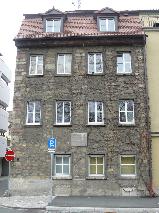
| 0/1/1833 | Richard Wagner is appointed choir director in Würzburg for six months. He received only 10 guilders a month for which he rented a room. During his time in Würzburg het started composing his opera "Die Feen". |
| 20/8/1839 | Richard Wagner meets Giacomo Meyerbeer at a spa in Boulogne sur Mer. They met by coincidence at a Spa, where Meyerbeer was with Ignaz Moscheles. Wagner read him from the libretto of "Rienzi" and asked him for help. Meyerbeer promised to do his best for Wagner in Paris. [Meyerbeer, Giacomo] |
| 22/12/1841 | Premiere of Halévy's "La reine de Chypre" at the Salle Le Peletier in Paris. The libretto was by Jules-Henri Vernoy de Saint-Georges. Rosine Stolz performed the title part of this grand opera and Gilbert Duprez was Gérard. Joseph Mazilier was the choreographer. Adéle Dumilâtre, Natalie Fitzjames and Pauline Leroux were in the ballet. Richard Wagner was in the audience. [Halévy, Fromental] |
| 20/10/1842 | Premiere of Richard Wagner's opera "Rienzi" at the Royal Court Theatre in Dresden. It was a huge succes. It was conducted by Carl Reissiger. Wilhelmine Schröder-Devrient was Adriano and Joseph Tichatschek was Rienzi. [Reissiger, Carl][Schröder-Devrient, Wilhelmine][Tichatscheck, Joseph] |
| 2/1/1843 | Premiere of Richard Wagner's opera "Der Fliegende Holländer" in Dresden. The premiere was supposed to take place in Berlin but eventually it was at the Royal Court Theatre in Dresden. Wagner was the conductor. Wilhelmine Schröder-Devrient was Senta and Johann Michael Wächter was the Dutchman. [Schröder-Devrient, Wilhelmine] |
| 2/2/1843 | Richard Wagner is appointed Royal Court Conductor of Saxony |
| 7/1/1844 | Wagner conducts "Der fliegende Holländer" at the Schauspielhaus in Berlin. It was the first time that this opera was performed in Berlin. It was well received but it wouldn't be performed again in Berlin until 1868. |
| 15/12/1844 | Carl Maria von Weber is reburied in Dresden. Richard Wagner, who had known him as a child and was now the musical director in Dresden, held a speech at the new grave at the Catholic Cemetery. [Weber, Carl Maria von] |
| 19/10/1845 | Premiere of Richard Wagner's opera "Tannhäusser" in Dresden. Richard Wagner conducted the opera himself. Josef Tichatschek was Tannhäuser, Johanna Wagner was Elisabeth and Wilhelmine Schröder-Devrient was Venus. Other singers were Anton Mitterwurzer and Johann Michael Wächter. [Schröder-Devrient, Wilhelmine][Tichatscheck, Joseph] |
| 0/12/1845 | Richard Wagner sees Jenny Lind in Berlin in "Don Giovanni" and in "Norma". [Lind, Jenny] |
| 5/4/1846 | Richard Wagner conducts Beethoven's sixth symphony in Dresden. The performance took place at the Old Opera House. [Beethoven, Ludwig van] |
| 16/2/1849 | Liszt conducts the premiere of Wagner's Tannhäuser in Weimar. An earlier version was first performed in Dresden in 1845. In 1849 Wagner was in exile in Switzerland. [Liszt, Franz] |
| 13/5/1849 | Wagner arrives in Weimar. He had been forced to flee from Dresden and in Weimar he attented a probe of his Tannhäuser that was conducted by Franz Liszt. Then news arrived that Wagner would be prosecuted and he left Weimar. [Liszt, Franz] |
| 16/3/1850 | Richard Wagner arrives in Bordeaux. He had been invited by Jessie Laussot to visit her and her husband. Soon he and Jessie became lovers. [Laussot, Jessie] |
| 18/5/1850 | Richard Wagner returns to Bordeaux. He went to the Hôtel des 4 Soeurs. He wanted a confrontation with the husband of his mistress Jessie Laussot but he soon found out that Laussot and his wife had left the city. In June she sent him a message that she would never see him again. It seems they met again in 1876. [Laussot, Jessie] |
| 28/8/1850 | Premiere of the opera "Lohengrin" by Richard Wagner in Weimar conducted by Franz Liszt. Richard Wagner had finished the opera early in 1848 but after his revolutionary activities he had been forced to leave Dresden in 1849. Liszt staged the opera in Weimar. Wagner was in exile at the time and couldn't attend. The opera was a success although the lead tenor Karl Beck disappointed. [Liszt, Franz][Milde, Hans Feodor von][Milde-Agthe, Rosa von] |
| 3/9/1850 | Richard Wagner's "Das Judenthum in der Musik" is published in the Neuen Zeitschrift für Musik. It was published in two installments on 3 and 9 September 1850 under the pseudonym K. [Karl] Freigedank. His intention was to fight the influence of Jews on German music. The Neuen Zeitschrift für Musik was directed by Franz Brendel at that time. In 1869 Wagner published an extended version under his own name. |
| 0/5/1853 | Richard Wagner conducts several concerts in Zürich |
| 10/5/1853 | Liszt, Wagner and Berlioz meet at Liszt's hotel in Paris. The next day, in the presence of Wagner, Berlioz sang at breakfast and Liszt played excerpts from "Benvenuto Cellini". [Berlioz, Hector][Liszt, Franz] |
| 4/9/1853 | Richard Wagner arrives in La Spezia. He had travelled by steamship from Genua and arrived exhausted in La Spezia. The next day he was so tired that he felt he was sinking in strongly flowing water and he stated that this was the inpiration for the preluded to "Das Rheingold". |
| 6/10/1853 | Liszt visits Wagner in Basel. With him was a group of supporters, among them Hans von Bülow. They came from Karlsruhe where the music festival had taken place and they stayed until Saturday. [Bülow, Hans von][Liszt, Franz] |
| 10/10/1853 | First meeting between Richard Wagner and Cosima Liszt [Wagner, Cosima] |
| 0/3/1855 | Richard Wagner conducts eight concerts in London. The concerts took place between March and May, 1855. |
| 4/3/1855 | Richard Wagner arrives in London to conduct eight concerts. He conducted eight concerts on 12 and March, 16 and 30 april, 14 and 28 May and 11 and 25 June. He was invited by the Royal Philharmonic Society and accepted the engagement because he needed the revenue. |
| 11/6/1855 | Queen Victoria attends a concert conducted by Richard Wagner. Victoria and Prince Albert spoke with him afterwards and she noted in her diary that he was short and quiet and that he had a hooked nose. But Wagner wrote to Franz list that she and Prince Albert were very nice to him and that they spoke openly in his favour. At the time he was still a political outlaw in Germany. |
| 20/6/1855 | Wagner and Berlioz dine together at the flat of Prosper Sainton in London. They had their differences and the diner and a few other meetings brought them closer. They wrote positive accounts of their meetings to Franz Liszt who very much wanted them to get along well. However, they were again reserved regarding each other afterwards. [Berlioz, Hector] |
| 18/2/1856 | Berlioz and Marie Recio walk out during a performance of Wagner's "Lohengrin" conducted by Liszt in Weimar. It happened on 18 February of shortly afterwards. It was the first time Berlioz heard Wagner's music. Although Berlioz and Recio attented the full second performance on 24 February it clouded the friendship between Liszt and Berlioz. [Berlioz, Hector][Liszt, Franz][Recio, Maria] |
| 28/8/1857 | First performance in Vienna of Wagner's "Tannhäuser" at the Ottakringer Thaliatheater. The director of the theatre, Johann Hoffmann, admired the work of Wagner. The conductor was Eduard Stolz. The location in Ottakring was the summer location of the theatre. |
| 30/9/1857 | Wagner's "Tannhäuser" is staged at the Theater in der Josefstadt in Vienna. It was staged by Johann Hoffmann who had already brought the opera to the Ottakringer Thaliatheater during the summer of 1857. |
| 0/8/1858 | Richard Wagner moves to Venice. He had separated from his wife Minna and hye lived there from August 1858 to March 1859. He worked on "Tristan and Isolde". As a former revolutionary he was watched by the police. On 1 February he was expelled from Austria, but he deadline was extended and he completed the score of Act II of "Tristan and Isolde". Amnesyty in Dresden was refused and he left Venice in March and travelled in Europe. In November 1861 he returned to Venice for four days.
|
| 25/1/1860 | Richard Wagner conducts a series of concerts at the Salle Ventadour of the Opéra italien in Paris. The concerts included extracts from his operas "Lohengrin", "Tannhäuser" and "Tristan und Isolde". The first concert was visited by Daniel Auber, Hector Berlioz, Charles Gounod, Giacomo Meyerbeer, Ernest Reyer, François-Auguste Gevaert and Jules Champfleury. The second concert took place on 1 Febraury 1860 and the third concert on 8 February 1860. During the series he met Charles Baudelaire, who was much impressed by Wagner's music. [Auber, Daniel][Baudelaire, Charles][Berlioz, Hector][Gounod, Charles][Meyerbeer, Giacomo] |
| 0/3/1860 | Richard Wagner is received by Gioacchino Rossini in Paris. It was early in March. |
| 0/7/1860 | Act Two of Wagner's Tristan und Isolde is performed at the house of Pauline Viardot. It was performed by Pauline Viardot, Richard Wagner himself and Karl Klindworth. Hector Berlioz and Marie Kalergis, in whose honour the event was organised, were present. [Berlioz, Hector][Klindworth, Karl][Viardot-Garcia, Pauline] |
| 2/2/1861 | Ludwig II of Bavaria attends Wagner's opera "Lohengrin". Ludwig was much impressed. |
| 13/3/1861 | Premiere of Richard Wagner's revised "Tannhäuser" at the Salle Le Pelletier in Paris. The performance was requested by Emperor Napoleon III after a suggestion by Pauline von Metternich. Urged by the members of the Jockey Club, Wagner had added a ballet to his opera. However, Wagner let the ballet start immediately after the ouverture, while it was known that the gentlemen were only present from the second act because they first finished their diners. The performance was disturbed by booing. Hector Berlioz was in the audience. After three performances "Tannhäuser" was over in Paris. [Berlioz, Hector][Napoleon III Bonaparte][Niemann, Albert] |
| 15/5/1861 | Richard Wagner attends the staging of "Lohengrin" at the Court Opera in Vienna |
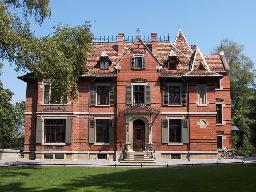
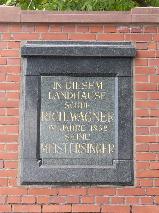
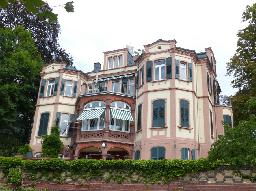
| 8/2/1862 | Richard Wagner moves to Biebrich. He was once more in financial difficulties and he rented two rooms in a villa built by the architect Frickhöfer at the Rheingaustrasse 137 near Schloss Biebrich. It was also near his publisher Schott in Mainz. He worked there on his future opera "Die Meistersinger von Nürnberg" and he was visited by Hans and Cosima von Bülow. He left Biebrich in November. [Bülow, Hans von][Wagner, Cosima] |
| 1/11/1862 | Hans and Cosima von Bülow meet Richard Wagner in Leipzig. There was a concert where Hans von Bülow would play Liszt's new piano concert and Wagner would conduct the Tannhäuser ouverture and a new prelude to "The Meistersinger". Wagner's young friend Wendelin Weissheimer would also present his work. Wagner later stated in his autobiography that at this day he experienced his first feelings for Cosima and that he hardly noticed the music. [Bülow, Hans von][Wagner, Cosima] |
| 26/12/1862 | The empress Elisabeth attends the first concert conducted by Richard Wagner in Vienna. It was the first time Wagner conducted a concert in Vienna. He didn't like conducting because it distracted him from composing, but he urgently needed the money. He also hoped to arrange a performance of "Tristan und Isolde" in Vienna. [Elisabeth von Bayern, Kaiserin von Österreich] |
| 6/1/1863 | Premiere of Brahm's "Piano Sonata 3" in Vienna. He played it himself. Richard Wagner was in the audience. [Brahms, Johannes] |
| 11/1/1863 | The empress Elisbeth attends the third Wagner concert in Vienna. She had also attended the first concert Wagner conducted in Vienna. She missed the second concert on 1 Jan 1863. [Elisabeth von Bayern, Kaiserin von Österreich] |
| 8/2/1863 | Richard Wagner conducts his own music in Prague. Antonin Dvorak was a member of the orchestra. [Dvorak, Antonin] |
| 0/3/1863 | Richard Wagner arrives in Moscow for three concerts. He came from St. Petersburg and returned there after his stay in Moscow. He met Nikolaus Rubinstein. He also visited the Kremlin but it didn't impress him at all. |
| 2/3/1863 | Richard Wagner conducts concerts in Saint Petersburg. In March he went to Moscow for three concerts and after that he gave more concerts in Saint Petersburg in April 1863. |
| 12/5/1863 | Richard Wagner moves to Penzing near Vienna |
| 28/11/1863 | Richard Wagner and Cosima Liszt become lovers. Wagner was staying in Berlin because Cosima's husband Hans von Bülow had asked him to attend a concert. When Von Bülow was busy with the repititions Wagner and Cosima made a coach ride during which they confessed to each other that they belonged together. That night Wagner was staying in Von Bülow's house. [Bülow, Hans von][Wagner, Cosima] |
| 4/5/1864 | First meeting between Ludwig II of Bavaria and Richard Wagner |
| 10/4/1865 | Hans von Bülow conducts the first repetition of "Tristan und Isolde". On the same day his wife Cosima bore a daughter, that was named Isolde. Isolde's father was Richard Wagner, the composer of "Tristan and Isolde". [Bülow, Hans von][Bülow, Isolde von][Wagner, Cosima] |
| 10/6/1865 | Premiere of Richard Wagner's "Tristan Und Isolde" in Munich. Hans von Bülow was the conductor. "Tristan und Isolde" was refused in Paris, Vienna and Karlsruhe because it would be 'impossible to perform'. The performance started at six and ended shortly before midnight. Ludwig Schnorr von Carolsfeld was Tristan and his wife Malvina was Isolde. King Ludwig II of Bavaria was there. [Bülow, Hans von][Garrigues, Eugenia Malvina][Possart-Deinet, Anna von][Schnorr von Carolsfeld, Ludwig] |
| 10/12/1865 | Richard Wagner is forced to leave Munich. Wagner's presence was now unwanted because he was suspected to influence king Ludwig II, who had given him a lot of money. |
| 24/10/1867 | Wagner completes his opera "Die Meistersinger von Nürnberg" |
| 21/6/1868 | Premiere of Wagner's "Die Meistersinger von Nünberg". It was staged in Munich in the presence of King Ludwig II of Bavaria. Hans von Bülow was the conductor. Ludwig insisted that Wagner would sit next to him in the royal box. After the first act the public was very enthousiastic and demanded to see the composer. But Wagner didn't show himself. Only after the last act he rose to accept the ovation of the public. This caused a scandal because it was considered inappropriate that a composer received the honours of the public standing next to the king. [Bausewein, Kaspar][Bülow, Hans von][Diez-Hartmann, Sophie][Mallinger, Mathilda][Strauss, Franz Joseph] |
| 22/9/1869 | Premiere of Richard Wagner's "Das Rheingold" in Munich. Franz Wüllner was the conductor. August Kindermann was Wotan, Heinrich Vogl was Loge, Sophie Stehle was Fricka, Henriette Müller-Marion was Freya,. Other parts were sung by Franz Nachbaur, Emma Seehofer, Max Schlosser, Kasper Bausewein, Anna Kaufmann, Therese Vogel, Karl Samuel Heinrich and Wilhelmine Ritter. [Bausewein, Kaspar][Vogl, Heinrich][Vogl, Therese] |
| 26/6/1870 | Premiere of Wagner's "Die Walküre" at the Hoftheater in Munich. Wagner wanted to stage it in 1871, but Ludwig II of Bavaria was the legal owner of the piece and didn't want to wait. Wüllner was the conductor and Joachim, Brahms, Saint-Saëns and Liszt were in the audience. Wagner wasn't there and Ludwig also stayed away. He had decided to wait for the second performance so that he would be able to see "Das Rheingold", that would be staged again during the summer, and "Die Walküre" in the right order. [Bausewein, Kaspar][Brahms, Johannes][Joachim, Joseph][Liszt, Franz][Possart-Deinet, Anna von][Saint-Saëns, Camille][Vogl, Heinrich][Vogl, Therese] |
| 5/2/1871 | Wagner completes his opera "Siegfried" |
| 12/5/1871 | Richard Wagner announces to build his own theatre in Bayreuth. He didn't want to stage his "Ring" in Munich as originally planned because the Court Theatre was not fit for the purpose. This was reason enough for Wagner to build his own theatre. |
| 1/11/1871 | Richard Wagner's "Lohengrin" is performed at the Teatro Communale di Bologna. It was the first time that a work by Wagner was perfomed in Italy. The local press protested against it, but the city council allowed it. The Viennese music critic Ernst Frank was in the audience. Wagner's start would soon rise in Italy and he was made a honorary citizen of Bologna in 1872. |
| 22/5/1872 | The first stone is laid for Richard Wagner's Festspielhaus in Bayreuth. It took place on Wagner's 59th birthday. It had cost him much effort to find the funding for the theatre in which he wanted to perform his Ring. Fransz Liszt took part in the ceremony. On this occasion the first meeting between Malwida von Meysenbug and Friedrich Nietzsche took place. [Liszt, Franz][Meysenbug, Malvida, Freiin von] |
| 7/11/1872 | The revised of Richard Wagner's "Tannhäuser" is staged at the Teatro Comunale in Bologna. He had revised it in 1861 and this version was known as the 'Paris' version. It was the first time that this version was performed outside France. Angelo Mariani was the conductor. On 30/01/1899 it would be produced in New York and on 15/07/1895 in London. |
| 0/9/1873 | Bruckner visits Wagner in Bayreuth. Bruckner asked Wagner if he could dedicate his third symphony to him and Wagner approved his request. |
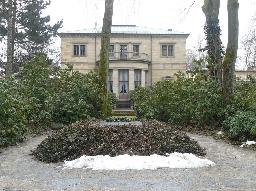
| 28/4/1874 | Richard Wagner moves into his villa Wahnfried in Bayreuth |
| 21/11/1874 | Wagner completes his opera "Götterdämmerung". This was the last of the four parts of his "Ring". |
| 0/3/1875 | Festival in honour of Richard Wagner at Makart's studio in Vienna. It had the form of a costume ball and he cooperated with Franz von Lenbach. Franz Liszt played the piano. Apart from Richard Wagner, his wife Cosima, Gottfried Semper and Arnold Böcklin were present. [Böcklin, Arnold][Lenbach, Franz von][Liszt, Franz][Makart, Hans ][Semper, Gottfried][Wagner, Cosima] |
| 12/6/1875 | Wagner's "Lohengrin" is staged at Drury Lane in London |
| 11/5/1876 | Last meeting between Wagner and Nietzsche. They were both in Sorrento and would be estranged afterwards. |
| 13/8/1876 | Premiere of Wagner's "Ring" in Bayreuth starting with "Das Rheingold". It was performed from August 13th to August 17th. "Das Rheingold" had its premiere in Munich in 1869, but this time the entire "Ring" was performed. Many illiustrious persons were present, among them Emperor Wilhelm I of Germany and King Ludwig II of Bavaria. On the 13th "Das Rheingold" was performed. Among the singers were Franz Betz, Heinrich Vogl, Friederike Grün, Marie Haupt, Eugen Gura, Georg Unger, Louise Jaide, Karl Hill, Max Schlosser, Albert Eilers, Franz von Reichenberg, Lilli Lehmann, Marie Lehmann and Minna Lammert. [Friedrich-Materna, Amalie][Lehmann, Lilli][Lehmann, Marie][Richter, Hans][Vogl, Heinrich][Wilhelm I, emperor of Germany] |
| 14/8/1876 | Wagner's "Die Walküre" performed in Bayreuth as second part of the full "Ring". Hans Richter was the conductor. Among the singers were Albert Niemann, Josephine Schefsky, Franz Betz, Friederike Grün, Amelie Materna, Marie Haupt, Lilli Lehmann, Marie Lehmann, Luise Kaide, Johanna Jachmann-Wagner, Hedwig Reicher-Kindermann and Minna Lammert. [Friedrich-Materna, Amalie][Lehmann, Lilli][Lehmann, Marie][Niemann, Albert][Reicher-Kindermann, Hedwig][Richter, Hans] |
| 16/8/1876 | Premiere of Richard Wagner's opera "Siegfried" in Bayreuth as third part of the "Ring". "Siegfried" was the third part of his "Ring des Nibelungen" and this part was performed for the first time. Hans Richter was the conductor. Among the singers were George Unger, Max Schlosser, Franz Betz, Karl Hill, Franz von Reichenberg, Marie Haupt, Luise Jaide and Amalie Materna. [Friedrich-Materna, Amalie][Richter, Hans] |
| 17/8/1876 | Premiere of Wagner's "Götterdämmerung" in Bayreuth as the fourth part of his "Ring". Hans Richter was the conductor. The singers were George Unger, Amalie Materna, Eugen Gura, Mathilde Weckerlin, Gustav Siehr, Kal Hill, Luise Jade, Jahanna Jachmann-Wagner, Josephine Schefsky, Friederike Grün, Lilli Lehmann, Marie Lehmann and Minna Lammert. [Friedrich-Materna, Amalie][Lehmann, Lilli][Lehmann, Marie][Richter, Hans] |
| 19/4/1877 | Wagner completes the textbook of "Parsifal" |
| 7/5/1877 | Start of the Wagner Festival at the Royal Albert Hall in London. It took place from 7 to 29 May. Wagner conducted the first half of each of the eight concerts that together formed the Grand Wagner Festival. The second part of the concerts was conducted by Hans Richter and Wagner watched him from a large arm chair on the corner of the stage. [Richter, Hans] |
| 17/5/1877 | Richard and Cosima Wagner are received by Queen Victoria at Windsor. Queen Victoria had met Wagner before in 1855 and she noted in her diary that he had grown old and stout, with a clever, but not pleasing countenance. [Wagner, Cosima] |
| 24/1/1878 | First performance of Wagner's "Ring" in Vienna starting with "Das Rheingold". Like in Bayreuth in 1876 the conductor was Hans Richter. [Reicher-Kindermann, Hedwig][Richter, Hans] |
| 4/1/1880 | Richard Wagner arrive in Naples. He stayed with his family in the Angri villa on the heights of Pausilippe. |
| 18/1/1880 | Richard Wagner receives Paul de Joukovsky in Naples. Joukovsky would create the set for "Parsifal" in Bayreuth in 1882. |
| 19/7/1880 | Richard Wagner finished his essay "Religion und Kunst" |
| 7/8/1880 | Richard Wagner and his family leave Naples. He had suffered from an allergy. They would pass Rome, San Marcello, Pistoia and Florence. |
| 24/8/1880 | Richard Wagner arrives in Siena. They lived at the villa Torre Fiorentina. Wagner was amazed by the cathedral. He visited it in the company of Paul de Joukovsky and they decided to use the choir of the cathedral for the decor of the temple in "Parsifal". |
| 16/9/1880 | Franz Liszt visits Richard Wagner in Siena. He stayed until 25 September 1880 and he worked there on compositions. [Liszt, Franz] |
| 10/11/1880 | Private performance of Richard Wagner's "Lohengrin" for King Ludwig II at the Court Theatre in Munich. Only Richard Wagner himself was allowed to join Ludwig in the royal box. Elsewhere in the theatre Cosima Wagner and her daughters were hidden. [Wagner, Cosima] |
| 12/11/1880 | Last meeting between Richard Wagner and King Ludwig II of Bavaria. It took place at the Court Thetre in Munich. After the king heard "Parsifal" he asked Wagner to conduct the Prelude to "Lohengrin" to 'compate'. Wagner felt affronted and gave the baton to Hermann Levi. Wagner and Ludwig would never meet again. |
| 25/4/1881 | Richard Wagner completes Act I of "Parsifal" |
| 5/5/1881 | Creation of Wagner's "Ring" in Berlin by Angelo Neumann's company. It took place from 5-9 May. Richard and Cosima Wagner had travelled to Berlin and attended the performances. [Neumann, Angelo][Wagner, Cosima] |
| 11/5/1881 | Richard Wagner receives Arthur Gobineau in Bayreuth. They held talks for almost four weeks. [Gobineau, Arthur de] |
| 29/5/1881 | Emperor William I attends Richard WAgner's "Gotterdämmerung" in Berlin. It was the fourth cycle of performances of Wagner's "Ring" in Berlin. Richard and Cosima Wagner attended this cycle in the presence of Count Gobineau and Paul von Joukovsky. [Wagner, Cosima][Wilhelm I, emperor of Germany] |
| 26/9/1881 | Judith Gautier stays with Richard and Cosima Wagner at Wahnfried. She had been invited by the Wagners and was in Bayreuth from 26 September to 1 October. Judith noticed that Wagner was seriously ill. [Wagner, Cosima] |
| 20/10/1881 | Richard Wagner finishes Act II of "Parsifal" |
| 5/11/1881 | Wagner arrives at the Hôtel des Palmes in Palermo. He had travelled from Munich to Verona and then from Napoli to Palermo. His family was with him and they occupied rooms 24, 25 and 26. |
| 11/11/1881 | Richard and Cosima Wagner visit the park of the Villa Giulia in Palermo. They enjoyed the blooming vegetation. It had previously been visited by Goethe as well. [Wagner, Cosima] |
| 28/12/1881 | Richard and Cosima Wagner visit the Cathedral at Monreale. Cosima noted in her diary that Wagner was in an ill humor, but the cathedral delighted them. Wagner visited the cathedral several times during their stay in Palermo. [Wagner, Cosima] |
| 31/12/1881 | Richard and Cosima Wagner visit the Orto Botanico in Palermo. They admired the splendid trees. [Wagner, Cosima] |
| 12/1/1882 | Richard and Cosima Wagner visit the La Zisa castle in Palermo. They also visited the cathedral on this day. [Wagner, Cosima] |
| 13/1/1882 | Wagner completes "Parsifal" in Palermo |
| 15/1/1882 | Auguste Renoir sketches Richard Wagner in Palermo. They had met the day before and talked for 45 minutes, despite the fact that Wagner spoke no French and Renoir spoke no German. Renoir had proposed a short sitting on the following day. Wagner sat for him but soon lost his good humour and according to Renoir he started feeling stiff. The sitting ended after 35 minutes. Later he used the pencil sketches he had made for his oil painting of Wagner. |
| 2/2/1882 | Richard Wagner moves from the Hôtel des Palmes to the Villa del Principe Gangi in Palermo. The villa was located at the Piazza dei Porazzi. During his stay he composed the Porazzi theme. As far as known this was his last composition before his death. |
| 20/3/1882 | Richard and Cosima Wagner travel from Palermo to Acireale. Count Gravina was with them. [Wagner, Cosima] |
| 28/3/1882 | Richard Wagner suffers a heart attack in Acireale. He and his wife Cosima had left Palermo and were in Acireale, between Catania and Taormina. He survived the heart attack and on 2 April he was able to make a daytrip to Taormina. |
| 2/4/1882 | Richard Wagner visits Taormina. He had sufficiently recovered from his heart attack on March, 28th. His wife Cosima was with him. [Wagner, Cosima] |
| 10/4/1882 | Richard Wagner and his family leave Acireale for Messina |
| 14/4/1882 | Richard Wagner and his family arrive in Naples |
| 1/5/1882 | Richard Wagner returns to Bayreuth. He had completed his final opera "Parsifal" in Palermo. |
| 26/7/1882 | Premiere of Wagner's "Parsifal" in Bayreuth. It was Wagner's last work and it would be staged another sixteen times that year until the end of August. Hermann Levi was the conductor, but during the last performance Wagner conducted the last act himself. It was the only time he appeared as a conductor in Bayreuth.
Hermann Winkelmann was Parsifal, Theodor Reichmann was Amfortas, Emil Scaria was Gurnemanz, August Kindermann was Titurel; Karl Hill was Klingsor, Amalie Materna was Kundry. Anton Fuchs and Eugen Stumpf were Gralritters. Hermine Galfy, Mathilde Keil, Max Mikorey and Adolf van Hübbenet were the Knappen. Sophie Dompierre perormed the alt solo. The Zaubermädchen were Pauline Horson, Johanna Meta, Carrie Pringle, Johanna André, Hermine Galfy and Luise Belse. [Friedrich-Materna, Amalie] |
| 14/9/1882 | Richard Wagner returns to Venice. The first days he stayed at the Hotel Europa. |
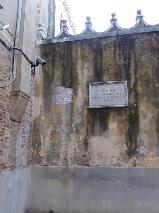
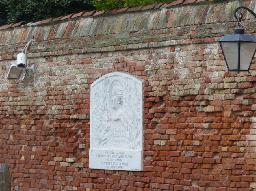
| 16/9/1882 | Richard Wagner moves into the Palazzo Vendramin in Venice. He had rented an entire floor from Count Bardi. |
| 24/12/1882 | Richard Wagner conducts a private concert in Venice. It took place at the Apollinee rooms of the Fenice theatre to celebrate the birthday of his wife Cosima. At the time Franz Liszt was visiting them in Venice and he and Wagner were often seen sitting together from the Grand Canal in front of the large window. Liszt was present at this occasion. Requested by Wagner, he played an aria by Rossini. [Liszt, Franz][Wagner, Cosima] |
| 12/2/1883 | Richard Wagner plays part of "Das Rhinegold" on the piano in Venice. He would die the next day at the Palazzo Vendramin. |
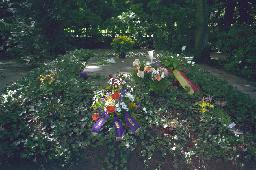
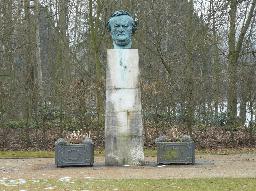
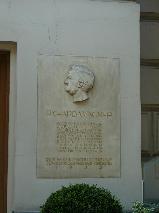
| 18/2/1883 | Richard Wagner is buried in the garden of his house Wahnfried in Bayreuth |
| 11/5/1897 | Rudolf Mahler stages Wagner's "Lohengrin" at the Court Opera in Vienna. He was first engaged as musical director at the Court Opera and this was his first production. Hermann Winkelmann was Lohengrin and Louise Ehrenstein was Elsa. [Mahler, Gustav] |
| 0/3/1899 | Angelo Neumann performs Wagner's "Ring" in Russia. His company performed the "Ring" in Saint-Petersburg and Moscow in March and April. The young Karl Muck was the conductor and Karl Lautenschlager designed the stage set. The singers included Heinrich and Therese Vogl. Therese Vogl was later replaced by Therese Malten. [Malten, Therese][Muck, Karl][Neumann, Angelo][Vogl, Heinrich][Vogl, Therese] |
| 0/5/1899 | Lilli Lehmann sings the part of Brünnhilde at the Maifestspiele in Wiesbaden. Wagner's entire "Ring des Nibelungen" was performed during that year. After that she also sang the part of Irmentraut in Lortzing's "Waffenschmied". She had also been a guest at the Maifestspiele in 1896 and she remembered them with pleasure in her autobiography. [Lehmann, Lilli][Lortzing, Albert] |
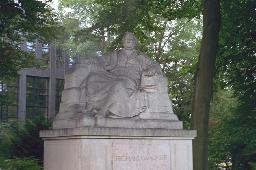
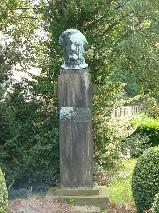
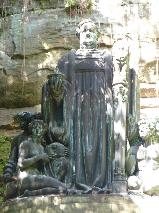
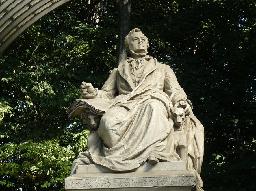
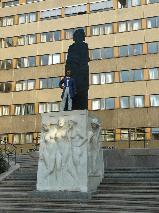
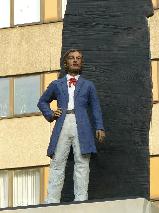
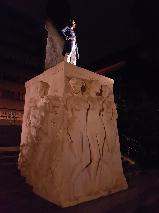
| 1/10/1903 | The Richard Wagner monument in Berlin is unveiled. It was created by Gustav Eberlein. The monument was commisioned by Ludwig Leichner, a manufacturer of cosmetics. [Eberlein, Gustav] |
| 24/12/1903 | First performance of "Parsifal" outside Bayreuth at the Metropolitan Opera in New York . The European copyright wasn't valid in the USA and the Metropolitan Opera in New York staged the opera against the wishes of Cosima Wagner. The MET used a publication of the opera by the publisher Schott. [Wagner, Cosima] |
| 29/3/1918 | Cosima plays the Steinway piano in Bayreuth for the first time since Richard Wagner's death. She played parts of the "Siegfried-Idyll" because of the birth of Wagner's first grandson Wieland. "The Siegfried-Idyll" was composed by Wagner after his son Siegfried was born. Afterwards Cosima would never play the Steinway again. [Wagner, Cosima][Wagner, Wieland] |
| 29/7/1951 | Opening of the first Festspiele in Bayreuth after the Second World War. After the Second World War, the Festspielhaus in Bayreuth stood under American command. After a while the Americans granted the Wagner family permission to resume the Festspiele. Winifred Wagner wasn't allowed to return to her post as director. She was succeeded by her son Wieland Wagner. [Wagner, Wieland][Wagner-Williams, Winnifred] |