| 10/9/1797 | Mary Wollstonecraft dies ten days after giving birth. She had given birth to her daughter, the future Mary Shelley, but she died ten days later of childbirth fever. [Wollstonecraft, Mary] |
| 24/8/1806 | Coleridge recites "The Ancient Mariner" to William Godwin and his daughter Mary. Coleridge frequently visited Godwin and this Sunday he recited his own poem "The Ancient Mariner". It was an experience that the nine year old Mary Godwin would never forget. [Godwin, William] |
| 7/6/1812 | Mary Godwin leaves for Scotland to have a holiday. There was tension between her and her stepmother Mary Jane and Godwin arranged a long stay for her with an acquaintance in Dundee, the radical Dissenter Mr. William Baxter. [Godwin, William] |
| 10/11/1812 | Mary Godwin returns to London in the company of Christy Baxter |
| 11/11/1812 | Mary Godwin is in the same house as Shelley and Harriet. Shelley, his wife Harriet and Harriet's sister Eliza dined with the Godwins that night. But Mary was tired and she probably remained upstairs. [Shelley, Percy Bysshe][Westbrook, Harriet] |
| 30/3/1814 | Mary Godwin returns to London from her second visit to Scotland. She returned to her father William Godwin and her stepmother Mary Jane at 41 Skinner Street, London. |
| 5/5/1814 | Percy Bysshe Shelley meets Mary Godwin. Shelley dined with William Godwin at Skinner Street. After this meeting Shelley and Mary soon started to spend days together. [Godwin, William][Shelley, Percy Bysshe] |
| 26/6/1814 | Mary Godwin and Percy Bysshe Shelley declare each other their love. They did so at the tomb of Mary's mother Mary Wollstonecraft. When Mary's father William Godwin heard the news he strongly disagreed. [Shelley, Percy Bysshe][Wollstonecraft, Mary] |
| 0/7/1814 | Shelley takes laudanum after Mary refuses to see him. Shelley had written to his wife Harriet that he loved Mary Godwin. Harriet came to London and visited Godwin. Under pressure Mary promised to meet Shelley no more. But Shelley turned hysteric and he appeared with guns, laudanum and suicide threats. They managed to calm him down, but soon afterwards he took a huge dose of laudanum. Godwin hurried to his lodgings where he found Shelley and a docter. Shelley survived, but his friend Thomas Peacock hardly recognized him when he saw him. [Shelley, Percy Bysshe][Westbrook, Harriet] |
| 6/7/1814 | Shelley asks William Godwin for the hand of his daughter Mary. Shelley wanted to end his marriage to Harriet Westbrook and wanted to go abroad with Mary Godwin. William Godwin didn't approve at all. [Godwin, William][Shelley, Percy Bysshe] |
| 28/7/1814 | Shelley and Mary Godwin leave London to elope to France. They secretly left London in the company of Claire Clairmont. They left for Dover, crossed the Channel in an open boat and travelled to Paris. [Clairmont, Claire][Shelley, Percy Bysshe] |
| 13/9/1814 | Shelley and Mary Godwin return to London [Shelley, Percy Bysshe] |
| 27/9/1814 | Shelley and Mary move to 5 Church Terrace, Pancras, London. Claire Clairmont went with them. [Clairmont, Claire][Shelley, Percy Bysshe] |
| 23/10/1814 | Shelley hides for his creditors. Between 23 Oct and 9 Nov he and Mary lived apart. [Shelley, Percy Bysshe] |
| 14/11/1814 | Shelley introduces Mary to his friend Hogg [Hogg, Thomas Jefferson][Shelley, Percy Bysshe] |
| 30/11/1814 | Charles, the son of Shelley and Harriet Westbrook is born. At that time Shelley had left Harriet and had eloped with Mary Godwin. [Shelley, Percy Bysshe][Westbrook, Harriet] |
| 1/1/1815 | T.J. Hogg declares his love to Mary Godwin, encouraged by P.B. Shelley. Mary accepted his affection, but she didn't answer it physically since she was pregnant from Shelley. Shelley was a strong advocate of free love and it is possible that he had sexual relations with her stepsister Claire at the time. [Clairmont, Claire][Hogg, Thomas Jefferson][Shelley, Percy Bysshe] |
| 10/1/1815 | Shelley and Mary move to 4 Hans Place, London. Claire Clairmont was once more in their company. [Clairmont, Claire][Shelley, Percy Bysshe] |
| 2/3/1815 | Shelley and Mary move to Arabella Road, Pimlico, London. In their company were Claire Clairmont and Clara, Mary and Shelley's baby girl. [Clairmont, Claire][Shelley, Percy Bysshe] |
| 6/3/1815 | Mary Godwin's stillborn daughter Clara dies [Shelley, Percy Bysshe] |
| 24/1/1816 | William, the second child of Mary Godwin and Percy Bysshe Shelley, is born [Shelley, Percy Bysshe] |
| 2/5/1816 | Percy Bysshe Shelley, Mary Godwin and Claire Clairmont leave London for Geneva [Clairmont, Claire][Shelley, Percy Bysshe] |
| 17/5/1816 | Percy Bysshe Shelley, Mary Godwin and Claire Clairmont arrive in Geneva. Soon Lord Byron and his physician John Polidori would arrive there as well. [Shelley, Percy Bysshe] |
| 16/6/1816 | Percy Bysshe Shelley, Mary Godwin, Claire Clairmont, Lord Byron and John Polidori tell each other ghost stories. They told each other stories all night and decided that each of them would write a ghost story. Mary Shelley wrote "Frankenstein" and John Polidori wrote "The Vampyre". [Byron, George Noel Gordon ][Clairmont, Claire][Shelley, Percy Bysshe] |
| 21/6/1816 | Percy Bysshe Shelley, Mary Godwin and Claire Clairmont go to Chamonix [Clairmont, Claire][Shelley, Percy Bysshe] |
| 29/7/1816 | Mary Godwin starts writing "Frankenstein" |
| 0/9/1816 | Mary Godwin, Percy Bysshe Shelley and Claire Clairmont arrive in Bath. After their return to England they travelled to Bath where they took lodgings at 5 Abbey Church Yard. In Bath Mary attended lectures by Dr Wilkinson at the Kingston Lecture Room and Wilkinson suggested that electricity might be used to bring inanimate matter to life. This was an inspiration to Mary's novel "Frankenstein". [Clairmont, Claire][Shelley, Percy Bysshe] |
| 8/9/1816 | Percy Bysshe Shelley, Mary Godwin and Claire Clairmont return to England and arrive at Portsmouth [Shelley, Percy Bysshe] |
| 29/12/1816 | Reconciliation between William Godwin and Mary Godwin. It was now clear that Percy Bysshe Shelley would marry Mary Godwin and Godwin no longer objected to their relationship. [Godwin, William] |
| 30/12/1816 | Percy Bysshe Shelley marries Mary Godwin. At St. Mildred's Church, London. [Shelley, Percy Bysshe] |
| 27/2/1817 | Percy Shelley and Mary Shelley leave Bath. They stayed with Percy's friend Thomas Peacock and went to live in Marlow-on-Thames, Buckinghamshire. [Shelley, Percy Bysshe] |
| 18/3/1817 | Percy Bysshe and Mary Shelley move to Albion House, Marlow [Shelley, Percy Bysshe] |
| 14/5/1817 | Mary Shelley completes her novel "Frankenstein". She asked Percy Bysshe Shelley to write an introduction and he did so. [Shelley, Percy Bysshe] |
| 24/11/1817 | William Godwin finishes reading "Frankenstein". The book was written by his daughter Mary and he was, against his habit, enthousiastic. One day later he wrote an introduction for his own book "Mandeville". [Godwin, William] |
| 9/3/1818 | William and Clara Shelley and Allegra Byron baptised at St Giles-in-the-Fields in London. The baptism took place before Percy, Mary and Clare left for the continent for the second time. The current church is from 1810 and the font is probably the same as at the time of the baptism. [Clairmont, Claire][Shelley, Percy Bysshe] |
| 11/3/1818 | Mary Shelley's "Frankenstein" appears in print. At the time Mary was only twenty years old. |
| 11/3/1818 | Mary Shelley, Percy Bysshe Shelley and Claire Clairmont leave for Italy. They crossed the Channel on the 12th. [Clairmont, Claire][Shelley, Percy Bysshe] |
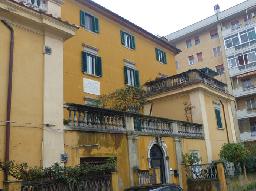
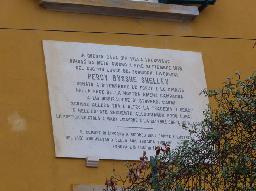
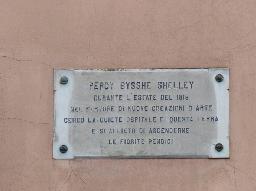
| 11/6/1818 | The Shelleys and Claire Clairmont move to the Casa Bertini in Bagna di Lucca [Clairmont, Claire][Shelley, Percy Bysshe] |
| 14/6/1818 | Mary Shelley writes to Walter Scott. Scott had reviewd "Frankenstein" favourable but assumed that Percy Bysshe Shelley was the author. She thanked him and told him that she was the author. |
| 17/8/1818 | Shelley travels to Venice with Claire Clairmont. Claire wanted to visit her daughter Allegra who was with the father, Lord Byron. Mary Shelley stayed behind in Bagni di Lucca. [Byron, Allegra][Clairmont, Claire][Shelley, Percy Bysshe] |
| 31/8/1818 | Mary Shelley leaves Bagna di Lucca for Venice. Her husband had asked her in a letter to join him and Claire Clairmont there. [Shelley, Percy Bysshe] |
| 24/9/1818 | Clara Shelley dies of dysentery. She was the third child of Mary and Percy Bysshe Shelley and she had contracted the illness during a hurried journey to Este. [Shelley, Percy Bysshe] |
| 5/11/1818 | The Shelleys travel to Rome. They would stay there until the end of November and then they moved on to Naples. [Shelley, Percy Bysshe] |
| 27/2/1819 | Shelley registers a daughter, Elena, in Naples. The child was named Elena Adelaide. Shelley gave 27 Dec 1818 as her birthdate and himself and his wife Mary as her parents. It seems impossible that the child was Mary's. According to Mary's diary Claire Claimont was 'unwell' on 27 Dec. But there is no further evidence that Claire had been pregnant, so it's unlikely as well that Claire was the mother. The child was probably adopted by another family. Only in 1936 the existence of Elena was discovered by Newman Ivy White. [Clairmont, Claire][Shelley, Percy Bysshe] |
| 0/3/1819 | The Shelleys return to Rome [Shelley, Percy Bysshe] |
| 9/3/1819 | Percy Bysshe and Mary Shelley visit the Pantheon in Rome. They went there again by moonlight. [Shelley, Percy Bysshe] |
| 12/3/1819 | Mary Shelley sees the Pope in Rome. In her diary she states that she went out to hear the mass. On March 11 she had been reading in the Bible and possibly this inspired her to listen to the mass. |
| 8/5/1819 | Percy Bysshe Shelley sits for a portrait by Amelia Curran. He posed on May 8th and 9th in Rome. The portrait was never finished. After Shelley's death Mary asked if she could have it. Amelia Curran answered from Paris that she had wanted to burn it because it was bad but that she hadn't done so. In May 1825 she sent the portrait to Mary from Rome. [Curran, Amelia][Shelley, Percy Bysshe] |
| 7/6/1819 | William Shelley dies from malaria. He was the second child of Percy Bysshe and Mary Shelley. He was buried in the Protestant Cemetery in Rome. On 10 Jun the Shelleys left Rome. [Shelley, Percy Bysshe] |
| 10/6/1819 | The Shelleys and Claire Clairmont leave Rome for Livorno. In Leghorn they wanted to visit the Gisbornes, who lived there. [Clairmont, Claire][Shelley, Percy Bysshe] |
| 0/8/1819 | Mary Shelley starts writing "Mathilda". She finished in in February, 1820 and sent the story to her father William Godwin in 1821. Godwin made no attempts to publish it amd it finally appeared in print in 1959. [Godwin, William] |
| 30/9/1819 | Mary Shelley meets Lady Mount Cashell. She visited her in Pisa together with Percy Bysshe Shelley and Claire Clairmont. [Clairmont, Claire][King, Margaret, Lady Mount Cashell][Shelley, Percy Bysshe] |
| 2/10/1819 | The Shelleys and Claire Clairmont move to Florence, 4395 via Valfonda. Claire left for Vienna on 10 Nov. [Shelley, Percy Bysshe] |
| 5/11/1819 | Shelley and Mary travel to Rome. They would stay there until the end of November and then depart for Naples. [Shelley, Percy Bysshe] |
| 12/11/1819 | Percy Bysshe and Mary Shelley's son Percy Florence is born. He was born in Florence. [Shelley, Percy Bysshe][Shelley, Percy Florence, 3rd Baronet] |
| 0/1/1820 | Shelley and Mary move to Casa Frasi, Pisa [Shelley, Percy Bysshe] |
| 0/3/1820 | Shelley's lyrical drama "Cenci" is published and Mary Shelley starts "Catruccio, Prince de Lucca". William Godwin later changed the name of his daughter's novel in "Valperga". [Shelley, Percy Bysshe] |
| 15/6/1820 | The Shelleys return to Bagna di Lucca [Shelley, Percy Bysshe] |
| 5/8/1820 | The Shelleys move to Casa Prinni, Bagni San Giuliano [Shelley, Percy Bysshe] |
| 12/8/1820 | Mary Shelley and Claire Clairmont visit Castruccio's grave in Lucca. The grave was located at the San Francesco Church and was marked by two tablets. Mary's novel "Valperga" was about Castruccio. [Clairmont, Claire] |
| 25/8/1820 | William Godwin receives the last letter Percy Bysshe Shelley wrote to him. Shortly informed Godwin that he would not send him anymore money after he had given him a considerable fortune during the last few years. He also hinted that Godwin had been accused of selling his daughter Mary to Shelley and sending more money would probably further damage his and her reputation. This last letter was probably written on 7 August. Godwin noted the receival of the letter with anger in his diary. [Godwin, William][Shelley, Percy Bysshe] |
| 0/11/1820 | The Shelleys meet Emilia Viviani in Florence. She was the daughter of the governor of Pisa and she was locked up in a convent until her marriage. She was the inspiration for Shelley's "Epipsychidion". [Shelley, Percy Bysshe] |
| 16/1/1821 | Jane and Edward Williams arrive in Pisa. They met the Shelleys on January 19th and the couples soon became friends. [Shelley, Percy Bysshe][Williams, Edward Ellerker][Williams, Jane] |
| 5/3/1821 | The Shelleys move to Casa Aulla, Pisa [Shelley, Percy Bysshe] |
| 8/5/1821 | The Shelleys move to Bagni di San Giuliano [Shelley, Percy Bysshe] |
| 0/7/1821 | The first translation of "Frankenstein" is published in Paris |
| 0/8/1821 | Mary Shelley finishes "Valperga" |
| 25/10/1821 | The Shelleys move to Tre Palazzi di Chiesa, Pisa [Shelley, Percy Bysshe] |
| 16/12/1821 | Byron shoots a small twig in two from 14 feet distance. This was written in his diary by Edward Williams, who was a witness. Mary Shelley and Jane Williams were also there. [Byron, George Noel Gordon ][Williams, Edward Ellerker][Williams, Jane] |
| 14/1/1822 | Edward John Trelawny arrives in Pisa. He was a friend of the Williams family and he admired Lord Byron. He soon met the Shelleys. [Shelley, Percy Bysshe][Trelawny, Edward John][Williams, Edward Ellerker][Williams, Jane] |
| 30/4/1822 | The Shelleys and Claire Clairmont move to Casa Magni, San Terenzo. The Williams family joined them one day later. [Clairmont, Claire][Shelley, Percy Bysshe][Williams, Edward Ellerker][Williams, Jane] |
| 16/6/1822 | Mary Shelley miscarries and almost dies herself. She thought she was dying from the hemorrhaging. Her own mother Mary Wollstonecraft had died after Mary's birth. Shelley saved her by putting her into a bucket of ice. When the doctor arrived the critical stage had already passed. Years later Mary wrote that she felt a passive kind of satisfaction at the time she thought she was dying and that the experience had removed her fear of death. [Shelley, Percy Bysshe] |
| 22/6/1822 | Shelley is dreaming that he strangles his wife Mary. First he dreamed that Edgar and Jane Williams walked naked and rted with blood into his room and told him that the see was destroying their house. When he looked outside in his dream he saw himself strangling Mary. When he woke up he screamed and ran into Mary's room to see if she was still alive. She had almost died of a miscarriage a few days before and she was still weak. [Shelley, Percy Bysshe] |
| 8/7/1822 | Percy Bysshe Shelley drowns in the Gulf of Spezia. He and Edward Williams were sailing back home to Mary Shelley and Jane Williams from Leghorn, where they had met Leigh Hunt and his family. Allthough a storm was rising they left in Shelley's small boat the Don Juan. Only ten days later their bodies were found on the beach. [Shelley, Percy Bysshe][Williams, Edward Ellerker][Williams, Jane] |
| 18/8/1822 | Trelawny burns Shelley's body on the beach. Shelley's body was found on the beach and buried there. It was not allowed to move it because of the risk of diseases. A huge metal furnace was brought to the beach and his remains were cremated. The ashes were taken to the Protestant Cemetery in Rome. Trelawny snatched Shelley's heart from the flames. Leigh Hunt wanted to keep it, but after some pression he gave it to Mary Shelley. Lord Byron couldn't stand it and swam back to his nearby ship before the burning of the corpse started. [Byron, George Noel Gordon ][Hunt, Leigh][Shelley, Percy Bysshe][Trelawny, Edward John] |
| 11/9/1822 | Mary Shelley leaves Pisa to tracel to Casa Negroto, Genoa. Jane Williams travelled with her and continued to London from Genoa. [Clairmont, Claire][Williams, Jane] |
| 3/10/1822 | Lord Byron arrives in Genoa. He took up residence in Casa Saluzzo. At the time Mary Shelley also lived in Genoa. [Byron, George Noel Gordon ] |
| 4/10/1822 | Leigh Hunt and his family join Mary Shelley in Genoa [Hunt, Leigh] |
| 1/1/1823 | The second issue of The Liberal is published. This issue contained "Song, Written for an Indian Air" by P.B. Shelley and "A Tale of the Passions, or, the Death of Despina" by Mary Shelley. [Shelley, Percy Bysshe] |
| 19/2/1823 | Mary Shelley's novel "Valperga" is published |
| 0/4/1823 | The third issue of The Liberal is published. It appeared around 23 Apr 1823 and it contained "Lines to a Critic" by P.B. Shelley and "Madame D'Houtetot" by Mary Shelley. [Shelley, Percy Bysshe] |
| 0/7/1823 | Mary Shelley writes her poem "The Choice" |
| 25/7/1823 | Mary Shelley leaves Genoa to return to England |
| 27/7/1823 | William Godwin attends the theatre premiere of Frankenstein. The book "Frankenstein, or The Modern Prometheus" was written by his daughter Mary Shelley. T.P. Cooke played the monster. [Godwin, William] |
| 30/7/1823 | The fourth issue of The Liberal is published. It contained an essay about Giovanni Villani written by Mary Shelley. It is possible that she had already written it in 1821. [Shelley, Percy Bysshe] |
| 12/8/1823 | Mary Shelley arrives in Paris. She was on her way from Italy to England and she stayed in Paris until 30 Aug 1823. |
| 18/8/1823 | First performance of "Frankenstein; or, the Demon of Switzerland" . Henry M. Milner was the second playwright to adapt Mary Shelley's novel for the stage. It opened at the Royal Coburg Theatre and ran for eight performances. |
| 25/8/1823 | Mary Shelley arrives in London with her son Percy Florence [Shelley, Percy Florence, 3rd Baronet] |
| 29/8/1823 | Mary Shelley attends a theatre performance of "Frankenstein". Her father william Godwin was also there. He had already witnessed the premiere on 27 Jul 1823. Jane Williams and William Godwin jr. also attended. The venue was the English Opera House Royal and the adaption was by Richard Brinsley Peake. [Godwin, William][Williams, Jane] |
| 8/9/1823 | Mary Shelley moves to 14 Speldhurst Street, Brunswick Square, London |
| 26/1/1824 | Mary Shelley and William Godwin see Edmund Kean in Richard III. Mary was impressed by Kean's part and planned to write a tragedy herself. The venue was the New Theatre Royal, Drury Lane, London. [Godwin, William] |
| 31/1/1824 | Mary Shelley and William Godwin see Edmund Kean as Shylock [Godwin, William] |
| 15/5/1824 | Mary Shelley receives the news that Lord Byron has died in Greece. In her diary she wrote "Albè-the dear, capricious, fascinating Albè". The Shelleys had always called him Albè (for LB, Lord Byron). She forgot all her objections to him in the shock of the moment. [Byron, George Noel Gordon ] |
| 0/6/1824 | Shelley's Posthumous Poems published by Mary Shelley. Sir Timothy Shelley stopped circulation by threatening to withdraw the allowance for her son Percy Florence. [Shelley, Percy Bysshe] |
| 21/6/1824 | Mary Shelley moves to 5 Bartholomew Place, Kentish Town. She lived near Jane Williams now. |
| 9/7/1824 | Mary Shelley visits Lord Byron's corpse before the funeral takes place [Byron, George Noel Gordon ] |
| 12/7/1824 | Lord Byron's funeral procession in London. A huge procession moved through London. A smaller procession moved to Hucknall, Nottinghamshire in four days. In the first coach were Colonel Leigh, Captain Byron, Hanson and Hobhouse. In the second coach were Burdett, Kinnaird, Bruce, Ellice, Stanhope and Travanion. In the third coach Moore, Rogers, Campbell and others. Mary Shelley saw the procession when it passed her house moving towards Highgate Hill. Caroline Lamb broke down once more when she saw the funeral processon of the former lover. [Byron, George Noel Gordon ][Hobhouse, John Cam, Lord Broughton][Lamb, Caroline ] |
| 26/2/1825 | Mary Shelley, Willam Godwin and Pietro Gamba see Edmund Kean as Othello. Jane Williams was there as well. Gamba was in England to discuss the publication of his book "A Narrative of Lord Byron's Last Journey to Greece" with publisher Murray. [Godwin, William][Williams, Jane] |
| 23/1/1826 | Mary Shelley's "The Last Man" is published. It was published anonymously by the publisher Henry Colburn with the statement that it was written by the author of "Frankenstein". After her name was mentioned in reviews Sir Timothy withdrew the allowance of her son Percy. When it was pointed out to him that it wasn't Mary's fault and that she had to make a living he continued the allowance. |
| 2/6/1827 | Mary Shelley meets Thomas Moore. She had met him before. |
| 13/7/1827 | Mary Shelley finds out that her friend Jane Williams has betrayed her. Jane was Mary's best friend, but Jane had spread malicious rumours about Mary behind her back. One of the things Jane said was that she had treated Shelley badly during his last year. Jane told this to Leigh Hunt and T.J. Hogg. [Hogg, Thomas Jefferson][Hunt, Leigh][Shelley, Percy Bysshe][Williams, Jane] |
| 0/8/1827 | Mary Shelley travels to Sompting, Arundel and Dieppe. The voyage took from August to October and her friend Isabel Robinson travelled with her. |
| 0/10/1827 | Marfy Shelley moves to 51 George Street, Portman Square |
| 4/11/1827 | Frances Trollope and Frances Wright leave for Nabosha. Nabosha was the commune of Frances Wright in America. Frances Trollope took three of her children (the future author Anthony wasn't among them) and the rest of the family should follow later. The French painter A.J.J. Hervieu (a friend of the Trollopes) also joined them on the ship and on this date they were waved goodbye by Mary Shelley. But Frances Trollope didn't like Nabosha and soon she left the commune. [Trollope, Frances] |
| 11/2/1828 | Confrontation between Mary Shelley and Jane Williams. Jane had spread stories about Mary and Mary told her that she had found out. Jane started crying and the conversation was terminated. Mary sent Jane a letter a few days later in wich she described how badly Jane had hurt her. [Williams, Jane] |
| 11/4/1828 | Mary Shelley leaves for Paris |
| 19/5/1828 | Mary Shelley leaves Paris. She suffered from smallpox. |
| 4/6/1828 | Mary Shelley returns from France to England. She arrived in Dover together with Julia Robinson. |
| 15/11/1828 | Mary Shelley is reunited with Trelawny [Trelawny, Edward John] |
| 0/1/1829 | Mary Shelley moves to 33 Somerset Street, Portman Square, London |
| 13/1/1829 | Last meeting of all the Godwin/Clairmont children [Clairmont, Charles Gaulis][Clairmont, Claire] |
| 1/6/1829 | Mary Shelley's allowance raised to 300 pounds a year |
| 25/3/1830 | William Godwin and Edward Bulwer-Lytton visit Mary Shelley. Washigton Irving and Thomas Moore were there as well. On 7 June 1830 Godwin and Bulwer-Lytton visited Mary again. [Godwin, William][Irving, Washington] |
| 13/5/1830 | "The Fortunes of Perkin Warbeck" by Mary Shelley is published |
| 0/11/1831 | Publication of the revised second edition of Mary Shelley's "Frankenstein" |
| 0/5/1833 | Mary Shelley moves to Harlow. Since september, 1832 her son Percy Florence went to school there. It was cheaper to enlist him as a day student and let him live with her. [Shelley, Percy Florence, 3rd Baronet] |
| 0/10/1835 | Mary Shelley's "Lives of The Most Eminent Literary and Scientific Men of Italy, Spain and Portugal part II" is published |
| 0/4/1836 | Mary Shelley moves to 14 North Bank, Regents Park. She had lived in Harlow since May 1833, where her son Percy went to school. In April 1836 she housed him with a private teacher, Mr. Morrison, Vicar of Stoneleigh (near Leamington, Warwickshire). [Shelley, Percy Florence, 3rd Baronet] |
| 0/2/1837 | Mary Shelley's novel "Falkner" is published |
| 0/3/1837 | Mary Shelley moves to 24 South Audley Street, London |
| 0/11/1837 | Mary shelley moves to 41d Park Street, Grosvenor Square |
| 0/8/1838 | Mary Shelley's "Lives of The Most Eminent Literary and Scientific Men in France part I" is published |
| 0/0/1839 | Mary Shelley's "Lives of The Most Eminent Literary and Scientific Men in France part II"is published |
| 0/0/1839 | Mary Shelley publishes an annotated version of the works of Percy Bysshe Shelley [Shelley, Percy Bysshe] |
| 0/6/1840 | Mary Shelley travels on the continent with her son Percy Florence. From June to December. They visited Cadenabbia, Milan and Paris. [Shelley, Percy Florence, 3rd Baronet] |
| 18/12/1840 | Mary Shelley visits Napoleon's tomb in Paris. Richard Monckton Milnes was with her. |
| 0/0/1842 | Mary Shelley travels to Italy |
| 0/9/1842 | Mary Shelley travels to Prague |
| 0/3/1843 | Mary Shelley arrives in Rome. She had been touring the continent with her son Percy Florence since June 1842 and it was her first visit to the city since the 1820s. They visited Shelley's grave but she couldn't find the grave of her son William who had died in Rome in 1819 and was buried at the same cemetery. Percy Florence was unimpressed with the art in Rome and to her disappointment he refused to visit the museums. Mary toured them with the art critic Alexis-Francóis Rio. [Shelley, Percy Bysshe][Shelley, Percy Florence, 3rd Baronet] |
| 0/7/1843 | First meeting of Mary Shelley and Gatteschi [Gatteschi, Ferdinando Luigi] |
| 10/7/1843 | Mary Shelley returns to England after a travelling on the continent. Her son Percy Florence was in her company. [Shelley, Percy Florence, 3rd Baronet] |
| 0/7/1844 | Mary Shelley's "Rambles in Germany" published |
| 10/10/1845 | The letters that he used to blackmail Mary Shelley are taken from Gatteschi. This took place in France. [Gatteschi, Ferdinando Luigi] |
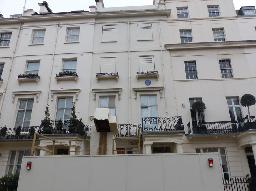
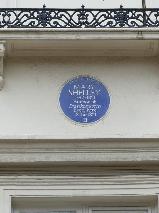
| 0/0/1846 | Mary Shelley moves to 24 Chester Square, London. She lived here until her death in 1851. |
| 0/8/1846 | Mary shelley travels to Baden-Baden |
| 29/7/1848 | Mary Shelley joins her son Percy Florence and his wife Jane at Field Place. Jane St. John had married her son Percy Florence and they had returned from their honeymoon in the Lake District. Field Place was the birthplace of Percy Florence's father Percy Bysshe Shelley. [Shelley, Percy Bysshe][Shelley, Percy Florence, 3rd Baronet][St. John, Jane] |
| 0/0/1850 | Mary Shelley travels to the Côte d'Azur. It was in the spring and she was in the company of her son Percy Florence and his wife Jane. [Shelley, Percy Florence, 3rd Baronet] |
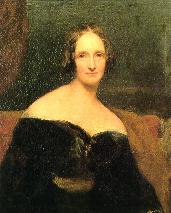
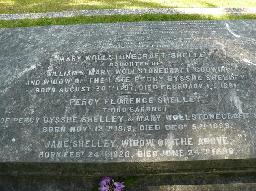
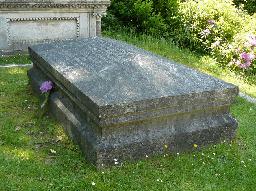
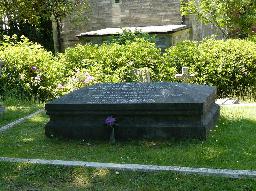
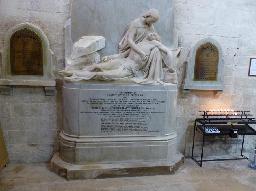
| 1/2/1851 | Mary Shelley dies at her home at Chester Square, London |
| 6/12/1889 | Sir Percy Florence Shelley dies. He was the only surviving child of Percy Bysshe shelley and Mary Shelley. [Shelley, Percy Bysshe][Shelley, Percy Florence, 3rd Baronet] |
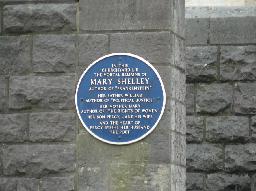
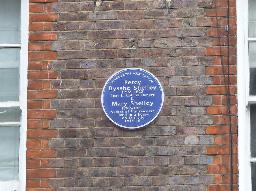
| 21/6/1977 | A plaque for Mary Shelley in unveiled at Chester Square, London. The church authorities of St. Michael's Church, London, didn't allow that the text 'Author of Frankenstein' was inscribed on the plaque. Instead it became 'Author' and 'Wife of the Poet'. A new plaque was unveiled in 2003. |